

Human rights lawyer and constitutional affairs expert, Chidi Odinkalu, has raised a strong alarm over the proposed NGO Regulation Bill before the National Assembly, describing it as potentially the most far-reaching restriction on civic life to be considered since Nigeria returned to democratic rule in 1999.
Odinkalu said the bill, which has passed first and second readings and is currently before a committee of the House of Representatives, could fundamentally alter how civil society organisations, community groups and other non-governmental entities operate in Nigeria.
The House Committee on NGOs is expected to hold a public hearing on the proposed legislation later this month.
Speaking on the bill, Odinkalu urged Nigerians to pay close attention to its provisions and participate actively in the legislative process, warning that its implications could extend well beyond registered NGOs.
“Let me be clear, this is the most dangerous piece of legislation that has come for consideration in the National Assembly since the return to civil rule in 1999.”
According to him, the proposed framework could affect virtually every organised activity outside direct government control.
“It covers the activities of every entity and everybody that is not government, and it affects churches, mosques, schools, universities, hospitals, everything, as well as humanitarian operations wherever they are taking place in the country.”
Odinkalu’s central concern is the level of control he believes the proposed law could give the Federal Government over funds raised and managed by non-governmental organisations and community groups.
“Basically, all resources, all funds, everything that are collected or liable to be collected and made available to service communities, individuals in need in this country will be subject to Abuja.”
He argued that such a system could extend to religious fundraising, saying churches and mosques could face government approval requirements before raising or deploying money.
“Before you can raise funds in your church and your mosque, you have to get Abuja’s permission. After you’ve raised the money, you have to return them to Abuja for Abuja to tell you what to do with them.”
He further claimed that organisations could be subjected to government clearance and auditing requirements.
“Nobody can operate anything without clearance from Abuja.”
Odinkalu said the proposed controls could also affect informal community financial arrangements, including traditional rotating savings schemes commonly known as Isusu.
“For the old mamas and old papas doing Isusu in the village, that is revolving credit. Before you do your collections, you come to Abuja for clearance.”
He added:
“After you’ve done your collections, before you share the money or rotate the collections amongst the beneficiaries, you come to Abuja for clearance.”
He warned that such requirements could undermine community-based support systems that operate outside formal government structures.
Odinkalu also raised concerns over the potential impact on religious organisations, particularly mosques and churches that routinely collect donations to support members and vulnerable people within their communities.
“The mosques that do collections every Friday to support people in their congregations and their communities will all have to account for that money to civil servants who will either tell them what to do with it or collect it and trouser it into their pockets.”
He concluded:
“The churches will be out of business. The mosques will be endangered.”
Beyond financial regulation, Odinkalu warned that the proposed legislation could have broader implications for freedom of association and the ability of citizens and groups to criticise government.
“And as a citizen, you’ve got to understand that this means that there will be no voice of criticism for government. Nobody can tell government anything.”
He said the bill could subject a wide range of associations to a government registration regime, including student organisations, religious groups and professional or community-based bodies.
“What this body proposes to do, what government is proposing with this bill, is that after it has been passed, everybody organizing in Nigeria under any form, students, all students association, reverend sisters in convents, reverend fathers and pastors, whatever they may be, imams, alfars, and everybody, you will have to apply to Abuja for them to register you to operate.”
Odinkalu argued that the power to approve or reject registration could effectively determine which organisations are allowed to operate.
“If they agree to register, they can refuse to register you, in which case you cannot do anything.”
He further alleged that organisations granted approval would have to renew their licences periodically.
“If they agree to register you, however, you will have to only hold that license for two years. After those two years, you will have to apply for them to renew your license.”
He added: “If they don’t agree, that license lapses.”
Odinkalu also claimed that operating without the required licence could attract imprisonment or a fine.
“If you try to do anything without that license, you’ll be liable to be imprisoned for 18 months. And if they are sympathetic and agree not to send you to jail, you may be let go with a fine of 500,000 naira.”
Odinkalu warned that the proposed regulatory framework could create a system in which public resources and civic activity become increasingly dependent on government approval.
“The civil servants will collect this money in the name of the politicians. It will be used to fire up political power that will not be accountable to any one of us.”
He reiterated his opposition to the bill, saying its potential consequences warranted widespread public scrutiny.
“And this is why I am saying that this is the most dangerous piece of legislation that’s been considered in our country to date, in the past 20 years.”
But Odinkalu said Nigerians were not powerless to influence the outcome of the legislative process.
“But you can do something about it. This does not have to be law.”
He urged citizens to engage the National Assembly and make their views known before the bill proceeds further.
Odinkalu’s intervention comes as the proposed legislation enters a critical stage, with the anticipated public hearing providing an opportunity for civil society organisations, religious bodies, professional groups and other stakeholders to scrutinise and respond to its provisions.
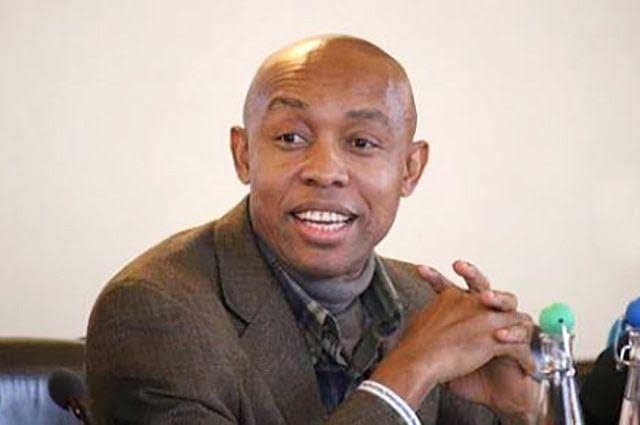
Chidi Odinkalu
