


The opposition battle for Nigeria’s presidency in 2027 has entered a new phase, with the African Democratic Congress (ADC) signalling that the door to a broader alliance remains open despite the collapse of its earlier coalition arrangement.
The fresh move comes as the ruling All Progressives Congress (APC) intensifies its campaign for President Bola Tinubu’s re-election and political voices in the North raise questions over the region’s relationship with the administration.
ADC National Publicity Secretary, Bolaji Abdullahi, said the party had not abandoned the idea of bringing opposition forces under one umbrella, arguing that only a sufficiently broad alliance could mount a serious challenge to Tinubu and the APC.
According to Abdullahi, the coalition conversation remains alive because the fundamental political objective—building a formidable opposition capable of defeating the ruling party—has not changed.
“We still have not given up the possibility. Don’t forget that we started this coalition building. And we still believe that the window has not closed for the possibility of building a coalition ahead of 2027 because we believe that the opposition stands a better chance if we are all working together.”
The statement is significant because the earlier coalition suffered a major setback following the departure of Peter Obi and Rabiu Musa Kwankwaso, two prominent figures whose political followings had been viewed as crucial to any attempt to unseat the APC.
Rather than declaring the coalition dead, however, the ADC appears to be keeping negotiations alive and leaving room for fresh political realignments before the 2027 presidential contest.
As the opposition reconsiders its strategy, the APC is already projecting confidence in Tinubu’s re-election prospects.
Speaker of the House of Representatives, Abbas Tajudeen, yesterday urged supporters of the President to take the re-election campaign to the grassroots.
Receiving the PBAT Door-to-Door Movement in Abuja, Abbas argued that Nigerians should not abandon policies and programmes initiated by the Tinubu administration only to have a successor reverse them.
He said the APC would campaign on what he described as the administration’s measurable achievements since 2023 and predicted that Tinubu could secure more than 10 million votes if the campaign was effectively executed.
The Speaker’s position effectively frames the 2027 contest as a referendum on the continuity of Tinubu’s policies, while the ADC’s strategy is centred on preventing the opposition vote from being divided.
But the political battle is also exposing growing disagreements over the North’s relationship with the Tinubu administration.
National Chairman of the Peoples Redemption Party (PRP), Hakeem Baba-Ahmed, accused northern political leaders of abandoning the region’s interests by aligning themselves with the President.
Speaking on Symfoni TV, Baba-Ahmed alleged that Tinubu had been able to shift what he described as benefits belonging to the North towards the South-West because northern leaders who should have challenged the administration had instead joined its camp.
“Tinubu is taking away what the North owned to the South-West because the North is not resisting,” he said.
Baba-Ahmed pointed to the strength of the APC in the North, noting that 18 of the party’s 32 governors are from the region, with Bauchi State the only northern state outside the APC fold.
He questioned why such political influence had not translated into greater pressure on the Federal Government over insecurity and other challenges confronting the region.
The emerging political picture presents three sharply different narratives ahead of 2027.
For the ADC, the immediate challenge is to prevent opposition fragmentation and revive enough of the coalition architecture to present a credible alternative to Tinubu.
For the APC, the strategy is to defend the President’s record and persuade voters that continuity offers greater benefits than another change of government.
And for critics such as Baba-Ahmed, the central question is whether northern political leaders have sacrificed regional interests for political proximity to the presidency.
With the election still ahead, the contest is therefore already moving beyond personalities. It is increasingly becoming a battle over opposition unity, political loyalty, regional interests and whether Nigerians should reward or reject continuity under Tinubu.
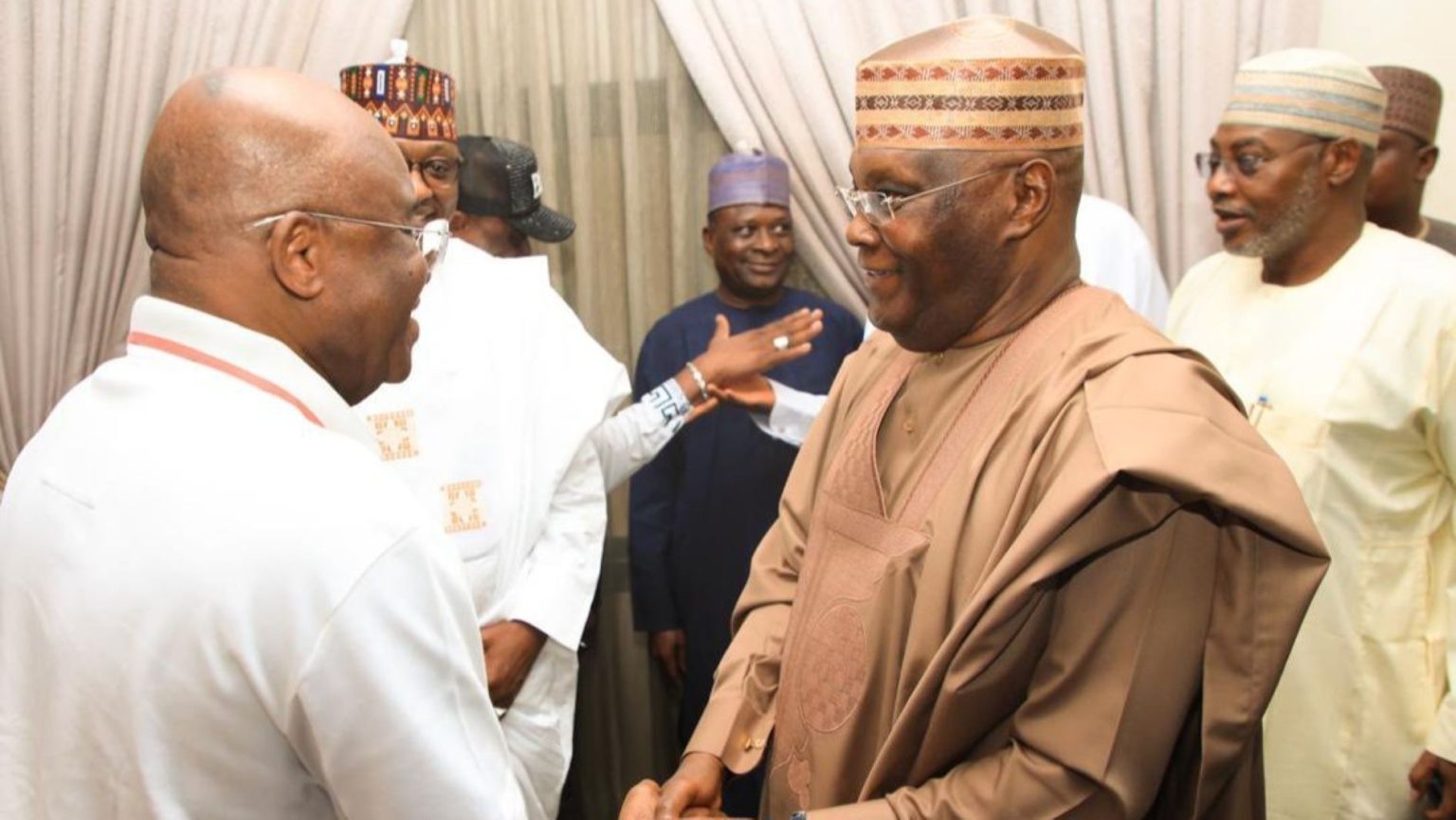
David Mark and Atiku Abubakar
