***Spotlight Education, Security, Youth Development
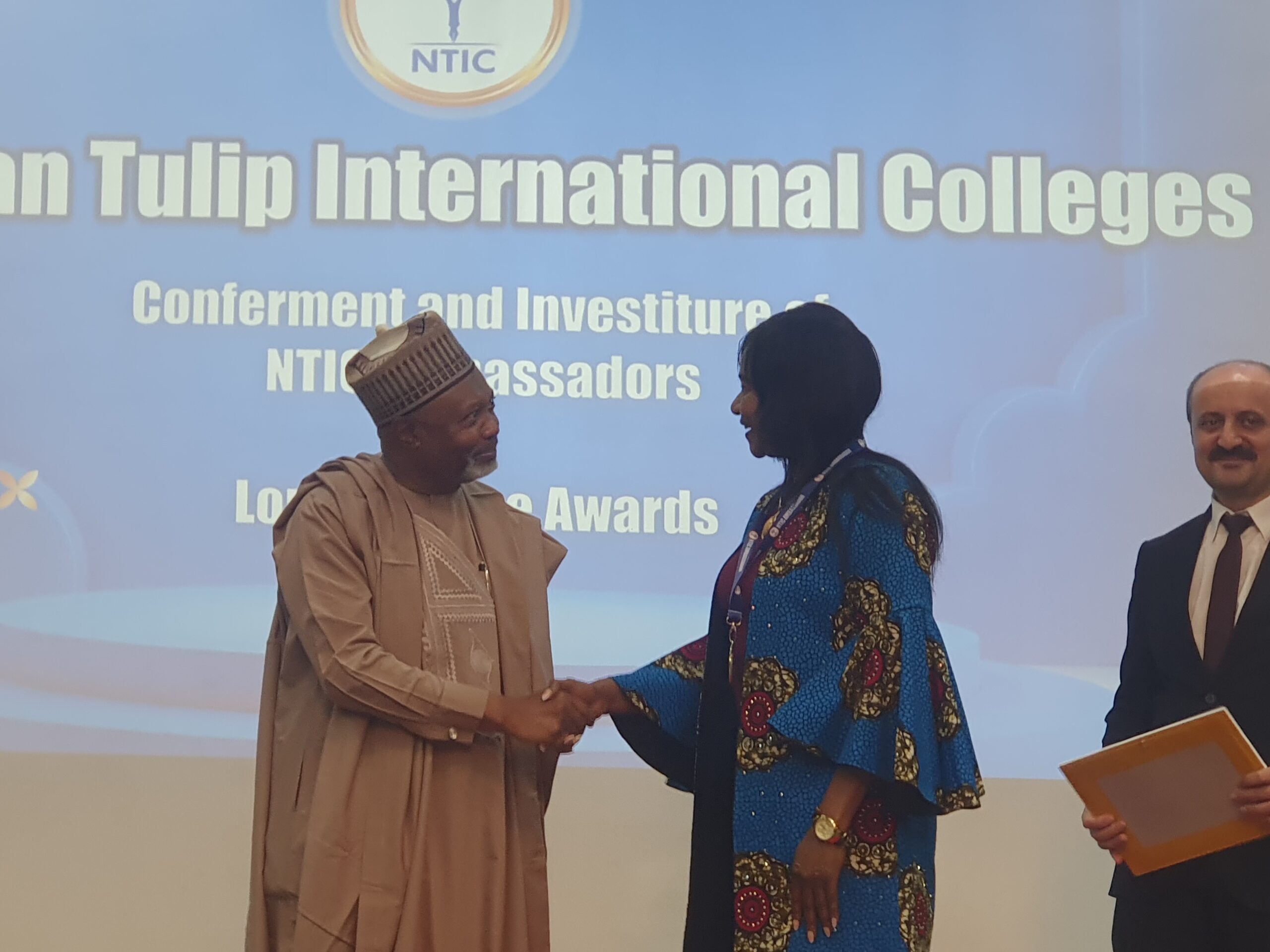
At a time Nigeria is grappling with rising insecurity, declining school attendance in some regions and growing concern over youth vulnerability, Nigerian Tulip International Colleges (NTIC) has appointed former Nigerian sprint icon Mary Onyali and retired Air Commodore Darlington Egbunu Abdullahi as ambassadors, reinforcing its belief that education, discipline and character development remain the strongest foundations for national renewal.
The appointments, announced at a ceremony in Abuja, brought together education stakeholders, parents, security experts and students, and highlighted NTIC’s effort to project education beyond academics to include leadership, emotional wellbeing and responsible citizenship.
Speaking after her unveiling, Onyali said her passion for children and youth development informed her decision to accept the ambassadorship, describing human capital as the most valuable asset any nation can invest in.
“I have always loved being around children. I try to put myself in their position and make them comfortable,” Onyali said. “What matters most to me is leaving a positive impact in their lives. Years later, when they call to say something I shared helped them, that is my reward.”
The former Olympic medallist and one of Nigeria’s most celebrated athletes said she intends to use her platform to increase enrolment at NTIC and correct widespread misconceptions about the school.
“For years, I have heard people say NTIC is too expensive or that it is a Muslim school. That is not true,” she said. “NTIC is a multinational, multicultural and multi-religious institution. It is located right in the heart of Abuja, and parents from anywhere can comfortably bring their children here.”
Onyali said part of her role as ambassador would be public enlightenment, using her reach and contacts to promote accurate information about the school and its learning environment.
She also spoke forcefully on the impact of insecurity on education, warning against allowing violence or fear to keep children away from school. Citing developments in Anambra State, Onyali urged governors and local government authorities to take decisive action.
“We cannot allow children to stop going to school because of insecurity,” she said. “In the Southeast, the stay-at-home problem was curtailed because the governor put his foot down. Other governors must do the same. If help is needed, they should ask for it. No leader should sit idle while children are out of school.”
Onyali stressed that education must continue even in difficult times, noting that societies that surrender schooling to fear risk long-term damage to their future.
On sports development, she traced Nigeria’s past international success to sustained grassroots investment, warning that the collapse of early talent discovery systems had contributed to the country’s recent struggles.
“It takes time to build champions—sometimes three Olympic cycles, which is about 12 years,” she said. “Nigeria has talent in abundance. What we need is to discover them early, nurture them properly and give them the right welfare. That is how we return to our glorious days.”
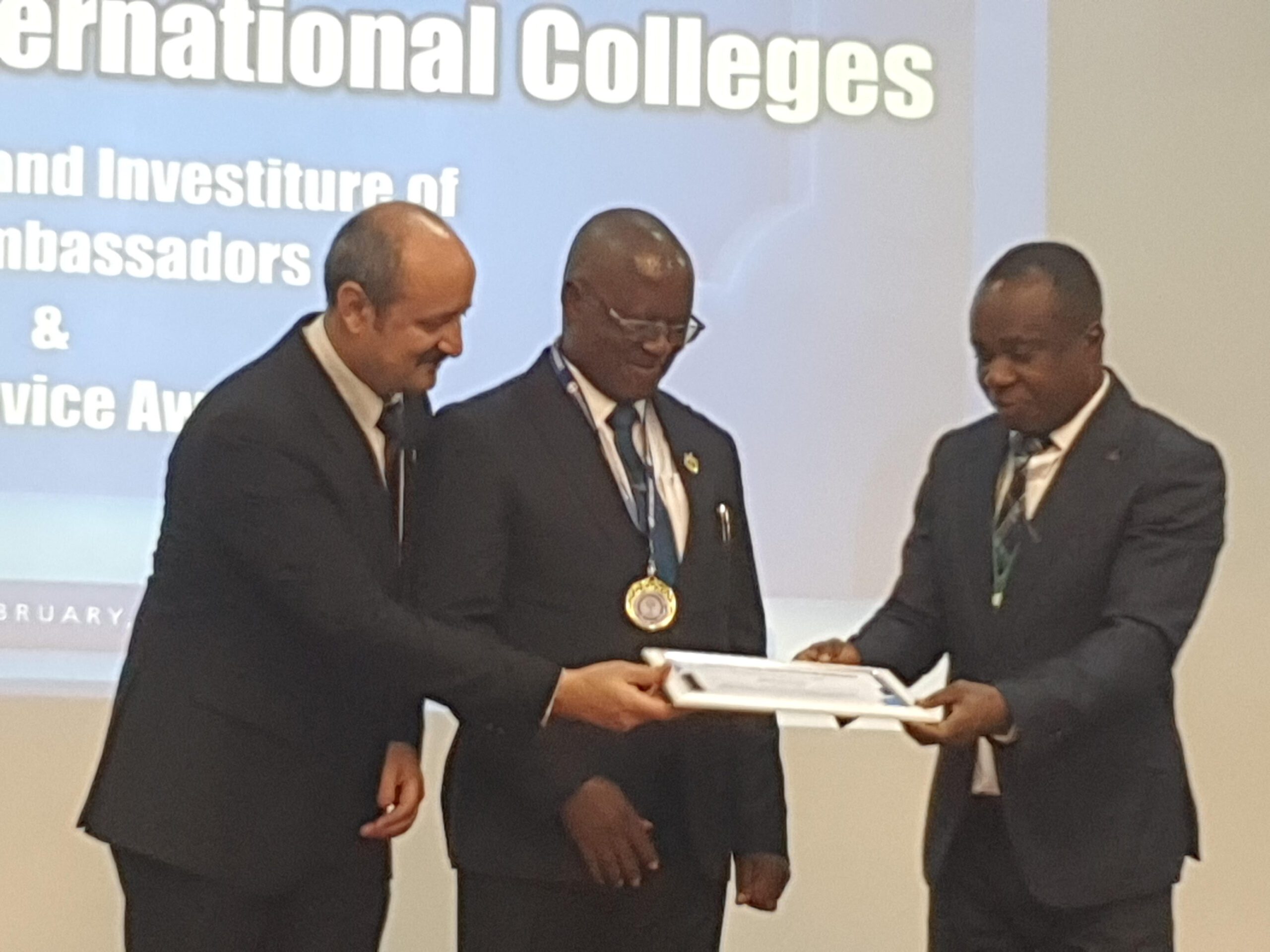
Also appointed as an NTIC Ambassador, retired Air Commodore Darlington Abdullahi, a scholar and security expert, described education as the most effective long-term solution to insecurity and social instability.
Drawing from decades of military service and academic research, Abdullahi said sound education shapes thinking, behaviour and decision-making, making young people less susceptible to criminal recruitment.
“Without good education, many young people may not fully understand their role in society,” he said. “But when children are properly educated, it becomes difficult for criminal elements to lure them into gangs, whether physically or in cyberspace.”
Abdullahi, who rose through the ranks of the Nigerian Air Force and later earned a PhD in Security and Strategic Studies, said NTIC provides a disciplined and secure learning environment essential for raising responsible citizens.
He urged parents and well-meaning Nigerians to extend educational opportunities beyond their own children, warning that neglecting education for others could have broader consequences for society.
“If you have the means, sponsor at least one other child,” he said. “If we deny others education, they may eventually make life unbearable for our own children. Education is not just personal—it is collective security.”
The retired Air Commodore, who has served on national and international committees, said his commitment to mentorship and youth development did not end with his military career, adding that his role as NTIC Ambassador aligns with his lifelong belief in human capacity building.
Management of NTIC said the appointments of Onyali and Abdullahi reflect the institution’s philosophy that education must be holistic, combining academic excellence with discipline, values and life skills.
According to the school, both ambassadors exemplify qualities NTIC seeks to instill in its students—resilience, integrity, leadership, emotional balance and service to society.
“Mary Onyali represents perseverance, excellence and inspiration, while Air Commodore Abdullahi embodies discipline, lifelong learning and service,” an NTIC official said. “Together, they reflect the kind of role models our children need in today’s Nigeria.”
The school added that at a time when insecurity, misinformation and moral decline threaten youth development, partnerships with credible national figures help reinforce confidence in education as a pathway to personal growth and national stability.
For Onyali and Abdullahi, the ambassadorship is not merely ceremonial. Both say it is an opportunity to influence lives, shape values and remind Nigerians that despite current challenges, investing in children remains the surest route to a safer, stronger future.
NTIC Names Mary Onyali, Air Commodore Abdullahi Ambassadors