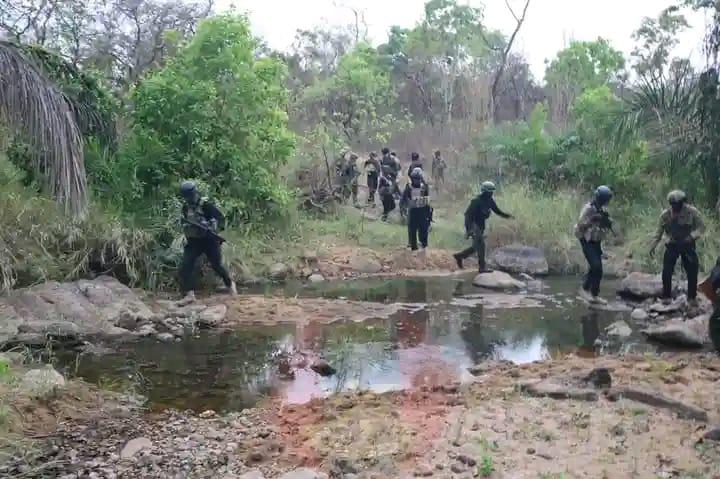
***Troops Destroy Terrorist Camp to Protect Residents
By Friday Idachaba, Lokoja
The Kogi State Government has issued a stern warning to churches operating late into the night or in vulnerable locations without security clearance, following intelligence of a planned bandit attack.
The Commissioner for Information and Communications, Kingsley Femi Fanwo, told newsmen in Lokoja on Wednesday that intercepted communications revealed criminals plotting to target a church in Ijumu Local Government Area. According to the commissioner, the bandits boasted they would profit from kidnapping worshippers during the service.
“Despite repeated advisories, some churches continue late-night operations. This is unacceptable amid prevailing security challenges,” Fanwo said. He stressed that no church is permitted to operate beyond 4:00 p.m., and those in isolated or bushy areas must relocate to safer premises.
Fanwo warned that violations of the protocol would attract sanctions. “This is not an attack on faith. It is a safety-first measure to protect lives,” he said, urging religious leaders to cooperate fully with security agencies.
The warning comes as the Nigerian Army’s 12 Brigade successfully overran a notorious terrorist enclave in the state, recovering a large cache of weapons and ammunition.
The counter-terrorism operation, led by Brigadier-General Kasim Umar Sidi, dismantled a camp linked to terrorist kingpins Kachalla Ibrahim and Shu’aibu, who have orchestrated criminal attacks across Kogi. Troops recovered over 2,000 rounds of 7.62 x 54mm ammunition and a box of high-velocity grenades before destroying the camp to prevent reoccupation.
State Security Adviser, Commander Jerry Omodara, commended the military for its swift and professional response. Fanwo added that the government is working closely with security agencies to sustain ongoing clearance operations.
Governor Ahmed Usman Ododo has reiterated his commitment to ending criminality in Kogi through a combination of proactive security measures and strict enforcement of preventive protocols, emphasizing that public safety remains the top priority.