


By John Akubo
Nigeria’s aviation authorities are facing renewed pressure to close persistent accessibility gaps at the nation’s airports as disability advocates and industry operators push for reforms that will make air travel safer, more independent and more predictable for Persons with Disabilities (PWDs).
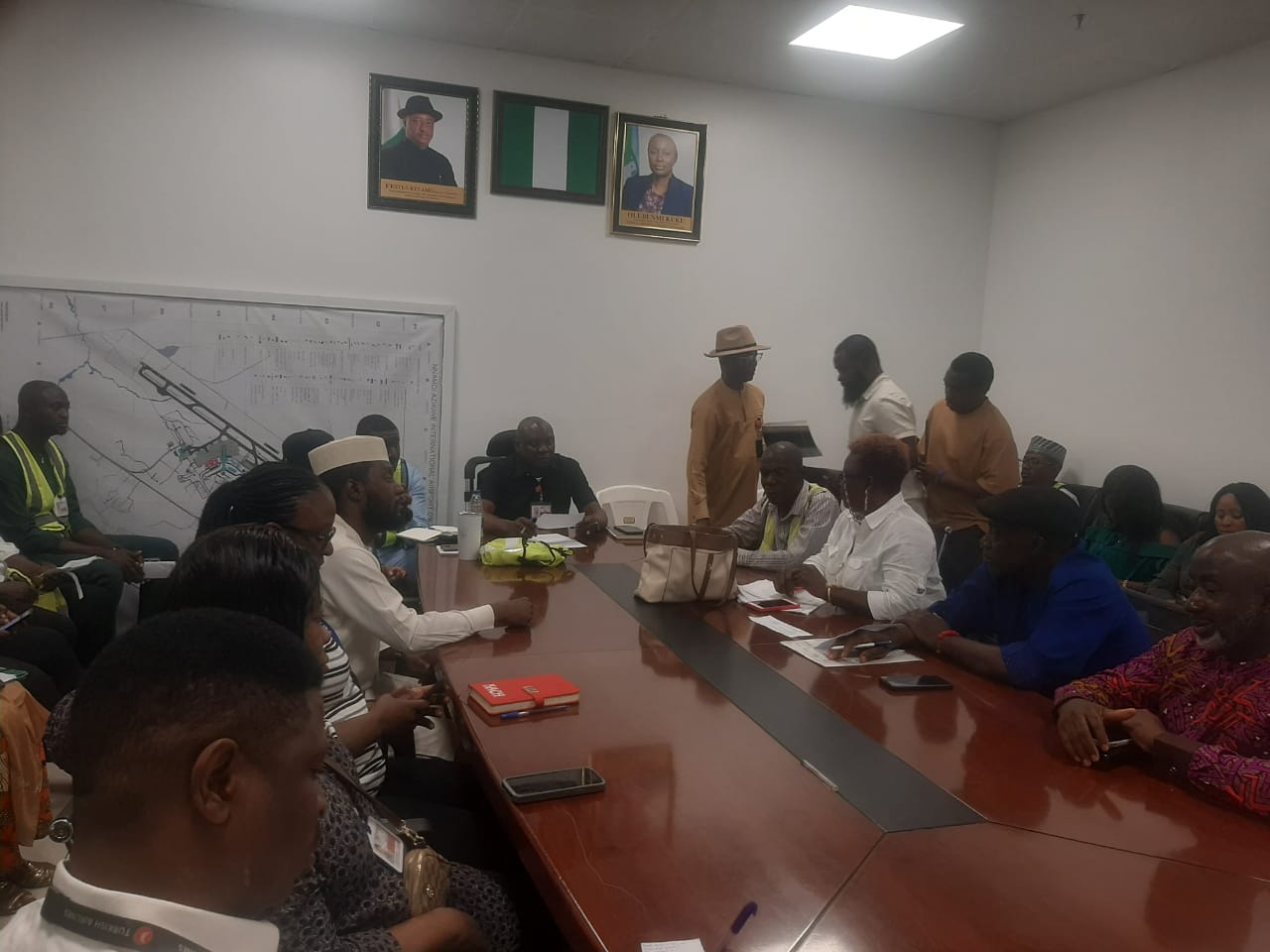
The renewed push followed an expanded stakeholders’ meeting between the Federal Airports Authority of Nigeria (FAAN) and Project Elevate, the National Aviation Accessibility Initiative, at the Nnamdi Azikiwe International Airport (NAIA), Abuja.
Rather than focusing solely on the provision of wheelchairs, lifts and ramps, participants at the meeting placed emphasis on the need to overhaul the entire passenger-assistance chain—from airport infrastructure and communication systems to airline procedures and the conduct of ground-handling personnel.
The meeting, held on Wednesday, August 5, followed earlier assessment visits and consultations by Project Elevate aimed at identifying barriers confronting passengers with disabilities within Nigeria’s aviation system.
Team Lead of Project Elevate, Comrade Abiodun Ozurumba, popularly known as Fantastic Bibi, commended FAAN for opening its doors to disability advocates but stressed that significant gaps remained.
She identified poor attitudes among some airport personnel, inaccessible or steep ramps, non-functional lifts in some areas and inadequate communication facilities for Deaf passengers as issues requiring urgent attention.
According to her, accessibility should not be treated as an optional service but as an integral part of aviation operations.
The discussions also exposed the need for clearer rules governing the treatment of passengers with different forms of disability.
Dr Adebukola Adebayo, a World Bank Consultant on Accessibility and a member of the blind community, recounted an experience in which he was left underneath an aircraft for about 30 minutes despite being accorded priority status as a passenger with a disability.
He also challenged the practice by some airlines of requiring blind passengers to travel with aides even when they are capable of travelling independently.
Adebayo advocated the development of a procedural aviation accessibility handbook that would spell out the rights of PWD passengers and clearly explain the assistance available to them at airports.
He further proposed that the National Commission for Persons with Disabilities (NCPWD) introduce standard disability identification cards to prevent impersonation and improve the delivery of specialised services.
For Deaf passengers, the major concern remains access to information.
Architect Ismail Muhammed, representing the President of the National Association of the Deaf, Alhaji Haruna, said Deaf travellers had missed flights because important announcements were made exclusively through public address systems.
He called for airports to combine audio announcements with digital visual displays and sign-language interpretation.
In response, Project Elevate announced plans to donate a 70-inch digital display screen to FAAN for installation at a strategic location within the airport.
The intervention is expected to provide Deaf passengers with easier access to critical travel information.
Ground-handling companies also used the meeting to outline accessibility measures already introduced at NAIA.
Precision Aviation Handling Company Limited said it currently provides designated drop-off points, trolley services, priority processing by Customs and Immigration, automated entrance doors and cabin wheelchairs suitable for passengers with different mobility requirements.
Skyway Aviation Handling Company PLC disclosed that four staircase climbers had been deployed at the airport to assist PWD passengers during aircraft boarding and disembarkation.
The company also proposed stronger information-sharing between airlines, ground handlers and the NCPWD, including the possibility of establishing a dedicated WhatsApp communication channel through which operators could receive advance notification of passengers requiring special assistance.
Another area of concern was the handling of passengers with serious medical conditions.
Oladimeji Sheriff, Manager of Primary Health Care, said passengers with reduced mobility or serious medical conditions sometimes arrive without valid Fit-to-Fly certificates, creating situations that can result in delayed or denied boarding.
He also warned that relatives or companions sometimes fail to notify airlines and ground handlers that a passenger requires special assistance, leaving airport personnel unaware until the passenger is already at the check-in or departure stage.
He stressed that early notification and compliance with established procedures would allow operators to prepare the necessary assistance and minimise delays.
Meanwhile, the Domestic Terminal Manager of NAIA, Bashir Amir, said newly installed lifts and escalators at the airport were fully operational.
He added that accessible toilet facilities had also been provided, while concerns raised about facilities at other locations, including Terminal Delta, would be examined.
The meeting, chaired by FAAN’s Head of Operations, NAIA Abuja, Peter Nuhu, ended with a renewed emphasis on collaboration between regulators, airport managers, airlines, ground handlers and disability organisations.
Beyond the individual interventions announced at the meeting, the broader demand from disability advocates is for accessibility to become a standard operating principle across Nigeria’s aviation industry.
For the sector, the emerging benchmark is no longer simply whether an airport has facilities for PWDs, but whether those facilities work, whether information reaches every passenger and whether assistance is delivered without compromising the dignity or independence of persons with disabilities.
The Abuja engagement therefore represents a potentially important step towards moving Nigeria’s aviation accessibility conversation from policy commitments to enforceable standards and measurable passenger experience.
