


“Poverty does not create disbelief. But it creates the marketplace where faith can be bought and sold. When stomachs are empty, the loudest voice is not the most truthful — it is the one with bread”.
BY GARKUWAN GASKIYA _
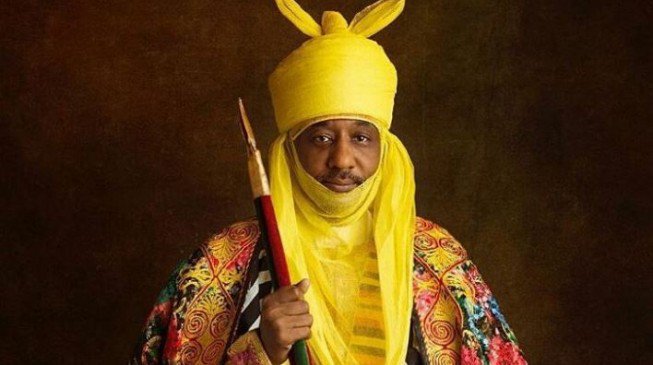
His Highness, the Emir of Kano, Muhammad Sanusi II, has issued a warning that should keep every leader in Northern Nigeria awake at night.

He said poverty in the region now poses a direct threat to the survival of Islam. His reasoning was blunt: poverty exposes people to religious manipulation and conversion. When people are hungry, he implied, faith becomes negotiable.
It is a hard statement. But it is also a necessary one.
Why the Emir’s Warning Holds Weight
The Emir’s logic is simple and historically grounded: Poverty + Vulnerability + Manipulation = Threat to Faith.
Across time and across religions, economic hardship creates an opening. In Northern Nigeria today, we see it. Some NGOs, missionary organizations, and even extremist groups have long used food, scholarships, medical care, and cash to gain access to vulnerable communities.
When a father cannot feed his children for three days, the question of creed can become secondary to the question of survival. “Whoever helps me” can override “whoever shares my belief.”
That is what the Emir means by “faith without dignity is fragile.”
Beyond that, poverty is dismantling the very institutions that carry Islam forward. It drives crime, drug abuse, and migration. It empties mosques. It closes madrasas. It scatters families. When the Ummah is broken and on the move, how do we teach our children the Quran, the Sunnah, and our values?
But We Must Add Nuance
To be fair, poverty does not automatically produce disbelief. Northern Nigeria has been poor for a long time, yet Islam remains the bedrock of our identity. In many of our poorest villages, you will find the strongest adherence to prayer, fasting, and community.
Many Muslims respond to hardship with more — sabr, more charity, and more reliance on Allah — not apostasy.
We must also admit that manipulation is not one-sided. Poverty is also used to recruit into extremist groups within Islam. So, the threat is twofold: conversion out, and radicalization within.
And poverty is not the only disease. Bad governance, corruption, unemployment, and collapse of education are the soil in which this problem grows. To blame only poverty is to let policymakers off the hook.
The Maqasid Argument
I believe the Emir is making a deeper point rooted in —maqasid al-Shariah — the objectives of Islamic law.
Islam commands the protection of five things: religion, life, intellect, lineage, and wealth. `Hifz ad-deen` cannot happen if `hifz an-nafs` and `hifz al-mal` are ignored.
When the government fails to provide basic needs, the religious space becomes a bidding war. The person with the deepest pocket — be it a politician, a foreign mission, or an extremist preacher — gets to define the narrative. That is dangerous for any society, and for any faith.
So What Do We Do?
The Emir’s warning must not end in fear. It must start a movement.
Protect Economic Dignity*: Jobs, skills, and agriculture must be prioritized. No policy should be called “pro-North” if it does not put food on the table.
Fix Our Schools: The almajiri system and out-of-school crisis must be reformed. An uneducated child is a child that anyone can claim.
Strengthen Families: We must return to responsible parenthood. Islam places — nafaqah — financial responsibility — squarely on parents. The state must also support vulnerable families so children are not abandoned.
Demand Accountable Leadership*: Both political and religious leaders must shift from selfish politics to service. Religion and office are — Amanah— not businesses.
Conclusion: Feed First, Then Preach
The Emir is not predicting the collapse of Islam in the North. He is warning us about the conditions that could lead to it.
Poverty does not create disbelief. But it creates the marketplace where faith can be bought and sold. When stomachs are empty, the loudest voice is not the most truthful — it is the one with bread.
If we want Islam to survive and thrive in Northern Nigeria, we must do more than defend it with words. We must defend it with jobs, schools, justice, and compassion.
As the Emir has reminded us, protecting religion also means protecting the people who practice it.
…Garkuwan Gaskiya is a public affairs commentator focused on governance, faith, and development in Northern Nigeria.
