


By Salihu Othman Isah
This is not an indictment of Senator Oluremi Tinubu, nor is it an attempt to cast aspersions on the First Lady of Nigeria.
It is a call to speak truth to power and to ask a difficult question: what does a birthday celebration mean in a country where millions of citizens are struggling with the rising cost of food, transport, healthcare and education?
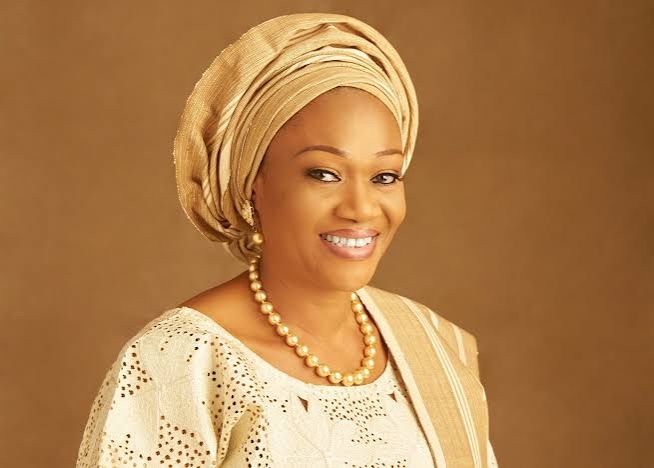
On Tuesday, the drums will roll in the Presidential Villa as Mrs. Oluremi Tinubu marks her 66th birthday.
Tributes are already pouring in.
The President of Maryam Abacha American University of Nigeria, MAAUN Group of Universities, Professor Adamu Abubakar Gwarzo, described the First Lady as an “epitome of humility and simplicity” and praised her contributions to women and youth empowerment.
More tributes are expected from politicians, governors, ministers, contractors and other associates of the administration.
But beyond the birthday messages and encomiums lies a more uncomfortable reality: how are ordinary Nigerians experiencing the country since the Tinubu administration came to power on May 29, 2023?
For many families, the answer is measured not in political speeches but in the price of food, transportation, rent, school fees and healthcare.
Rice, cooking gas, petrol and other essential commodities have become central to the daily struggle of millions of households.
That is why the First Lady’s birthday offers an opportunity for reflection rather than simply celebration.
Mrs. Tinubu is not merely the wife of the President. She is a former senator and the head of the Renewed Hope Initiative, through which she has undertaken programmes focused on women, youths, education, healthcare and vulnerable Nigerians.
That public role naturally invites public scrutiny.
When Professor Gwarzo describes her as an epitome of humility and simplicity, Nigerians are entitled to ask what those qualities should mean in practical terms for the poorest citizens.
What does empowerment mean to the market woman struggling to replace her stock?
What does hope mean to the mother who cannot afford school expenses for her children?
What does peace mean to families displaced by violence in parts of the country?
These are not questions against one woman. They are questions about governance and the responsibility of those occupying positions of influence.
Nigeria’s security challenges have continued to affect communities across the country. Farmers in several states have faced attacks and displacement, while millions of citizens remain vulnerable to poverty and food insecurity.
Against that background, public celebrations involving political leaders can easily appear disconnected from the realities confronting ordinary citizens.
The same question applies to women’s empowerment.
If a woman receives a small grant but the cost of food, transportation and business inputs continues to rise faster than her income, how sustainable is that intervention?
Empowerment should not merely provide temporary relief. It should create an environment in which women can build businesses, educate their children, access healthcare and live with dignity.
This is where the government’s economic policies deserve sustained scrutiny.
The removal of petrol subsidy, naira reforms and other economic measures were presented by the administration as necessary steps toward long-term economic reform. The government has continued to argue that these policies will ultimately strengthen the economy and improve living conditions.
But the immediate burden on households has been severe.
That tension between long-term reform and short-term hardship remains one of the most important issues confronting Nigeria.
And it should be part of the conversation surrounding every celebration involving the nation’s political leadership.
Mrs. Tinubu’s birthday should therefore not become another occasion for extravagant praise without reflection.
If she truly represents humility and simplicity, one meaningful response would be to encourage supporters to channel some of the money normally spent on birthday advertisements and celebrations into scholarships, maternal healthcare, food support, skills acquisition and assistance for displaced families.
That would turn celebration into social impact.
There is nothing wrong with praying for the First Lady or wishing her a long and healthy life.
But religious and cultural values also encourage leaders and citizens to speak honestly about the condition of society.
Nigeria needs that honesty now.
At 66, Mrs. Tinubu has occupied several significant public roles. She has served as a senator and is now the First Lady of Africa’s most populous country.
That history gives her an unusual platform.
She can use that platform not merely to celebrate achievements but also to amplify the concerns of women who cannot afford food, girls at risk of dropping out of school, mothers struggling to access healthcare and families displaced by insecurity.
Her greatest birthday gift may therefore not be another tribute, a newspaper advertisement or a ceremonial honour.
It could be her voice.
A voice urging the government to confront the cost-of-living crisis more aggressively.
A voice demanding stronger protection for women and children.
A voice insisting that economic reforms must ultimately translate into better lives for ordinary Nigerians.
A voice reminding those in power that behind every economic statistic is a family trying to survive.
The birthday celebration will come and go.
The flowers will fade. The tributes will disappear from newspaper pages. The photographs will eventually become archival material.
But the struggle of the ordinary Nigerian will continue.
That is why the real question at 66 is not simply whether Senator Oluremi Tinubu deserves birthday wishes.
She does.
The more important question is what kind of Nigeria she, her husband and the political class will leave behind for the next generation.
A Nigeria where women have genuine economic opportunities.
A Nigeria where children can attend school regardless of their parents’ income.
A Nigeria where healthcare is accessible.
A Nigeria where farmers can return safely to their farms.
A Nigeria where families can afford three meals a day.
That would be a celebration worth remembering.
And that would make the idea of Renewed Hope meaningful to the people who need it most.