

Close Menu
National Update
    Facebook X (Twitter) Instagram
    Trending
    • Dalung Urges Public to Check on Anthony Kila Amid Credentials Controversy
    • Shell Sells Nigeria Gas Distribution Business to Local Firm
    • Senate Backs Treatment Over Jail for Nigerians Who Attempt Suicide
    • Tinubu’s Campaign Net Widens as APC Drafts Wike, Adeleke, Soludo
    • Kogi Court Sentences Abdulmutalib Abduljabar to Death for Murder
    • FG Launches D30 Platform to Track Creative, Tourism Investment Opportunities
    • 2027: APC Can’t Win Three Top-Voting States Without Rigging — Isaac Fayose
    • 2027: Timi Frank Urges Trump to Sanction INEC Officials, Judges
    Facebook X (Twitter) Instagram
    National UpdateNational Update
    Subscribe
    • News
    • Politics
    • Opinion
    • Economy
    • Entertainment
    • Health
    • Security
    National Update
    Home»Opinion

    When Hunger Speaks Louder Than Faith: The Emir’s Warning To The North

    By National UpdateAugust 3, 2026 Opinion No Comments4 Mins Read
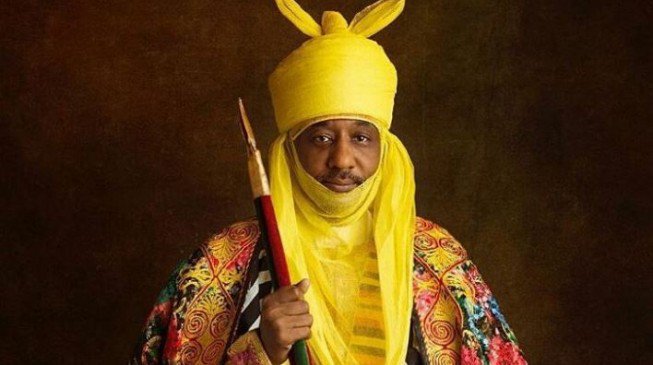
    Emir of Kano, Sanusi Lamido
    Share
    Facebook Twitter WhatsApp LinkedIn Email

    “Poverty does not create disbelief. But it creates the marketplace where faith can be bought and sold. When stomachs are empty, the loudest voice is not the most truthful — it is the one with bread”.

    BY GARKUWAN GASKIYA _

    His Highness, the Emir of Kano, Muhammad Sanusi II, has issued a warning that should keep every leader in Northern Nigeria awake at night.


    He said poverty in the region now poses a direct threat to the survival of Islam. His reasoning was blunt: poverty exposes people to religious manipulation and conversion. When people are hungry, he implied, faith becomes negotiable.

    It is a hard statement. But it is also a necessary one.

    Why the Emir’s Warning Holds Weight

    The Emir’s logic is simple and historically grounded: Poverty + Vulnerability + Manipulation = Threat to Faith.

    Across time and across religions, economic hardship creates an opening. In Northern Nigeria today, we see it. Some NGOs, missionary organizations, and even extremist groups have long used food, scholarships, medical care, and cash to gain access to vulnerable communities.

    When a father cannot feed his children for three days, the question of creed can become secondary to the question of survival. “Whoever helps me” can override “whoever shares my belief.”

    That is what the Emir means by “faith without dignity is fragile.”

    Beyond that, poverty is dismantling the very institutions that carry Islam forward. It drives crime, drug abuse, and migration. It empties mosques. It closes madrasas. It scatters families. When the Ummah is broken and on the move, how do we teach our children the Quran, the Sunnah, and our values?

    But We Must Add Nuance

    To be fair, poverty does not automatically produce disbelief. Northern Nigeria has been poor for a long time, yet Islam remains the bedrock of our identity. In many of our poorest villages, you will find the strongest adherence to prayer, fasting, and community.

    Many Muslims respond to hardship with more — sabr, more charity, and more reliance on Allah — not apostasy.

    We must also admit that manipulation is not one-sided. Poverty is also used to recruit into extremist groups within Islam. So, the threat is twofold: conversion out, and radicalization within.

    And poverty is not the only disease. Bad governance, corruption, unemployment, and collapse of education are the soil in which this problem grows. To blame only poverty is to let policymakers off the hook.

    The Maqasid Argument

    I believe the Emir is making a deeper point rooted in —maqasid al-Shariah — the objectives of Islamic law.

    Islam commands the protection of five things: religion, life, intellect, lineage, and wealth. `Hifz ad-deen` cannot happen if `hifz an-nafs` and `hifz al-mal` are ignored.

    When the government fails to provide basic needs, the religious space becomes a bidding war. The person with the deepest pocket — be it a politician, a foreign mission, or an extremist preacher — gets to define the narrative. That is dangerous for any society, and for any faith.

    So What Do We Do?

    The Emir’s warning must not end in fear. It must start a movement.

    Protect Economic Dignity*: Jobs, skills, and agriculture must be prioritized. No policy should be called “pro-North” if it does not put food on the table.

    Fix Our Schools: The almajiri system and out-of-school crisis must be reformed. An uneducated child is a child that anyone can claim.

    Strengthen Families: We must return to responsible parenthood. Islam places — nafaqah — financial responsibility — squarely on parents. The state must also support vulnerable families so children are not abandoned.

    Demand Accountable Leadership*: Both political and religious leaders must shift from selfish politics to service. Religion and office are — Amanah— not businesses.

    Conclusion: Feed First, Then Preach

    The Emir is not predicting the collapse of Islam in the North. He is warning us about the conditions that could lead to it.

    Poverty does not create disbelief. But it creates the marketplace where faith can be bought and sold. When stomachs are empty, the loudest voice is not the most truthful — it is the one with bread.

    If we want Islam to survive and thrive in Northern Nigeria, we must do more than defend it with words. We must defend it with jobs, schools, justice, and compassion.

    As the Emir has reminded us, protecting religion also means protecting the people who practice it.

    …Garkuwan Gaskiya is a public affairs commentator focused on governance, faith, and development in Northern Nigeria.

    Previous ArticleFalana Raises Alarm Over ‘Disturbing Pattern’ of Suspicious Deaths, Seeks Independent Probes
    Next Article Budget Is About Choices, Not Cash — ActionAid Tells Governments

    Keep Reading

    A Look at Lean Government and Ostentation

    Onnoghen’s Ordeal: How Power Changes Hands, but History Never Forgets

    Eziokwu, Echi Noo Ebea N’Enugu State (2)

    Eziokwu, Echi Noo Ebea Na Enugu State (1)

    Tinubu’s Road Approval: HURIWA Demands Action as South-East Communities Wait

    Teachers: Building Bridges of Faith, Knowledge and Peace in a Divided World

    Add A Comment

    Comments are closed.

    Advert
    VGC Advert
    Most Viewed Posts
    • Breaking: Intrigues, as ADC suspends its presidential candidate, Kachikwu, accuses him of blackmail (1,773)
      The African Democratic Congress (ADC) has suspended its presidential candidate Dumebi Kachikwu, from the party, accusing him of false, misguided and defamatory video he made and circulated, among other infractions. The party also considered Kachikwu's action as "smacks of crass irresponsibility, gross indiscipline, disingenuous scandalization and blackmail, and completely unfit of someone who wants to
    • Concerned Religious Prayer Forum Responds to Criticism of National Prayer Initiative (1,253)
      The Concerned Religious Prayer Forum has issued a statement clarifying its mission and responding to recent criticisms surrounding its seven-day national prayer initiative. Established as a non-governmental organization on January 9, 2024, the Forum emphasizes that it is an independent group composed of citizens motivated by a shared desire to promote peace, unity, and prosperity
    • Qatar Charity Empowers 60 Jigawa Widows, Vulnerable Persons with ₦300m (1,082)
      By Ahmed Rufa’i, Dutse The Qatar Charity Organization has donated economic empowerment equipment valued at over ₦300 million to 60 widows and vulnerable persons across the 27 local government areas of Jigawa State. The items were distributed during a ceremony held at the Banquet Hall of the Government House, Dutse, and presided over by the
    • Ex-Kogi Gov’s Arraignment Stalled at the instance of EFCC Counsels (1,075)
      The arraignment of the former Governor of Kogi State, Yahaya Bello, on an alleged money laundering case instituted against him by the Economic and Financial Crimes Commission (EFCC), has been adjurned to June 27, by the Federal High Court, in Abuja, based on an agreement by the counsels to the two parties. A new date,
    • North Central Serving Governor withdrew N60 billion cash in six years ― EFCC (1,014)
      A serving Nigerian governor has allegedly withdrawn N60billion from his state’s purse. The Economic and Financial Crimes Commission (EFCC) said that he has lifted about N60 billion cash from state coffers in about his six years in office. The governor remains unnamed and his state, partially identified as domiciling in the North Central of the

    Latest News

    Dalung Urges Public to Check on Anthony Kila Amid Credentials Controversy

    October 13, 2026

    Shell Sells Nigeria Gas Distribution Business to Local Firm

    October 13, 2026

    Senate Backs Treatment Over Jail for Nigerians Who Attempt Suicide

    October 13, 2026

    Tinubu’s Campaign Net Widens as APC Drafts Wike, Adeleke, Soludo

    October 13, 2026

    Kogi Court Sentences Abdulmutalib Abduljabar to Death for Murder

    October 13, 2026

    Subscribe to Updates

    Get the latest creative news from FooBar about art, design and business.

    National Update
    Facebook X (Twitter) Instagram
    © 2026 National Update. Designed by Lamark Cre8ives.

    Type above and press Enter to search. Press Esc to cancel.