


By Emmanuel Nnadozie Onwubiko
President Bola Ahmed Tinubu is a lucky man. He is a lucky husband and a lucky father. The President may not be forgotten in a hurry, long after he has served out his tenure as the leader of Nigeria, the largest Black so-called democracy in the world. I say so because of two major figures who have added glamour to the tenure of Mr President: his wife, Senator Oluremi Tinubu, a former senator, and his son, Mr Seyi Tinubu, an accomplished lawyer and entrepreneur. Both personalities have used their proximity to the highest political office in the land to position themselves as philanthropists who are assisting their husband and father in alleviating poverty.
Whether Nigerians would acknowledge them as such, however, is debatable, given that some key policies of the current administration have contributed to the spread of multidimensional poverty on an unprecedented scale. The removal of the fuel subsidy led to a sharp increase in the pump price of petrol, which in turn worsened the cost-of-living crisis. Furthermore, the government’s decision to allow the national currency to float freely against major international currencies such as the US dollar, euro and pound sterling unleashed hyperinflation and has made the naira one of the weakest-performing currencies in the world. Consequently, the purchasing power of the naira has continued to decline.

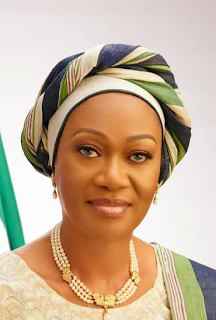
This piece focuses on Senator Oluremi Tinubu’s activities in her capacity as the wife of the President of Nigeria, a position colloquially known as the First Lady. Therefore, it will not examine the activities of President Tinubu’s son, Barrister Seyi Tinubu.
Over the past three years, the wife of the President has made whistle-stop visits to different states of the federation in an effort to showcase her philanthropic initiatives. These numerous visits have seen her donate substantial sums of money and materials to various groups across the country.
During one of these visits, she attracted controversy when she recommended the small-scale business of frying akara as a sustainable economic activity capable of empowering Nigerian households. Many Nigerians disagreed with her, arguing that frying akara is not a sustainable pathway to long-term economic empowerment.
Amid the controversy generated by the First Lady’s suggestion, which was widely criticised by many social media commentators and vocal Nigerians, President Tinubu affectionately referred to his wife as “Mama Akara” while hosting journalists covering the State House at the inaugural Presidential Dinner with the media.
Incidentally, Mrs Oluremi Tinubu had earlier donated a brand-new bus to the State House Press Corps in Abuja. Perhaps this First Lady has made more donations than any of her predecessors, benefiting various groups, including military retirees, market women, women leaders of the All Progressives Congress, who each received brand-new luxury buses, and journalists covering the Presidency.
If the truth must be told, however, the akara business is not a viable large-scale solution to the severe economic hardship inflicted on millions of Nigerians by the flagship economic policies of President Tinubu, particularly the removal of the fuel subsidy and the continued devaluation of the naira. This is because akara is not a business that can sustainably accommodate a large number of participants. If the majority of poor rural and urban women were to engage in frying and selling akara, there simply would not be enough consumers to support them all. Consequently, the capacity of the business to reduce the growing rate of poverty is limited.
A more sustainable approach would be for the wife of the President to work with state governments in establishing shopping outlets and structured markets for poor rural and urban women rather than giving them ₦50,000, which is barely enough to establish and sustain a business until it becomes profitable.
What would more effectively reduce poverty is for the Tinubu administration to reduce the cost of governance, trim the huge number of political appointees receiving salaries and allowances, and redirect those resources toward rebuilding the country’s deteriorating infrastructure in education, healthcare and road transportation. Government should also create an enabling environment in which millions of Nigerians can acquire practical skills that would enable them to become self-reliant in their chosen trades.
Government must also intervene to check the continuous increase in fuel prices. Since fuel pricing has largely been left to so-called market forces, marketers have effectively fixed prices at levels that have crippled millions of small businesses while worsening unemployment and poverty on a massive scale.
Even in advanced capitalist societies, governments intervene where necessary. The duty of every responsible government is to regulate the activities of private service providers to ensure that citizens are not deprived of the essential goods and services required for a decent standard of living.
The argument of this writer is that distributing ₦50,000 each to thousands of women to start akara businesses is, at best, too modest an intervention to become the central strategy for poverty eradication in Nigeria.
There is, however, another major intervention undertaken by the wife of the President during her visit to Abia State. She announced significant support aimed at reviving the centuries-old Akwete weaving industry in the state.
The First Lady, Senator Oluremi Tinubu, told members of the Akwete weaving community that she would wear traditional Akwete fabric if President Bola Tinubu is re-elected for a second term in office, describing the indigenous textile as comfortable, breathable and a symbol of Nigeria’s rich cultural heritage.
Mrs Tinubu made the pledge during her maiden visit to the Akwete Weaving Cooperative Village in Ukwa East Local Government Area of Abia State, where she also announced a ₦2 billion donation to support the revitalisation and expansion of the centuries-old weaving industry.
Addressing members of the cooperative, the First Lady said she was impressed by the quality of the locally woven fabric and expressed her commitment to promoting it.
“If God brings my husband back for a second term, I’ll be wearing a buba and wrapper made from Akwete. I am going to be wearing that because it is very soft, breathable cotton,” she said.
Mrs Tinubu commended the women of the Akwete Weaving Cooperative for sustaining the age-old craft, noting that the tradition has continued to thrive because it has been handed down from one generation to another. She said it was encouraging to see younger people learning the skill from their families, stressing the importance of preserving Nigeria’s indigenous crafts and cultural identity.
“I saw young people in their families doing the same thing. So, it is a craft that is transferred from one generation to another,” she added.
The First Lady urged Nigerians to embrace Akwete fabric and other locally produced textiles, saying that increased patronage would help preserve indigenous craftsmanship, create jobs and improve the livelihoods of local artisans.
She also reaffirmed her support for initiatives aimed at empowering women and promoting local industries, noting that the ₦2 billion intervention would contribute to strengthening the Akwete weaving industry and expanding economic opportunities for those engaged in the craft.
Ordinarily, this writer would commend any act of generosity that is genuinely intended to support struggling families, help them sustain their businesses and industries, and enable them to provide for their households.
However, there are questions that agitate my mind. How will this donation be structured, and what arrangements have been put in place to ensure that the money reaches the intended beneficiaries? What roles will government institutions such as the Bank of Industry, the Federal Ministry of Industry, Trade and Investment, and the Abia State Ministry of Trade and Industry play in ensuring accountability and sustainability? There is also the question of transparency. Where did the ₦2 billion come from? Is it an outright grant to the women, or will it be administered as credit facilities to members of the cooperative society that was announced as the beneficiary of the substantial financial intervention?
These are legitimate questions regarding the administration of the funds to the intended beneficiaries. They are important because accountability and transparency are fundamental pillars of democracy, which President Tinubu says his administration is committed to upholding.
Nevertheless, the wife of the President deserves to be remembered positively for her efforts to revitalise the Akwete weaving industry. She should encourage her husband to direct the relevant federal agencies, together with the Federal Ministry of Industry, Trade and Investment, to visit the Akwete weaving community in Abia State and other communities where indigenous textile weaving is practised. Their task should be to develop seamless, institutionalised mechanisms through which lending institutions can continually provide affordable credit facilities to these artisans.
Likewise, the Abia State Government and other state governments where similar small-scale but economically significant textile-weaving enterprises exist should establish effective monitoring systems to ensure that loans granted to beneficiaries are repaid, thereby allowing others to benefit. Such an arrangement should become a sustainable revolving credit programme jointly supported by the Federal and state governments.
Besides, the wife of the President does not have to wait until her husband wins a second and final presidential term before wearing Akwete fabric. Is her decision to delay wearing it until then a political campaign strategy?
If Senator Oluremi Tinubu truly believes that Akwete is a high-quality textile, as this writer also believes it is, then the logical step would be for her to commission Akwete outfits from the weavers in Abia State and begin wearing them during her official engagements across Nigeria now. Her generous support for the Akwete Weaving Cooperative should not be perceived as part of a political campaign strategy.
The wife of President Tinubu can always return to the Akwete weaving community to campaign for her husband whenever the Independent National Electoral Commission officially declares the commencement of campaigns for the 2027 presidential election. At that stage, she may enlist the beneficiaries of the intervention to assist in mobilising support among other voters.
Emmanuel Nnadozie Onwubiko is the Founder of the Human Rights Writers Association of Nigeria (HURIWA) and a former National Commissioner of the National Human Rights Commission of Nigeria.
