


Fresh concerns are being raised about the strength of Nigeria’s electoral legal framework ahead of the 2027 general elections, following warnings that recent amendments to the Electoral Act may have weakened safeguards intended to protect the integrity of election results.
The concerns were raised by retired High Court judge and electronic evidence expert, Justice Ajileye, who said the amended law expands the use of technology for voter accreditation but still leaves significant gaps in the transmission and collation of results.
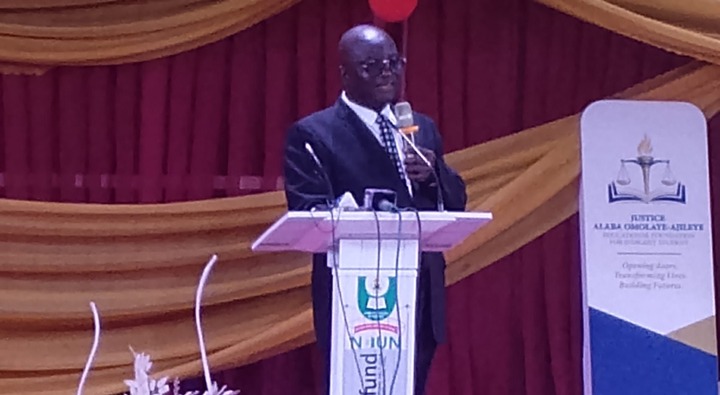
Speaking in Abuja at the public presentation of his books, Electronic Evidence (Second Edition) and Compendium of Cases on Electronic Evidence, Volume II (2020–2025), the retired jurist said the legislation contains provisions that could undermine the transparency the electronic reforms were meant to deliver.

According to him, the amended Electoral Act makes the Bimodal Voter Accreditation System (BVAS) compulsory for voter accreditation, but still allows election officials to revert to manual procedures whenever electronic transmission of results fails.
He said it is necessary to acknowledge technological limitations, but argued that the law does not set out strict conditions for abandoning electronic transmission.
“The weakness of the amendment is not that it recognises the possibility of technological failure,” he said. “The defect lies in making manual recording or manual collation the automatic fallback without imposing strict safeguards.”
Justice Ajileye warned that the absence of clearly defined procedures could create room for abuse, especially in politically sensitive polling units where claims of technical failure may be contested.
He asked who should determine that electronic transmission has truly failed, how many attempts should be made before manual collation is permitted, and what documentary or digital evidence should be required before officials can abandon electronic transmission.
In his view, the law does not adequately answer these questions, leaving legal grey areas that could weaken public confidence in election outcomes.
To strengthen the process, he proposed several safeguards, including compulsory incident reports by presiding officers, multiple electronically logged transmission attempts, certification of any technical failure by party agents and security personnel, preservation of results on secure offline devices, and mandatory transmission from the nearest location with network connectivity before manual collation is allowed.
He also urged the Independent National Electoral Commission (INEC) to publicly disclose every instance of failed electronic transmission, including the reasons, technical reports and digital logs tied to each incident.
Without such measures, he warned, the amendment risks providing “statutory cover to the very opacity that electronic transmission was introduced to eliminate.”
The retired judge’s intervention has revived debates that shaped legislative consideration of the Electoral Act amendment, during which lawmakers were divided over whether electronic transmission of results should be compulsory or whether INEC should retain discretion where technological challenges arise.
Supporters of mandatory electronic transmission argued that it would reduce opportunities for result manipulation during collation, while others insisted that poor network coverage in parts of the country made an absolute requirement unrealistic.
The final amendment retained electronic transmission but allowed manual alternatives where technical failures occur—a compromise that Justice Ajileye believes still requires stronger legal and operational safeguards.
His remarks come as political activity gradually gathers pace ahead of the 2027 general elections and as election stakeholders continue to push for reforms aimed at deepening public confidence in the electoral process.
The intervention is expected to renew calls for either further amendments to the Electoral Act or more detailed operational guidelines from INEC to ensure that manual fallback provisions are not exploited to undermine the credibility of election results.
