


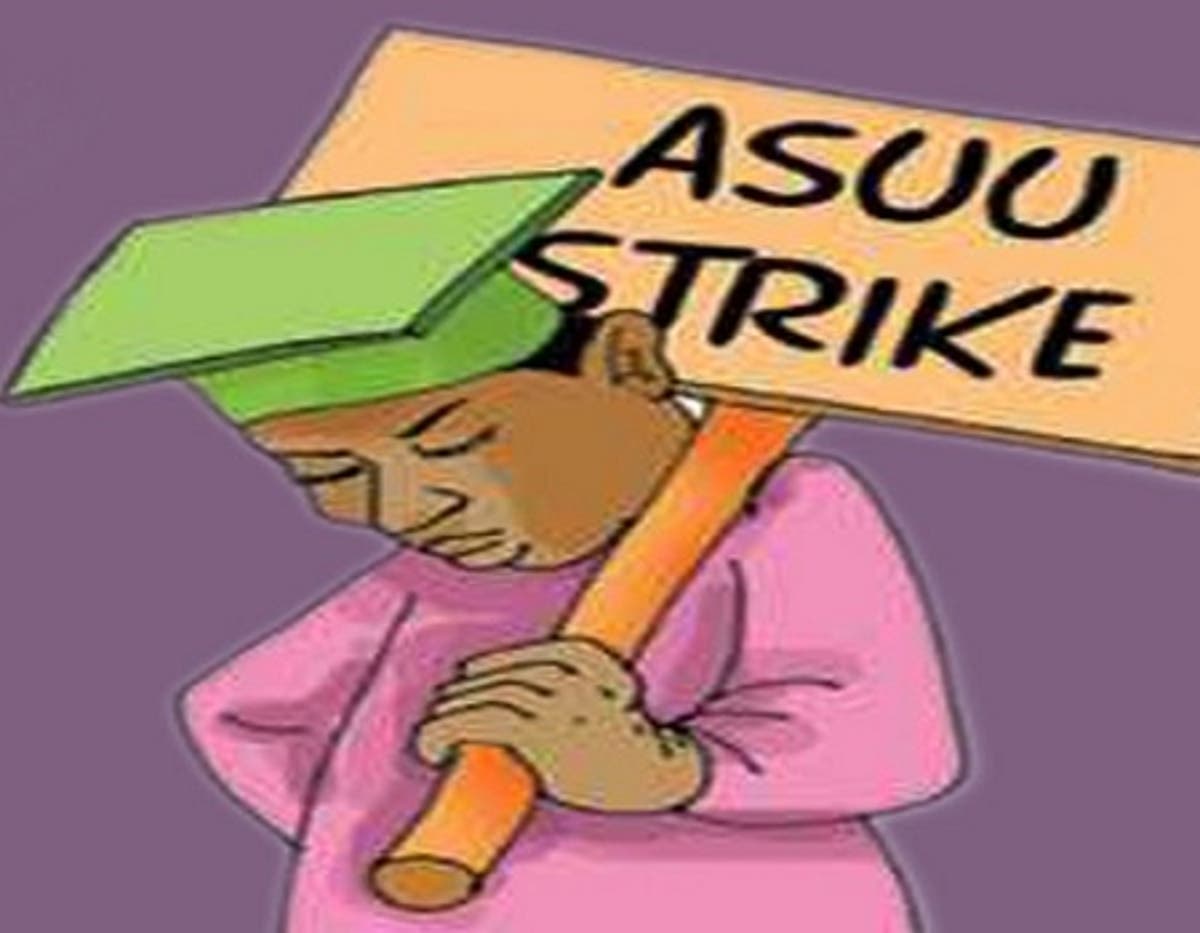
Nigeria’s public universities are once again on the brink of paralysis as the Academic Staff Union of Universities (ASUU) has declared a two-week total strike, accusing the Federal Government of insensitivity and failure to honour previous agreements.
The industrial action takes effect from 12:01 a.m. on Monday, October 13, 2025, following the expiration of a two-week ultimatum issued to the government to resolve long-standing issues affecting the education sector.
ASUU President, Prof. Christopher Piwuna, announced the decision on Sunday at a press conference in Abuja, describing it as a reluctant but unavoidable move after “years of unfulfilled promises.”

“Government has continued to ask for time without showing any concrete commitment. We have reached the limit of our patience,” Piwuna said.
He explained that the union’s National Executive Council (NEC) took the decision after a series of fruitless meetings with government representatives. According to him, ASUU’s patience has been stretched thin by the Federal Government’s repeated delays and half-measures.
Among ASUU’s key demands are the renegotiation of the 2009 ASUU-FGN agreement, sustainable funding of public universities, revitalisation of decaying infrastructure, and payment of outstanding arrears and deductions.
The union also cited victimisation of members at the Lagos State University (LASU), Prince Abubakar Audu University (KSU), and the Federal University of Technology, Owerri (FUTO) as unresolved grievances.
“Consequently, all branches of ASUU are hereby directed to withdraw their services from midnight, Monday, October 13. This warning strike shall be total and comprehensive,” Piwuna announced.
He urged civil society organisations, parents, and students to prevail on the government to act decisively within the two-week window, warning that failure to do so would trigger an indefinite shutdown.
“This struggle is not just about lecturers’ welfare — it is about saving the soul of Nigeria’s public universities,” the ASUU President declared.
The latest strike revives memories of prolonged shutdowns that have repeatedly disrupted Nigeria’s academic calendar, leaving students and parents frustrated. It also underscores the fragile state of labour relations in the education sector, where trust between the union and government has worn dangerously thin.
