


By: Lamara Garba Azare
Tinubu’s mass pardon blurs the line between compassion and compromise, raising a haunting question: when mercy favors the powerful, what becomes of justice?
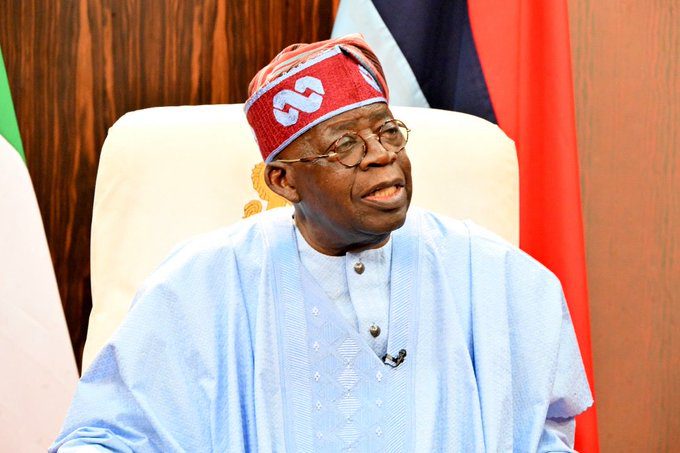
In the cold chambers of justice where verdicts echo louder than repentance, mercy often walks barefoot; uncertain, delicate, and controversial. Yet on a quiet Thursday, 9th October 2025 in Abuja, President Bola Ahmed Tinubu chose to give mercy its moment in the sun. One hundred and seventy-five names, men and women once chained by law, judged by society, and forgotten by time found themselves reborn under the presidential prerogative of mercy.


Among them, one name stirred the nation’s conscience: Maryam Sanda, the woman whose story of love turned lethal dominated headlines and divided hearts. Convicted for the killing of her husband, Biliyaminu Bello, she had spent nearly seven years behind the walls of Suleja Medium Security Custodial Centre. Her release, the presidency said, was grounded in remorse, good conduct, and the pleas made on behalf of her children. In that fragile justification lies a reflection of humanity’s most ancient moral dilemma: when does punishment end and forgiveness begin?
Mercy is a double-edged virtue , sacred to philosophers and yet scandalous to the wounded. It humanizes justice but unsettles those who still mourn their losses.
Indeed, for some Nigerians, Tinubu’s gesture was an act of compassion; for others, it was a dangerous precedent, a romanticization of crime in a society already burdened by moral erosion. It most be noted that when justice is made to kneel before sentiment, the nation loses its moral compass.
Yet to understand mercy is to understand the nature of humanity itself. Punishment, as Plato once mused, is “meant to heal the soul not just to avenge it”.
However, when the state extends mercy too freely, it certainly risks cheapening both justice and compassion. Therefore, in forgiving Maryam Sanda, the presidency might have thought it was healing a broken woman, but many Nigerians see a different story; one of privilege and selective sympathy. Unarguably if repentance alone could open prison gates, then the poor who rot in cells without lawyers or influence would have been free long ago.
Beyond Sanda’s story lies a tapestry of forgotten faces; drug offenders, corrupt officials, miners, traffickers, and old men whose crimes now live longer than their strength. Some were guilty of greed; others of hunger. A seventy-year-old man once jailed for cannabis; a 20-year-old boy imprisoned for illegal mining; a teacher-turned-fraudster; a soldier whose gun betrayed his conscience. Perhaps, each name on that list tells a story of despair, temptation, and the struggle to survive in a land where opportunity wears the mask of crime.
Therefore, to forgive them is not to excuse their wrongs but to affirm faith in transformation. For many, prison became a paradoxical classroom a place of confinement that taught freedom. Some acquired vocational skills; others pursued degrees through the National Open University of Nigeria. The blackboards of correctional centres bore witness to a kind of education the world rarely talks about which are the education of the soul. One of the pardoned, a man once sentenced for drug trafficking, became a mentor for younger inmates, preaching the gospel of change. Another, a miner from Zamfara, learned to read for the first time in prison. These are quiet revolutions, invisible to headlines but powerful enough to challenge the idea that people are forever defined by their worst mistakes.
But the question remains: should remorse alone guarantee release? Is mercy still virtue when it makes the innocent feel betrayed? The answer depends on whether we view justice as a contract or a confession. In a nation where thousands languish for petty theft, where pre-trial detainees rot longer than their eventual sentences, presidential mercy that favours the high-profile seems not like compassion, but contradiction.
Indeed, President Tinubu’s decision has revived memories of past pardons that blurred the lines between mercy and manipulation. Nigerians remember how, in 2013, the Jonathan administration sparked outrage for pardoning former Bayelsa governor Diepreye Alamieyeseigha, convicted for corruption. They remember how powerful names have often walked free while ordinary men died awaiting trial. Clemency in Nigeria, it seems, is not about the spirit of the law but the status of the convict.
And yet, there is another layer, the symbolic pardon of figures like Major-General Mamman Vatsa and Sir Herbert Macaulay, both long dead. Tinubu’s decision to forgive the dead and the living in one stroke reads like an attempt to blend history with morality. But mercy for the dead costs nothing. It is the living who must bear the consequences of forgiveness. When the same decree that absolves a nationalist wronged by colonial powers also frees a convicted murderer, it collapses the moral distance between martyrdom and murder.
Mercy, in principle, is divine; in politics, it is often selective. In the shadow of Tinubu’s economic reforms that have left millions gasping under inflation, this gesture feels mistimed, a display of compassion for convicts when the law-abiding are crushed by hardship. What does it say to the market woman who obeys the law but cannot feed her children, that the state’s mercy flows more easily to the guilty than to the governed?
Behind the poetry of forgiveness lies a bitter truth, is it apt to say Nigeria’s justice system remains unequal. Many of those freed are victims of poverty and policy, yes, but their freedom exposes a system that bends to visibility. Those without names, those buried alive in cells without charge, those who committed no crime beyond being poor they are the unseen casualties of this mercy. When justice becomes a privilege, mercy becomes mockery.
Some defenders of the president argue that mercy, by its nature, must shock. They say it is an act of leadership to forgive when forgiveness is least popular. They cite religion that God forgives sinners daily, that the state too must learn to heal. But God, unlike governments, sees the heart. Human institutions must also see fairness. Mercy without equity is hypocrisy wearing a halo.
In the end, Tinubu’s gesture reveals more about the state of the Nigerian conscience than about the convicts themselves. We live in a nation where outrage is selective, where some crimes are sins and others are strategies. When the mighty fall, we find reasons to pity; when the weak stumble, we demand blood. This is the contradiction that mercy exposes not just who is forgiven, but who is never given a chance to be forgiven.
Therefore, every pardon is a mirror held to the soul of the pardoner. It reveals whether a leader governs from vengeance or vision. In commuting death sentences, shortening jail terms, and reviving forgotten lives, Tinubu has joined the timeless debate between justice and mercy as well as between the letter of the law and the spirit of humanity. Yet mercy without justice breeds impunity, and forgiveness without reform breeds repetition. The gates of Suleja and Kirikiri may have opened, but the real prison remains; the moral paralysis of a country that forgives the guilty while punishing the poor.
Still, mercy is not evil in itself; it is the motive that determines its worth. If this act leads to true rehabilitation to a system that humanizes punishment, reforms inmates, and strengthens reintegration then it will stand as a moral milestone. But if it serves only to polish political benevolence, then it will remain a wound disguised as grace.
And so, as the sun sets over the courtyards of the pardoned, Nigeria must ask itself: who speaks for the victims? Who redeems the dead? Who pardons the powerless?
For justice is not just the punishment of crime it is the preservation of moral balance. A nation that forgives too easily soon forgets why laws exist. And a president who pardons the guilty without reforming the system that made them guilty risks turning mercy into misrule.
In the end, mercy is a sacred fire as it warms, but it also burns. Used wisely, it redeems nations; used carelessly, it consumes them. President Tinubu’s pardon may be written in the language of compassion, but history will judge it in the grammar of consequence. For every act of mercy leaves two legacies: the one written on paper, and the one written on conscience. The former fades with time; the latter never does.
Lamara Garba Azare is a journalist and public affairs commentator.
2 Comments
g5wvm1
wvcyjy