

Close Menu
National Update
    Facebook X (Twitter) Instagram
    Trending
    • HURIWA Demands Withdrawal of Nutritionists’ Bill, Cites Threat to Indigenous Food Heritage
    • Dalung Demands Probe Into Alleged Billions Paid For Ministerial Appointments
    • No Clear King – The Most Open Ballon D’Or Race In History
    • Wike’s Lawyer Accuses Opponent of Media Trial, Threatens VDM Over $2.1m Suit
    • Emir cautions Yari over Tinubu’s promises ahead of 2027 election
    • Nigeria at 66: The Productivity of Dignity – When the State Bows, the Nation Rises
    • Pate Blames Nigerians’ Blind Loyalty for Weak Democratic Accountability
    • Kano Govt Boosts NDLEA Operations with Equipment Donation
    Facebook X (Twitter) Instagram
    National UpdateNational Update
    Subscribe
    • News
    • Politics
    • Opinion
    • Economy
    • Entertainment
    • Health
    • Security
    National Update
    Home»Finance

    Nigeria–Rwanda Tax Treaty Signals a New Era of African Economic Sovereignty

    By National UpdateJune 27, 2025Updated:June 27, 2025 Finance No Comments3 Mins Read
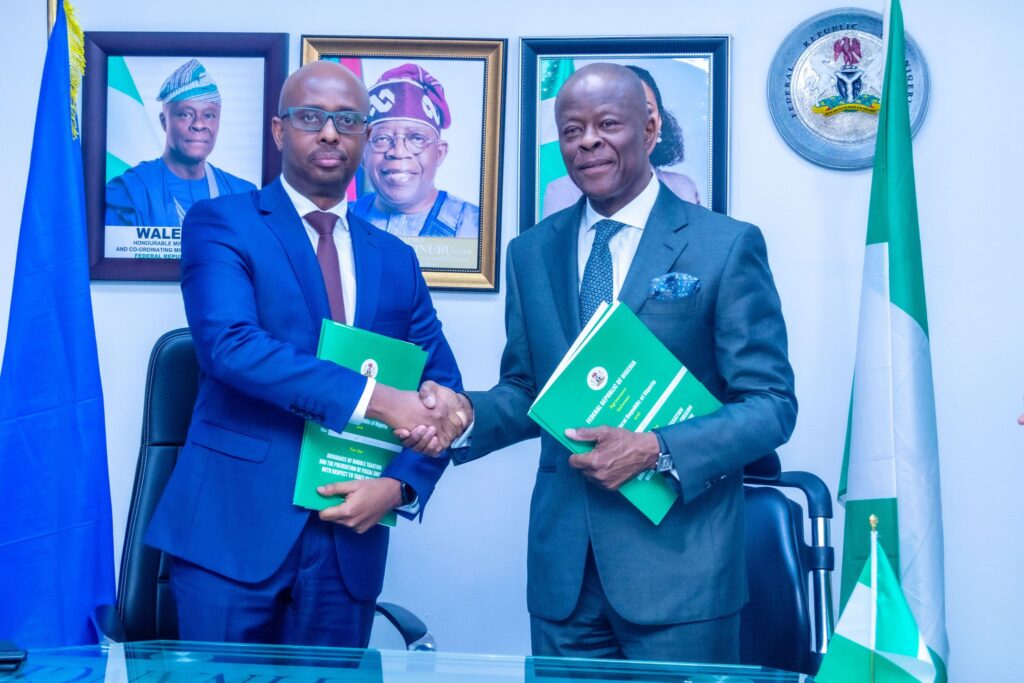
    R-L, Honourable Minister of Finance and Coordinating Minister of the Economy Mr Wale Edun and the Rwanda’s Minister of Finance and Economic Planning Mr Yusuf Murangwa, pictured shortly after the signing of the double Taxation Treaty agreement on Friday, to unlock cross-border investment on the sidelines of the 32nd Afreximbank Annual Meetings holding in Abuja, Nigeria
    Share
    Facebook Twitter WhatsApp LinkedIn Email

    In a defining moment for African economic integration, Nigeria and Rwanda have signed a historic double taxation treaty that signals a bold step towards reclaiming the continent’s financial sovereignty and unlocking cross-border private capital.

    The agreement—inked on the sidelines of the 32nd Afreximbank Annual Meetings in Abuja—is far more than a bureaucratic tax instrument. It marks the convergence of two reform-minded African economies, committed to rewriting the rules of engagement for investors and governments alike.

    Signed by Nigeria’s Minister of Finance and Coordinating Minister of the Economy, Mr. Wale Edun, and Rwanda’s Minister of Finance and Economic Planning, Mr. Yusuf Murangwa, the treaty will eliminate the risk of the same income being taxed twice in both countries.
    But its real value lies in what it unlocks: trust, transparency, and shared ambition.
    Director of Information and Public relations, Muhammed Manga in a statement quoted Edun to have said,
    “This is more than a tax agreement—it is a strategic platform for economic diplomacy, “It helps position Nigeria as a prime destination for investment within the AfCFTA framework, and encourages the kind of cross-border partnerships we need to build a resilient, self-financing Africa.”

    Coming just weeks after Nigeria passed four landmark tax reform bills, the treaty reflects a new policy rhythm—a region finally tuning its instruments for the symphony of private-sector-led growth.
    For Nigeria, a country with Africa’s largest economy and population, the deal sends a powerful signal to investors: tax clarity is here to stay.
    Minister Murangwa echoed that sentiment, calling the agreement “a cornerstone for long-term regional integration.”
    “Rwanda and Nigeria are showing what cooperation looks like in the new Africa—where we move beyond aid and towards equity, innovation, and capital flow.”
    At its core, the treaty removes a critical barrier to business: uncertainty.
    For African startups and multinationals alike, operating across borders often means navigating a web of conflicting tax laws, resulting in avoidable costs and compliance headaches.
    With this agreement, the two nations are saying: Let’s make it easier to do business in Africa, for Africans and with Africans.

    The sectors poised to benefit are among the most dynamic—technology, logistics, agribusiness, creative economy, and digital finance.
    For instance, a Nigerian fintech launching operations in Kigali—or a Rwandan agri-tech firm partnering with farmers in Kano—will now have a simpler, more predictable tax environment.

    This bilateral win could become continental policy. As African governments confront global economic headwinds, initiatives like this treaty showcase an emerging confidence: that African countries can set the terms, shape the frameworks, and lead the future of global trade—on their own terms.
    “What we witnessed today is a quiet revolution in policy thinking,” said a senior trade analyst at the African Union. “It’s about moving from protectionism to productive partnerships, from extraction to investment.”
    The technical teams behind the treaty—praised by both ministers for their expertise and foresight—crafted a framework that is globally compliant yet locally empowering. It introduces mechanisms for tax dispute resolution, information exchange, and anti-abuse provisions to prevent tax avoidance, while protecting the revenue interests of both countries.

    In a world where capital is mobile and competition is fierce, treaties like this are no longer optional—they are the cornerstone of credible economic governance.

    As Nigeria and Rwanda step forward, the message is clear: Africa is not waiting for permission. It is building its own investment architecture—one treaty, one reform, one partnership at a time.

    Previous ArticleSDP Purge: State Chairmen Back Gabam’s Suspension, Demand Reform
    Next Article Ganduje Bows Out as APC Chairman Amid Growing Political Undercurrents

    Keep Reading

    FAAC Shares ₦2.338trn as August Revenue Drops Sharply

    FG denies operating shadow budgets, says no ₦8.8tr spent outside fiscal plan

    Nigeria Courts Global Investors as G20 Dialogue Boosts Confidence in Economic Reforms

    October FAAC Allocation: FG, States, LGs Share N2.094 Trillion

    Nigeria, Poland Deepen Economic Ties to Boost Trade, Strategic Investment

    Wale Edun Hails Medicaid Cancer Foundation’s ₦100 Million Contribution to Patients

    Add A Comment

    Comments are closed.

    Advert
    VGC Advert
    Most Viewed Posts
    • Breaking: Intrigues, as ADC suspends its presidential candidate, Kachikwu, accuses him of blackmail (1,873)
      The African Democratic Congress (ADC) has suspended its presidential candidate Dumebi Kachikwu, from the party, accusing him of false, misguided and defamatory video he made and circulated, among other infractions. The party also considered Kachikwu's action as "smacks of crass irresponsibility, gross indiscipline, disingenuous scandalization and blackmail, and completely unfit of someone who wants to
    • Ex-Kogi Gov’s Arraignment Stalled at the instance of EFCC Counsels (1,609)
      The arraignment of the former Governor of Kogi State, Yahaya Bello, on an alleged money laundering case instituted against him by the Economic and Financial Crimes Commission (EFCC), has been adjurned to June 27, by the Federal High Court, in Abuja, based on an agreement by the counsels to the two parties. A new date,
    • Concerned Religious Prayer Forum Responds to Criticism of National Prayer Initiative (1,328)
      The Concerned Religious Prayer Forum has issued a statement clarifying its mission and responding to recent criticisms surrounding its seven-day national prayer initiative. Established as a non-governmental organization on January 9, 2024, the Forum emphasizes that it is an independent group composed of citizens motivated by a shared desire to promote peace, unity, and prosperity
    • North Central Serving Governor withdrew N60 billion cash in six years ― EFCC (1,318)
      A serving Nigerian governor has allegedly withdrawn N60billion from his state’s purse. The Economic and Financial Crimes Commission (EFCC) said that he has lifted about N60 billion cash from state coffers in about his six years in office. The governor remains unnamed and his state, partially identified as domiciling in the North Central of the
    • Qatar Charity Empowers 60 Jigawa Widows, Vulnerable Persons with ₦300m (1,245)
      By Ahmed Rufa’i, Dutse The Qatar Charity Organization has donated economic empowerment equipment valued at over ₦300 million to 60 widows and vulnerable persons across the 27 local government areas of Jigawa State. The items were distributed during a ceremony held at the Banquet Hall of the Government House, Dutse, and presided over by the

    Latest News

    HURIWA Demands Withdrawal of Nutritionists’ Bill, Cites Threat to Indigenous Food Heritage

    October 23, 2026

    Dalung Demands Probe Into Alleged Billions Paid For Ministerial Appointments

    October 23, 2026

    No Clear King – The Most Open Ballon D’Or Race In History

    October 23, 2026

    Wike’s Lawyer Accuses Opponent of Media Trial, Threatens VDM Over $2.1m Suit

    October 23, 2026

    Emir cautions Yari over Tinubu’s promises ahead of 2027 election

    October 23, 2026

    Subscribe to Updates

    Get the latest creative news from FooBar about art, design and business.

    National Update
    Facebook X (Twitter) Instagram
    © 2026 National Update. Designed by Lamark Cre8ives.

    Type above and press Enter to search. Press Esc to cancel.