

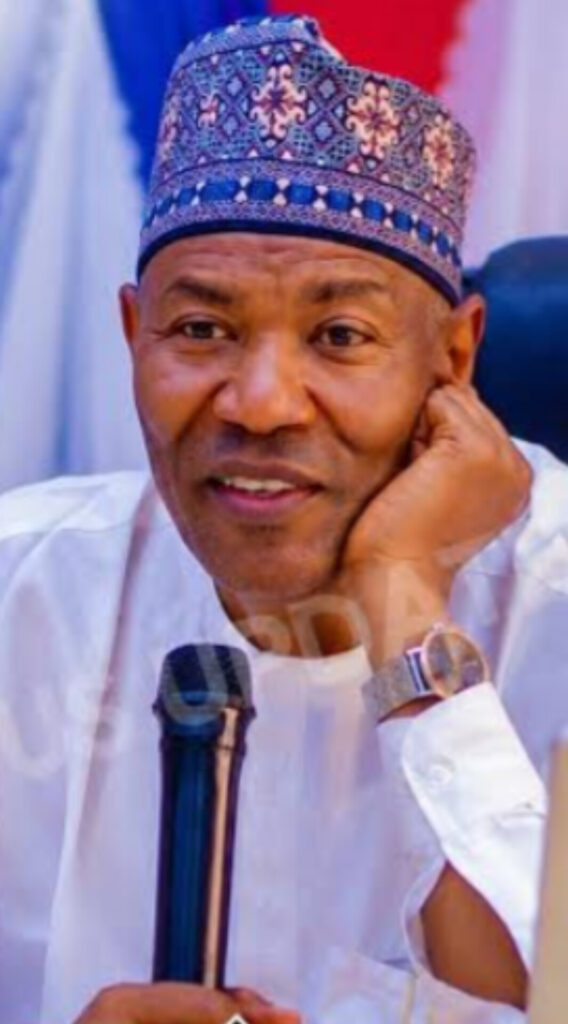

A culture of unquestioning loyalty to political leaders is undermining accountability in Nigeria, Professor Umaru A. Pate has warned, challenging citizens to examine how their support for those in power may be helping to sustain poor leadership and weaken democratic institutions.
Pate argued that Nigeria’s democratic crisis could not be blamed on politicians alone, insisting that followers also bear responsibility when they tolerate failures, defend questionable conduct or place personal and group loyalties above the public interest.
The Professor of Journalism and New Media Studies at Bayero University, Kano, delivered the message in a presentation titled The Psychology of Leadership and Followership in Democratic Nigeria at the fifth annual conference of the Forum of Former Deputy Governors of Nigeria, held at the African Continental Hotel, Abuja, on October 20–21, 2026.
In a pointed challenge to the country’s political culture, Pate said the quality of democracy depended as much on citizens’ attitudes as on the character of those occupying positions of authority.
“The quality of Nigerian democracy depends not only on the quality of its leaders but also on the quality of its followership,” he said.
His argument shifts attention from the familiar debate over bad leadership to a difficult question: what happens when citizens help reproduce the very leadership failures they complain about?
Pate explained that political authority was not the same as genuine leadership, noting that occupying a powerful office did not automatically confer moral authority or earn public commitment.
A leader, he said, could command obedience without winning the trust and confidence of the people, while individuals without formal political positions could exercise enormous influence.
He identified a major danger in political relationships built around personal benefits rather than shared national aspirations.
“The psychological question then becomes: ‘What can my leader give me?’ rather than: ‘What can we collectively build?’” he said.
The distinction highlights the risks of a political culture in which support is exchanged for appointments, favours and other immediate benefits, rather than based on public performance and a commitment to the common good.
Under such conditions, citizens may become reluctant to challenge those they support, even when their decisions or conduct deserve scrutiny.
Pate did not present followership as passive obedience. Instead, he described it as an active psychological relationship in which citizens determine whether leaders are credible, competent, trustworthy, legitimate or exploitative.
Their perceptions, expectations, fears and loyalties, he explained, help shape the authority leaders exercise.
The professor’s argument also raises questions about the consequences of defending political leaders primarily because they share one’s ethnic, religious or regional identity.
He noted that perceived exclusion from public appointments, employment and political representation could generate alienation, resentment and distrust, underscoring the need for fairness and inclusion in a diverse country such as Nigeria.
However, he also stressed the importance of placing the national interest above narrow group loyalties.
Beyond political allegiance, Pate identified emotional intelligence as a critical requirement for leadership in a multicultural democracy.
He warned that intellectual ability and technical competence could not compensate for arrogance, impulsiveness or an inability to listen.
Leaders who humiliate dissenters, reject criticism or confuse personal loyalty with institutional responsibility risk damaging relationships and undermining public confidence.
Pate also turned attention to the digital space, where social media has expanded citizens’ capacity to challenge authority but has also created opportunities for emotional manipulation.
He observed that messages provoking fear, anger, outrage, humiliation or pride could spread more rapidly than content requiring careful reflection.
He urged Nigerians to verify information before sharing it and avoid allowing political messaging to manipulate their judgement or deepen existing divisions.
The professor said younger Nigerians were increasingly demanding transparency, accessibility, responsiveness and greater participation in governance.
He described the transition from a system in which leaders speak and followers listen to one in which citizens can respond, criticise and mobilise as a potentially positive development for democracy.
But he warned that online activism must produce responsible citizenship rather than become an endless cycle of outrage.
For Pate, the solution requires a fundamental change in the relationship between those who govern and those who are governed.
He called on leaders to listen before making decisions, communicate honestly, distribute opportunities fairly, encourage criticism and accept accountability.
He also urged them to develop capable people rather than cultivate personal dependence.
“A leader who creates dependants may remain powerful. A leader who creates capable people creates institutions,” he said.
The message places a double responsibility on Nigeria’s political class and the electorate: leaders must stop treating public authority as a personal possession, while citizens must stop treating political loyalty as an obligation to defend every decision.
Pate summed up the challenge with two questions that, he said, should confront both sides of the relationship.
“The leader must ask: ‘What kind of followers am I producing?’ The follower must ask: ‘What kind of leadership am I helping to reproduce?’”
He concluded that Nigeria’s democratic future would depend on whether citizens could move beyond obedient followership to responsible citizenship, leaders could convert personal authority into institutional legitimacy, and the country’s diverse communities could develop a stronger sense of common belonging.