


***2025 budget largest in States history, 86.6%
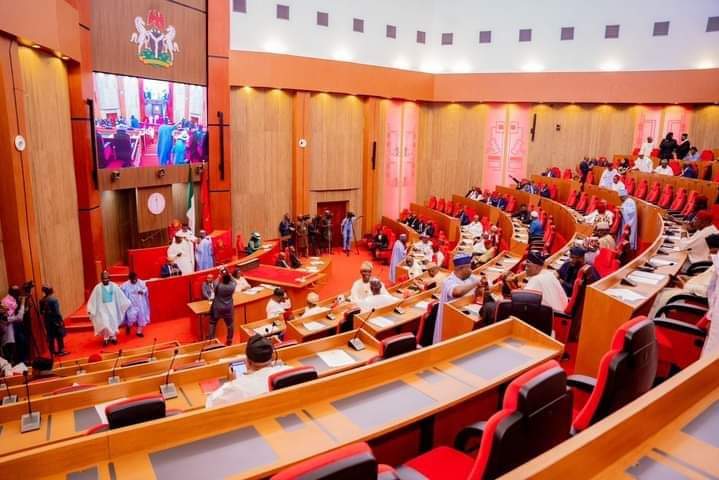
In a high-stakes session at the National Assembly, the Senate Ad Hoc Committee on Emergency Rule Oversight has commenced detailed scrutiny of the proposed ₦1.846 trillion 2025 budget for Rivers State, the largest in the state’s history and an 86.6% increase over last year’s appropriation.
The session marked the most consequential phase of federal oversight since emergency rule was declared in the state by President Bola Ahmed Tinubu in early 2025.

At the center of the budget defense was the Sole Administrator of Rivers State, Vice Admiral Ibok-Ete Ekwe Ibas (Rtd)
who made a spirited case for the inflated figures, describing the budget as a people-first, post-crisis financial framework designed to “restore governance, rebuild trust, and relaunch development.”
“This is not business as usual,” the Administrator told Senators. “This is a transitional moment that demands bold action. The 2025 budget is crafted to address insecurity, mend broken systems, and lay the groundwork for peace and inclusive growth.”
The Sole Administrator explained that the original budget framework—85% of which was inherited from the previous administration—was revised upward by about 15% to address three critical areas:
Clearing ₦50 billion in pension and gratuity arrears, Funding emergency security and peacebuilding initiatives, and
Legally integrating first-quarter expenditures made before emergency rule was declared.
These additions brought the total projected expenditure to ₦1.846 trillion, compared to ₦793.5 billion in 2024.
“This isn’t just about roads and bridges,” the Administrator added. “It’s about people who have served this state and are now aging without their entitlements. It’s about farmers who need safe roads. It’s about young people who need jobs.”
The budget’s architecture also factors in the eventual restoration of constitutional order, retaining legal provisions for the offices and functions of suspended political actors.
A Budget Anchored in Infrastructure, Security, and Inclusion
Breaking down the numbers, ₦1.072 trillion (72.4%) is allocated for capital projects—a sharp contrast to most state budgets where recurrent expenditure dominates. Just ₦408.4 billion (27.5%) is reserved for recurrent spending, with a negligible portion going to overheads.
Key sectoral allocations include:
₦324.5 billion for roads, bridges, and transport infrastructure
₦55 billion for upgrading the Rivers State University Teaching Hospital
₦30 billion for secondary schools and ₦5.75 billion for primary education rehabilitation
₦38.85 billion for shoreline protection and erosion control
₦10 billion to boost food production and agriculture
₦50 billion to offset pension liabilities
₦20 billion to recapitalize the Rivers Microfinance Bank for MSMEs
The state also plans to spend ₦3 billion on a youth innovation center and ₦2.5 billion on women’s economic empowerment.
“What we are seeing is a deliberate attempt to reset the economy and expand social equity,” said Senator Michael Opeyemi Bamidele, Chairman of the Ad Hoc Committee. “For a state under emergency rule, this budget is more than numbers—it’s a peace plan.”
To fund the ₦1.846 trillion budget, the Rivers State government projects ₦550 billion from the Federation Account (FAAC), ₦360.46 billion from independent revenue sources, ₦67.6 billion from grants and aid, ₦250 billion from loans and credit facilities, ₦220.8 billion in opening balance from prior fiscal operations
While the debt component rose modestly from ₦237 billion in 2024 to ₦250 billion, it now makes up 16.6% of the total budget. Debt servicing alone is projected at ₦120.8 billion—a staggering 57.9% increase from the previous year.
Still, the Senate Committee appeared largely convinced of the budget’s fiscal rationale, especially given the documented performance of the 2024 budget, which exceeded its revenue target by ₦250 billion (31.6%) and underspent by ₦52.7 billion, largely due to transition-related gaps.
Senate’s Warning: Oversight Will Be Continuous
Senator Bamidele praised the Administrator’s presentation but cautioned that the approval of the budget would not signal the end of legislative oversight.
“We are not here for formality. We will follow the money. We will track the projects. We will hold you accountable, line by line, ministry by ministry,” Bamidele warned.
He emphasized that the Senate’s interest lies in ensuring the budget delivers real-world outcomes—improved roads, functioning hospitals, working schools, and security that residents can feel.
“When allocations on paper become solutions in the real world, trust in government is restored,” he added. “This is how we renew the social contract.”
The Rivers 2025 Appropriation Bill may be historic in size, but its real legacy will be judged by impact. In a state long plagued by political turbulence, violence, and unmet expectations, the challenge is not how much is spent—but how well.
If the figures defended on the Senate floor translate into jobs, peace, roads, dignity for retirees, and empowerment for youths and women, then the Sole Administrator’s vision may not only stabilize the present but also anchor the future of governance in Rivers State.
