

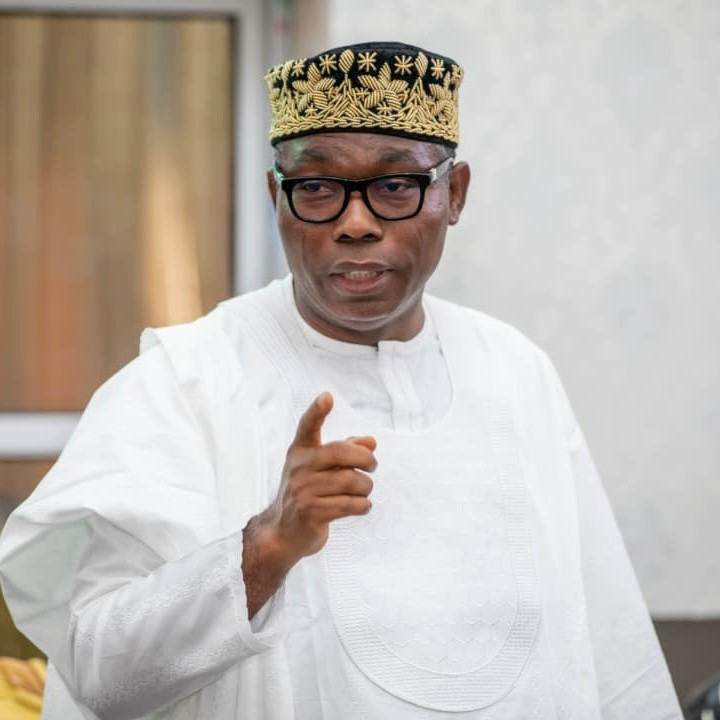

***Says rich criminal suspects cannot ride luxury jeeps while poor Nigerians rot in jail
***Challenges activists over Tinubu’s government
The 2027 presidential candidate of the Social Democratic Party (SDP), Prince Adewole Adebayo, has accused Nigeria’s criminal justice system of favouring the wealthy while poor citizens face harsh punishment for petty offences.
“We cannot have a criminal justice system run by criminals,” he declared, promising a sweeping overhaul if elected president.
Adebayo spoke in an address delivered on his behalf by his campaign’s Chief Media and Communications Adviser, Comrade Mark Adebayo, at the Committee for the Defence of Human Rights (CDHR) annual lecture in Lagos on Thursday.
The event, held at the Airport Hotel, Ikeja, was themed “Understanding Human Rights Beyond Emotions and Personal Interests.”
In his address, titled “The Counter-Intuitive Architecture of Human Rights,” Adebayo contrasted the treatment of poor Nigerians accused of petty theft with that of powerful individuals facing allegations of corruption.
He cited the example of a poor person jailed for stealing bread worth ₦1,000, while individuals accused of diverting trillions of naira in public funds arrive at court in luxury vehicles.
“The one who steals trillions from the treasury is taken to and from court in luxury jeeps,” he said.
Adebayo promised to reform the system to guarantee equal treatment before the law, protect the innocent and punish those found guilty.
He warned that perceived double standards were eroding public confidence in the justice system and encouraging citizens to resort to self-help.
The SDP candidate also defended the right of every accused person to legal representation and a fair hearing, regardless of the allegations against them.
He argued that defending an accused person did not amount to endorsing the alleged crime, insisting that the state must prove its case beyond reasonable doubt.
Adebayo cautioned that abandoning due process to punish unpopular defendants could eventually expose innocent citizens to arbitrary prosecution.
He also challenged civil society organisations over what he described as declining commitment to selfless activism.
The SDP candidate questioned why Nigeria’s estimated 18.3 million out-of-school children had not triggered sustained nationwide mobilisation by rights advocates.
He urged activists to move beyond selective protests and confront issues affecting millions of vulnerable Nigerians.
Recalling a protest in Abuja against electoral reforms, Adebayo said demonstrators were tear-gassed and argued that civil society groups should have sustained the campaign.
He called for stronger mobilisation to defend citizens arrested or prosecuted for participating in peaceful protests.
Turning to the 2027 elections, Adebayo accused President Bola Tinubu’s administration of preparing to undermine a free, fair and credible electoral process.
He claimed the government was aware of growing public dissatisfaction and challenged it to defend its record before Nigerians.
The allegations formed part of Adebayo’s political address and were not independently established at the event.
He warned that civil society organisations would bear historical responsibility if they failed to mobilise against what he described as the recycling of retrogressive leadership.
Adebayo also invoked the legacy of late human rights lawyer Gani Fawehinmi, arguing that genuine activism must defend people’s rights regardless of political differences or personal grievances.
He urged activists to reclaim the spirit of selfless advocacy and lead efforts to promote equal justice, accountable governance and credible elections.
He maintained that human rights must never become privileges reserved for the wealthy or politically connected.

