

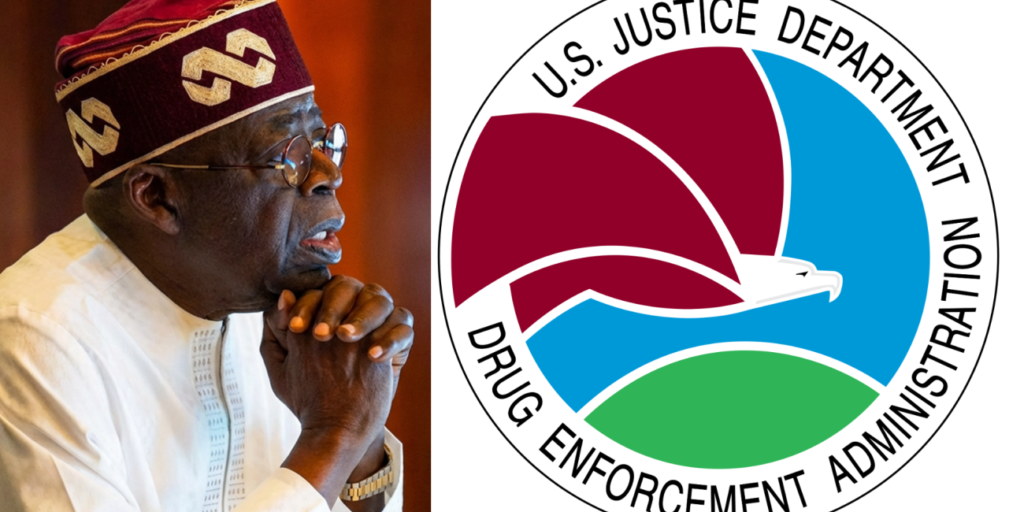

The United States Drug Enforcement Administration has given fresh reasons for keeping parts of investigative records linked to President Bola Tinubu away from public view, citing the protection of confidential sources and sensitive law-enforcement techniques.
The latest development is part of an ongoing Freedom of Information Act battle before the US District Court for the District of Columbia over records sought by American transparency activist Aaron Greenspan.
In a September 23 filing, the US government defended the DEA’s decision to redact or withhold portions of the documents, arguing that disclosure could expose people who provided information to investigators and reveal investigative methods not generally known to the public.


The case, Greenspan v. Executive Office for U.S. Attorneys et al, is a civil FOIA dispute and not a criminal prosecution of Tinubu.
The records being sought relate to historical US investigations involving Tinubu and other individuals, including an investigation into an international drug-trafficking and money-laundering network in the late 1980s and early 1990s.
The DEA cited several categories of investigative documents, including DEA-6, DEA-292 and DEA-210 reports, in explaining its position.
According to the government, similar explanations for withholding information in its Vaughn Index do not make the index inadequate because the documents belong to similar categories of investigative records.
The agency also relied on exemptions under the US FOIA law covering confidential-source information and law-enforcement techniques.
The latest filing follows a major development in April 2025, when US District Judge Beryl Howell ruled that the FBI and DEA could no longer rely on a “Glomar response” to refuse to confirm or deny the existence of records concerning Tinubu, because the existence of the relevant investigation had already been officially acknowledged.
The ruling, however, did not order the wholesale release of all records. It dealt with the agencies’ refusal to confirm or deny whether responsive records existed, leaving separate questions over what material could legally remain redacted or withheld.
The latest filing therefore shifts attention to the extent of disclosure, with the government arguing that some information remains protected even after the agencies were required to process the records.
Tinubu has separately intervened in the case and asked the US court to protect records from disclosure, with his lawyers arguing that privacy rights should be respected.
The Presidency has also stressed that the proceedings do not amount to a criminal case against Tinubu and that no finding of criminal wrongdoing has been made against him in the FOIA litigation.
The September 23 filing does not disclose what the withheld records contain, what confidential sources allegedly told investigators or whether the records establish any criminal conduct by Tinubu.
The dispute remains centred on how much of the historical investigative material can be released under US freedom-of-information law.