


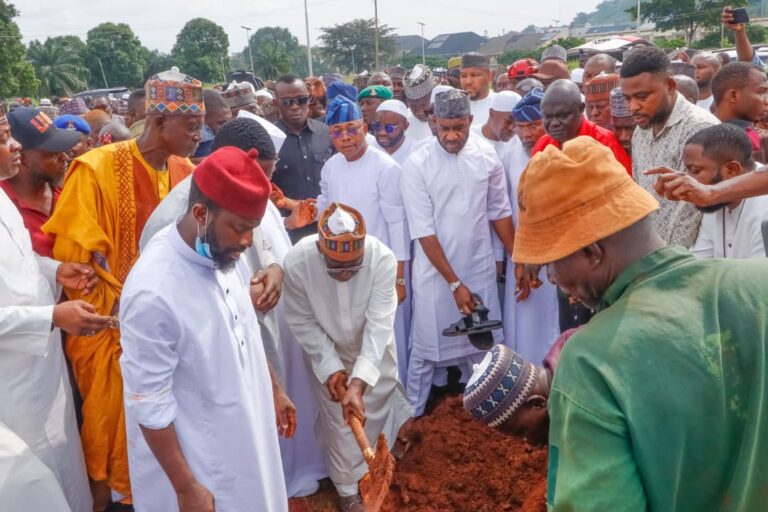
Former Kogi Governor Ibrahim Idris was buried in Abuja on Friday, as Governor Ahmed Usman Ododo and former governors Yahaya Bello and Idris Wada gathered to pay their final respects.
Idris, who died at the age of 77 in the United Kingdom on September 20, was buried at the Gudu Cemetery, Apo, Abuja, after Islamic funeral rites.
The burial brought together the incumbent governor and two of his predecessors, alongside family members, government officials, political leaders, traditional rulers and sympathisers who gathered to honour the former governor.
The remains of Idris arrived at the International Wing of the Nnamdi Azikiwe International Airport, Abuja, from the United Kingdom, where Ododo, Bello, Wada and other Kogi leaders received them.
The body was later taken to the National Mosque, Abuja, where the Janazah prayer was conducted by the Chief Imam before the remains were conveyed to Gudu Cemetery for interment.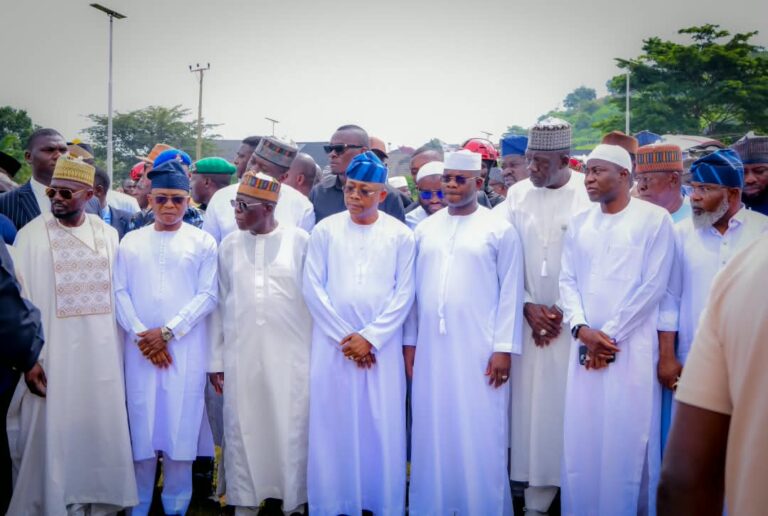
The gathering provided a striking picture of unity in Kogi’s political leadership, with Ododo, Bello and Wada standing together to honour the man who governed the state between 2003 and January 2012.
Idris was elected governor in 2003 and returned to office after the 2008 governorship re-run conducted following a legal challenge to the 2007 election.
He was succeeded by Captain Idris Wada in January 2012.
Bello later governed the state before Ododo emerged as the incumbent governor.
The three leaders are currently members of the ruling All Progressives Congress.
The Kogi State Government had earlier announced a state burial for Idris and constituted a high-powered burial committee chaired by Deputy Governor Joel Salifu Oyibo to coordinate the funeral arrangements.
Following the announcement of Idris’s death, Ododo visited the bereaved family in Abuja alongside Bello and senior government officials to convey the condolences of the state government.
The governor subsequently declared three days of mourning and directed that the Nigerian and Kogi State flags be flown at half-mast across government offices and designated public institutions.
During his tenure, Idris’s administration was associated with interventions in infrastructure, education, healthcare and housing.
His political career spanned several decades and placed him among the notable figures in the political development of Kogi State.
His death prompted tributes from political associates and the Peoples Democratic Party, where he had been a prominent figure during his political career.
At Gudu Cemetery, mourners observed the final Islamic rites before the remains of the former governor were committed to the earth.
The burial brought to a close the public life of a former governor whose tenure occupied a significant chapter in Kogi’s political history.
For Kogi, however, Friday’s gathering was also a visual reminder of the succession of leadership across the state—from Idris to Wada, Bello and now Ododo—as political leaders from different generations joined the family to say their final farewell.
They prayed Almighty Allah to forgive his shortcomings and grant him Aljanat Firdaus.
