

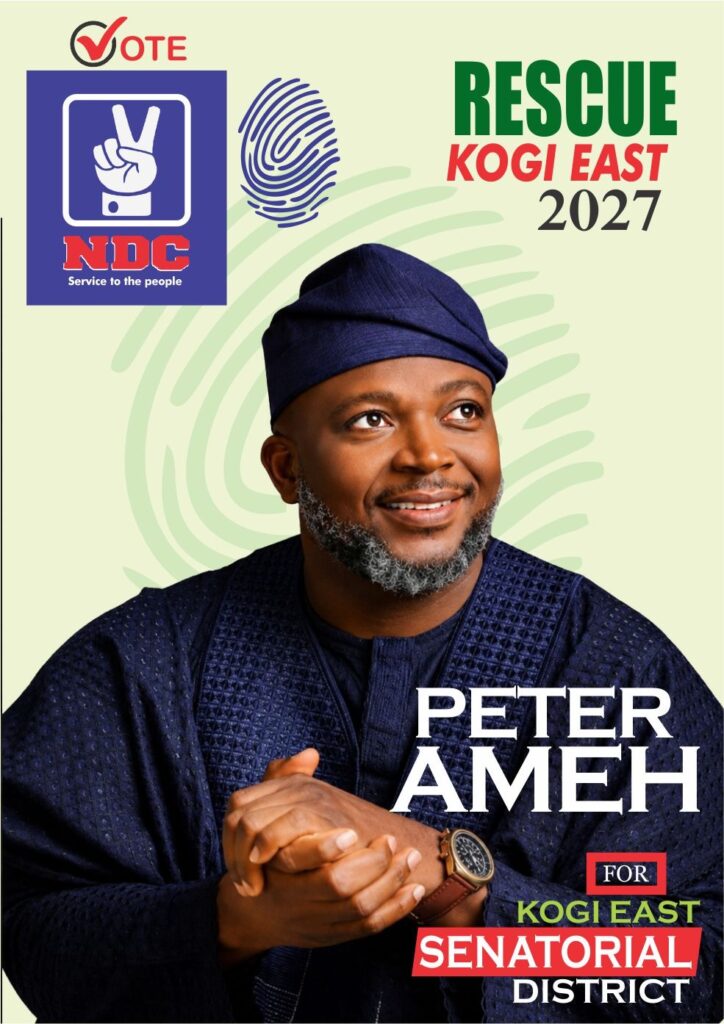

The future of Kogi East is sitting in classrooms, workshops, farms, markets, offices and homes across the nine local government areas.
They are young graduates searching for their first opportunity. They are artisans trying to build businesses with limited tools. They are farmers looking for better ways to produce and sell. They are young women running small businesses from their homes. They are technology enthusiasts trying to work with inadequate internet access. They are young people with ideas, energy and ambition who simply want a fair opportunity to make something of their lives.
High Chief Peter Ojonugwa Ameh believes Kogi East cannot build a prosperous future while leaving this generation on the margins of economic activity.
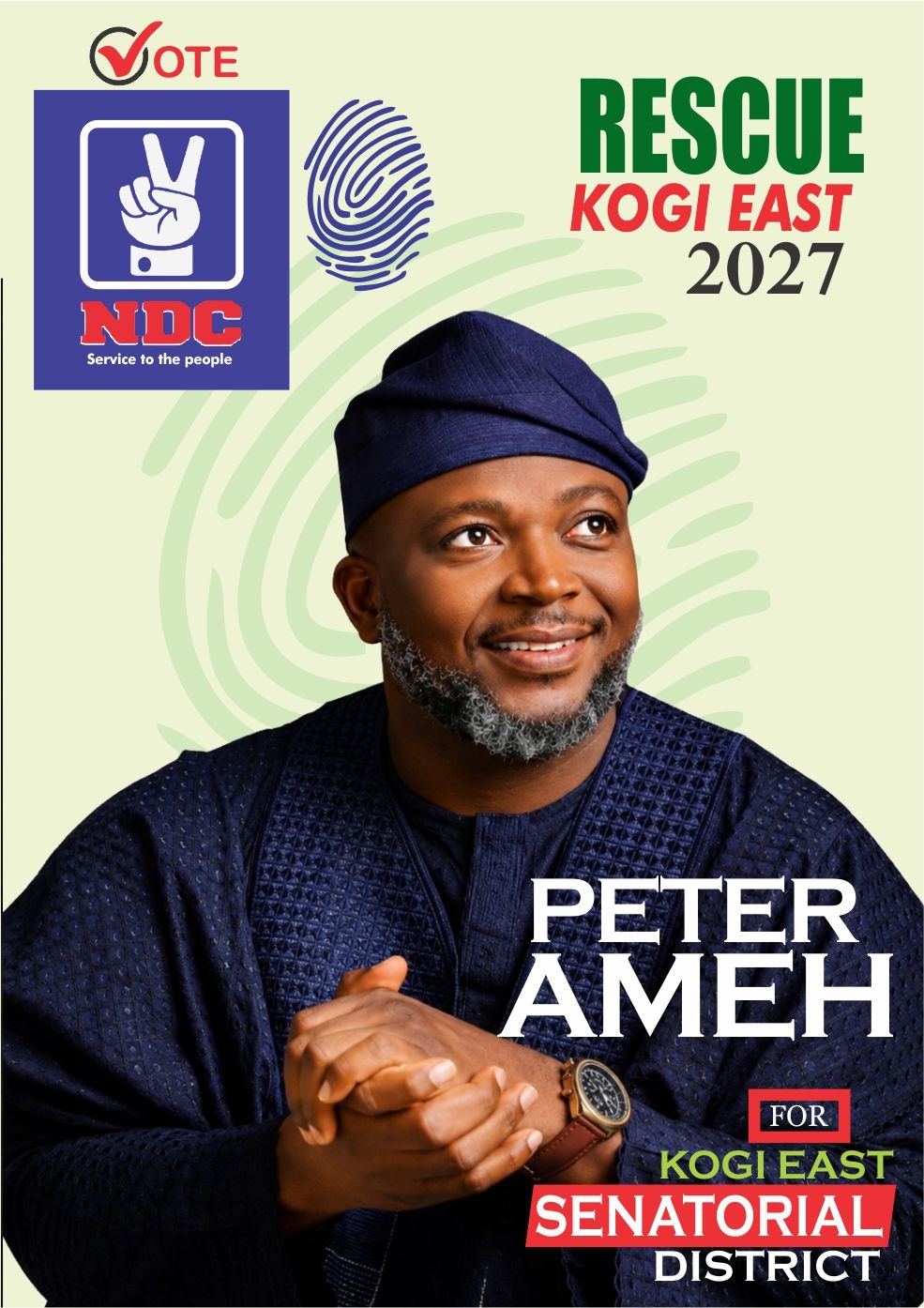

That is why young people must occupy a central place in his Senate agenda.
The challenge goes beyond unemployment.
A young person may have a university degree and still lack the practical skills required by the labour market. Another may have a business idea but lack affordable finance. A farmer may have land but lack modern equipment, storage and access to markets. An artisan may have customers but lack the tools required to increase production.
These are different problems, but they lead to the same question:
How do we turn the energy of Kogi East’s young population into productive economic power?
Peter Ameh’s answer begins with skills.
Education must connect more directly with employment and enterprise. Vocational and technical training should receive greater attention. Young people should have opportunities to acquire practical skills in areas such as agriculture, agro-processing, construction, technology, renewable energy, manufacturing, repairs, creative industries and other trades with clear economic value.
The objective should be simple.
Give a young person a skill that can earn income.
But skills alone are not enough.
A trained young person still needs access to tools, finance, markets and infrastructure.
That is why Ameh’s youth agenda connects directly with his agricultural, infrastructure and economic development proposals.
A young person trained in agro-processing needs access to electricity and machinery.
A young farmer needs roads, storage and markets.
A technology entrepreneur needs reliable electricity and internet connectivity.
A young artisan needs equipment and access to customers.
A graduate seeking employment needs an economy capable of creating jobs.
Development, therefore, has to work as a system.
The Senate can contribute to that system through legislation, budget scrutiny, oversight and advocacy for federal programmes that reach young people in Kogi East.
Peter Ameh can use the platform to push for stronger access to federal skills-development programmes, entrepreneurship schemes, agricultural interventions, technical education and digital opportunities.
He can also advocate for programmes that deliberately reach young people outside the major urban centres.
This matters because opportunity should not depend entirely on whether a young person lives in Anyigba, Ankpa, Idah, Dekina, Bassa, Olamaboro, Omala, Ofu, Igalamela/Odolu or Ibaji.
The young person in a rural community deserves a pathway to opportunity too.
There is also a need to change the way political representation relates to young people.
Young people should not be treated merely as campaign crowds during elections.
They should be part of the conversation about legislation, development priorities and public policy.
Ameh’s proposed constituency engagement model can, therefore, create space for regular interaction with youth groups, students, entrepreneurs, artisans, farmers and professional associations across Kogi East.
Their concerns should inform representation.
Their ideas should reach Abuja.
Their progress should form part of the constituency’s development story.
The political future of Kogi East will also depend on whether its young people see a future in the district itself.
When productive opportunities exist at home, fewer young people are forced to leave simply to search for a livelihood elsewhere.
A stronger local economy can keep skills, enterprise and spending within the district.
That is why Peter Ameh’s youth agenda cannot be separated from his wider development agenda.
Roads create access.
Power supports enterprise.
Agriculture creates value.
Education develops skills.
Digital connectivity opens new markets.
Good representation helps connect these opportunities to federal institutions.
This is the kind of Kogi East Ameh is presenting to the people.
A district where a young person can learn a skill, start a business, work on a farm, build a career or develop an idea without believing that the only path to a decent future is to leave home.
High Chief Peter Ameh is asking for the mandate to take that vision to the Senate.
For the young people of Kogi East, the 2027 election is an opportunity to demand representation that recognises their potential and treats their future as a development priority.
Kogi East cannot build tomorrow while leaving its young people behind today.
KOGI EAST RISING!!!
© PETER AMEH FOR SENATE 2027 MEDIA