
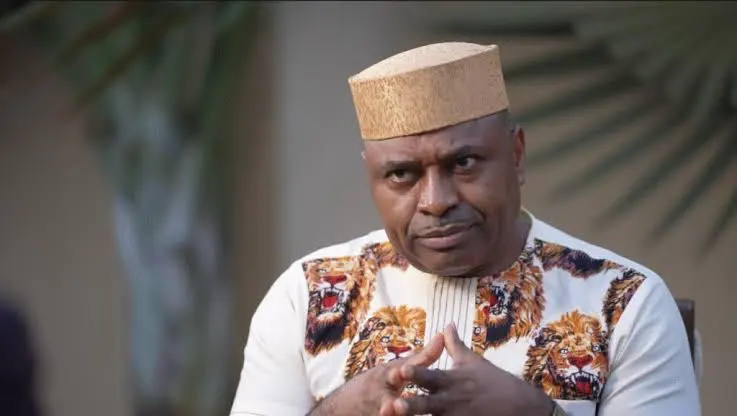
The spokesperson for the Atiku Abubakar Presidential Campaign, Kenneth Okonkwo, has accused President Bola Tinubu and the National Assembly of failing to discharge their constitutional responsibilities over the President’s prolonged absence from Nigeria.
Okonkwo, who spoke during an interview on Arise TV, argued that Section 145 of the 1999 Constitution does not make the President’s obligation to transmit a written declaration dependent on an absence lasting 21 days.
President Tinubu has been outside Nigeria since August 30 on what the Presidency described as a working vacation, while Vice-President Kashim Shettima has been representing Nigeria at the United Nations General Assembly in New York.
The Presidency has maintained that Tinubu remains in charge of government and continues to direct affairs from abroad.
But Okonkwo, a lawyer, disputed the constitutional basis of that position.
He said Section 145(1) provides that whenever the President proceeds on vacation or is otherwise unable to perform the functions of his office, he is required to transmit a written declaration to the President of the Senate and the Speaker of the House of Representatives.
According to him, the subsection contains no reference to a 21-day waiting period.
“In Section 145(1), there is no nexus between the President and 21 days. That subsection talked about the duty of the President,” Okonkwo said.
He argued that the 21-day provision appears under Section 145(2), which provides a procedure for the National Assembly where the President fails or is unable to transmit the required declaration.
Okonkwo maintained that the National Assembly should not simply wait for 21 days where it considers the President unable to perform his functions.
“The country should not wait more than 21 days. If he fails, the Acting President should be inaugurated immediately as Vice-President and to perform the function,” he said.
He also argued that Shettima should continue performing presidential functions until Tinubu formally communicates his resumption of duties.
Okonkwo accused both the executive and legislative arms of government of failing to discharge what he described as their respective constitutional responsibilities.
“What we’re saying is that the President, who is the leader of the executive, has failed. The National Assembly, who is the leader of the legislature… they have failed,” he said.
He said the situation raised questions about the functioning of constitutional checks and balances.
Rather than immediately pursue the matter in court, Okonkwo said the Atiku campaign would take the issue to Nigerians ahead of the 2027 general election.
“What we’re going to do is to tell Nigerians that they have a failed President and failed National Assembly and vote them out in 2027,” he said.
The interview also touched on Tinubu’s absence from the United Nations General Assembly for the third consecutive year.
Okonkwo questioned the decision to delegate Shettima to represent Nigeria at the gathering and also made allegations linking Tinubu’s absence from the United States to renewed attention surrounding historical US records involving the President.
Those claims were made by Okonkwo and have not been independently established.
The Presidency has maintained that Tinubu’s absence from the UNGA was a scheduling decision and that Shettima was duly delegated to represent Nigeria.
The constitutional question raised by Okonkwo is separate from the UNGA issue. His central argument is that Section 145 requires a formal written declaration when the President proceeds on vacation or is otherwise unable to perform his functions, rather than making that requirement conditional on a 21-day absence.
The dispute is likely to remain a subject of political and constitutional debate while Tinubu remains outside Nigeria and questions persist over whether the procedure contemplated under Section 145 has been followed.