

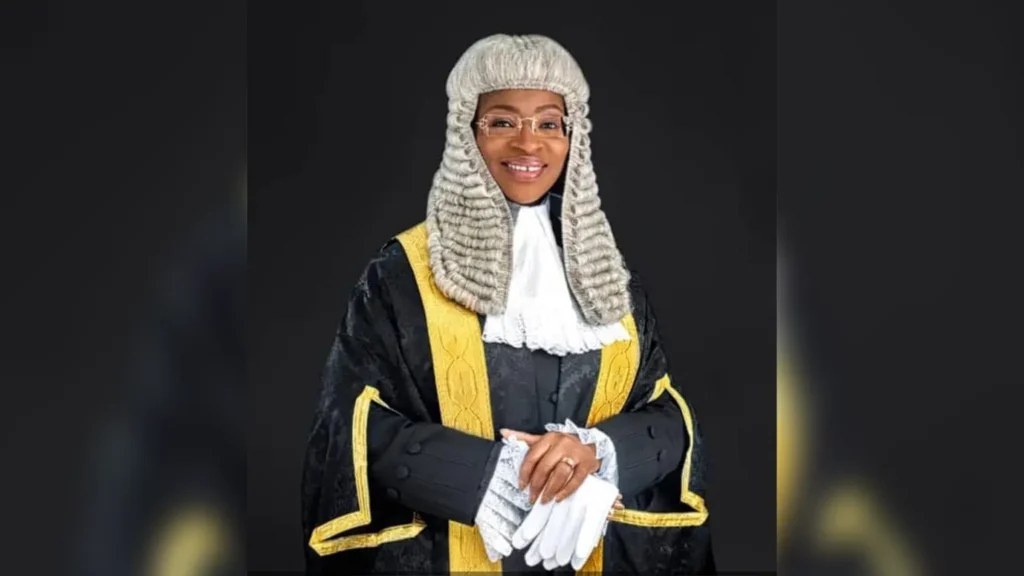
A fresh debate over police accountability and citizens’ privacy has emerged between the Nigerian Bar Association and the Nigeria Police Force following a disagreement over the right of Nigerians to record officers while performing their duties.
The President of the Nigerian Bar Association, Oyinkansola Badejo-Okusanya, SAN, has backed the use of recording as a tool for transparency in policing, while stressing that the right must be exercised within the limits of the law.
Badejo-Okusanya made the position known during an engagement with the Inspector-General of Police, Tunji Disu, who had questioned the legality and limits of citizens recording police officers on duty.
The NBA President argued that law enforcement agencies should not be afraid of transparency, saying recording police activities could help promote accountability and expose misconduct.
She cited the use of body cameras by police officers in the United States as an example of how recording can serve as a check on both law enforcement personnel and members of the public.
According to her, footage of police encounters could provide evidence for identifying officers who engage in misconduct and ensuring that those found culpable are appropriately sanctioned.
Badejo-Okusanya, however, acknowledged that the issue was not without complications, particularly where recordings invade the privacy of police officers or other individuals.
She said the focus should therefore be on clearly defining what citizens can lawfully record and where the boundaries lie.
“What we need to do is not run away from these kind of progressive moves. We just need to understand the limits,” she said.
The NBA President suggested that existing laws could be strengthened or properly interpreted to prevent abuse while preserving legitimate public oversight of police operations.
She said lawyers and police officers should work together to establish a clear legal framework that balances transparency in policing with the right to privacy.
Her position followed concerns raised by the IGP, who described the effect of a recent court judgment on police morale as “very, very demoralising.”
Disu alleged that some Nigerians had interpreted the judgment as a licence to record police officers in virtually every situation, including instances where officers were in restaurants rather than carrying out official duties in public.
The IGP urged the NBA to participate in a police symposium in Owerri, Imo State, where the legal implications of recording police officers would be examined.
Badejo-Okusanya welcomed further engagement, saying the issue required frank discussions between the legal profession and the police rather than outright rejection of progressive accountability measures.
The debate has consequently shifted from whether police officers can be recorded at all to where the law should draw the line between legitimate public scrutiny and unlawful intrusion into privacy.