


Written by MARCEL MBAMALU
Kaduna politics has a way of turning yesterday’s allies into today’s accusers.
Last week, Femi Fani-Kayode went viral again. In a trending video, the former minister called Governor Uba Sani “fair-minded” and said he does not discriminate against Christians. Then he turned the knife on Nasir El-Rufai, alleging persecution of Christians and marginalization of Southern Kaduna during his eight years in office.


The words landed hard because these are not strangers. Sani served under El-Rufai. Fani-Kayode defended El-Rufai in 2022 and 2023, calling him “not a religious bigot, not a terrorist, not a jihadist.” Now both men are criticizing him.
So what changed? Did Uba Sani suddenly become a different kind of leader? Or did the politics around him change enough to produce a different Fani-Kayode?
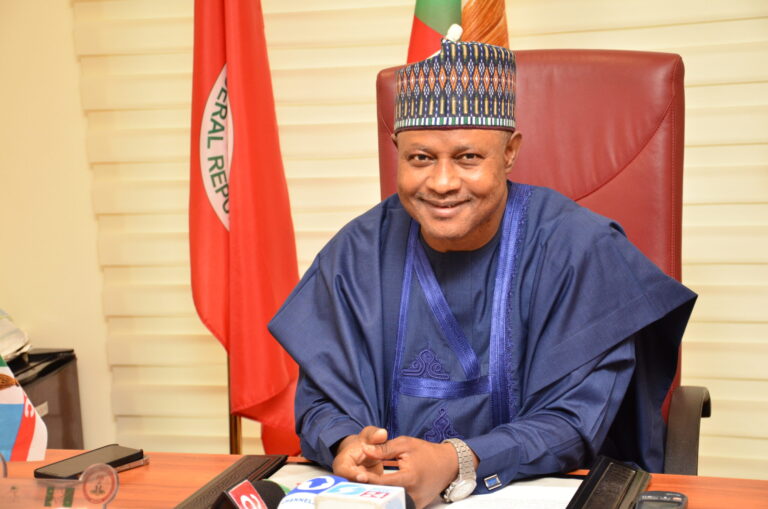
It is the question Kaduna, and Nigeria, cannot avoid ahead of 2027. Is Sani truly an uncommon fair-minded politician breaking with the past — restoring Christian pilgrimage, picking a Southern Kaduna deputy, preaching inclusion? Or is this a shrewd political strategy to rebrand, win back Southern Kaduna, and survive in a state where religion and ethnicity decide elections?
Because the numbers do not disappear. More than 1,360 people were killed in Kaduna in Sani’s first two years. Churches were attacked in Kajuru in January. Insecurity outlived El-Rufai.
In this Bottom Line, we trace the journey from activist to senator to governor, from El-Rufai’s protégé to his critic, and test the claim of “fairness” against the facts on the ground.
Uba Sani was not a political newcomer when he got to Government House in 2023. Born in Zaria, he first made his name as a civil rights activist during the struggle against military rule and later with the Campaign for Democracy. When democracy returned in 1999, he backed Olusegun Obasanjo and was appointed Special Assistant to the President on Public Affairs. He later worked in the FCT Administration, including under El-Rufai when the latter was FCT Minister.
When El-Rufai became Kaduna governor in 2015, Sani was inside the structure as Special Adviser on Political and Intergovernmental Affairs. In 2019 he won Kaduna Central for the APC and chaired the powerful Senate Committee on Banking, Insurance and Other Financial Institutions. In 2022 he got the APC governorship ticket in an emergence widely linked to El-Rufai’s backing, and in 2023 he won with 730,002 votes against PDP’s Isa Ashiru who polled 719,196.
That closeness matters because the administration now being criticized is the same one Sani helped run. El-Rufai governed from 2015 to 2023 with a record of reforms and infrastructure, but also with severe insecurity. Data from ACLED recorded 1,660 insecurity incidents and 4,876 deaths between May 29, 2015 and May 29, 2023, from banditry, communal violence, terrorism and other attacks.
Southern Kaduna bore the worst of it. In 2016 the Catholic Archdiocese of Kafanchan reported 808 deaths, 1,422 houses, 16 churches, 19 shops and a primary school destroyed across four LGAs. El-Rufai disputed the figures, while NEMA put deaths at 204. The U.S. State Department later documented the killing of 17 Christians in Zangon Kataf and 33 in Runji in 2023, plus a Catholic seminarian. Other reports put Christian deaths at 5,014 between October 2021 and September 2022, and 4,118 between October 2022 and September 2023. El-Rufai’s restrictions on overnight vigils and pilgrimages drew accusations of anti-Christian bias, which his government denied as public order measures. He also admitted paying some Fulani groups compensation to stop attacks in Southern Kaduna, a claim critics used to accuse him of funding armed groups. He insisted his administration protected both Muslims and Christians.
Where was Fani-Kayode in all of this? The timing matters because the criticism is not coming from a lifelong opponent. In September 2022, Fani-Kayode defended El-Rufai over photos with Sheikh Ahmad Gumi, arguing a relationship did not make him a terrorist sympathizer. This is despite Fani-Kayode himself calling in May 2021 for Gumi’s arrest over alleged links to kidnappers. In June 2023, just after El-Rufai’s controversial comments on the Muslim-Muslim political arrangement, Fani-Kayode as an APC chieftain said he “knows a religious bigot when I see one” and assured Nigerians that El-Rufai was not one. He called him courageous, pragmatic and bold.
El-Rufai’s path after office tells part of the story. His relationship with the APC collapsed. In March 2025 he left for the SDP, citing disagreement with the party’s direction. He later left the SDP and joined the ADC in November 2025, declaring it would offer an alternative ahead of 2027, before the federal government arrested him and charged him in multiple court cases.
By February 2026, Fani-Kayode’s tone had flipped. In an article titled “Nasir El-Rufai and the Threat to National Security”, he called himself an “old friend and concerned observer” and began making grave allegations. He has since accused El-Rufai of persecuting Christians and marginalizing Christian communities. In the same month, Sheikh Haliru Maraya of the Kaduna State Special Hajj Committee alleged that while El-Rufai announced a general ban on state-sponsored pilgrimage, it affected Christian trips to Jerusalem while Muslim Hajj sponsorship continued. The Kaduna government published the allegation.
People are allowed to change their minds. But when the same voice that defended a man against charges of extremism becomes his loudest accuser three years later, Nigerians are entitled to ask why. Was it principle, or proximity to power?
That brings us back to Sani. If he deserves the “uncommon fair-minded” tag, it must be tested by action, not by contrast with El-Rufai. One clear break is religion. In February, his administration resumed Kaduna’s state-sponsored Christian pilgrimage after an 11-year suspension, approving 50 Christians for a program that last ran in 2014. For many in Southern Kaduna, that signaled a different approach.
Sani also came in promising a “peaceful and united Kaduna State” and pledged cooperation with traditional rulers, religious institutions and community leaders. But fairness is tested where people are being killed. The killings did not end with El-Rufai. The ICIR reported 546 deaths from 259 incidents in 2023, and 816 deaths from 397 incidents in 2024. Its assessment put total deaths at 1,362 from 656 incidents in Sani’s first two years. In January 2026, gunmen attacked three churches in Kurmin Wali, Kajuru, during Sunday service and abducted worshippers. Kaduna officials later said 183 people were abducted and all were freed. The release was commendable. The abduction showed the crisis remains.
Politics is also part of the calculation. Sani’s choice of Jerry Adams, a Christian from Southern Kaduna and chairman of KADIRS, as his 2027 running mate to replace Deputy Governor Hadiza Balarabe was significant. He could have picked another Muslim. Instead he called it a decision of “inclusion, justice, fairness” and equitable representation. In a state where faith and ethnicity decide votes, it also broadens his base in Southern Kaduna ahead of 2027.
So which is it? A pattern of inclusion and confidence-building, or a strategic repositioning? Sani did not emerge outside El-Rufai’s structure. He was mentored by it, elevated by it, and now defines himself against it. That is the classic Kaduna story: yesterday’s insider becomes today’s reformer.
Fani-Kayode’s intervention only sharpens the question. He is a politician with a long history of moving between camps and defending whoever is in power. That does not make his current allegations false. It makes them political. And it forces us to ask: would this conversation be happening if El-Rufai were still in the APC?
Kaduna has lived too long on the edge of faith and fear. What people want is not press statements or viral videos. They want to farm without being kidnapped. They want to worship without being attacked. They want a government that treats every citizen, in Zaria and Kafanchan, in Birnin Gwari and Jema’a, as equal before the law.
Uba Sani may indeed be a different kind of governor. The pilgrimage, the deputy governor pick, the language of inclusion — they count for something in a state fractured by years of blood. But fairness is not proven by one gesture. It is proven by consistency, by security, and by whether power is used to heal or to calculate.
If Sani is a saint, then let the record show it in fewer graves and more schools. If he is a strategist, then let us at least admit that strategy in Kaduna has always meant survival.
The real test is not what Fani-Kayode says on video. The real test is 2027, and the years before it. Will Kaduna remember Uba Sani as the man who broke the cycle, or as the man who mastered it?
Because in Kaduna, history has a habit of repeating itself — unless someone is brave enough, or shrewd enough, to plant a different seed.