


By Opeyemi Owoeye
The August 15, 2026 Osun State governorship election was never just about who would occupy Bola Ige House in Osogbo. It was framed by INEC itself as “the most consequential off-cycle election in Nigeria” because “after this election, we move straight into the general election.”
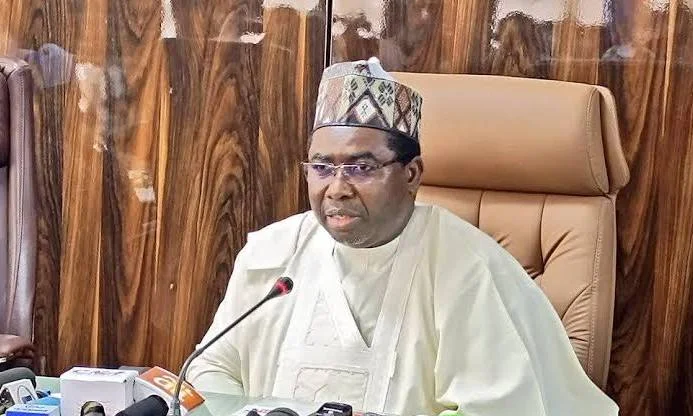
With barely five months to the 2027 general elections, all eyes turned to the Independent National Electoral Commission under its Chairman, *Professor Joash Amupitan, SAN*. Could INEC conduct a credible poll in a state already described as tense? Could the commission prove it had learned from past off-cycle elections and restore public trust?

Days after the poll, the early verdict suggests INEC under Amupitan passed its first major test — not flawlessly, but professionally.
*1. The Context: A “Mirror” Election*
From the outset, Amupitan positioned Osun 2026 as a barometer for 2027. “We look at Osun as a mirror through which we can see the general election that is coming up next year”. He also declared that “the winner of the August 15 governorship election… will emerge through the ballot”, and that “the decision of who becomes the governor should not be decided by bullet but by the will of the people.”
That framing raised the stakes. Osun had seen pre-election tension, reports of violence and threats, and even a rowdy stakeholders’ meeting disrupted by party supporters. Traditional rulers were brought in to de-escalate, and a Peace Accord was signed.
INEC’s job was not just to count votes, but to convince 2,339,233 registered voters across 3,763 polling units that their ballots would count.
*2. Professionalism: Technology, Logistics and Contingency*
Amupitan’s INEC made technology and preparedness the centerpiece.
*BVAS stress-test*: Ahead of the poll, INEC conducted a mock accreditation in 12 polling units across the three senatorial districts. The exercise revealed a critical flaw: BVAS devices could not recognize facial images on old 2011 PVCs. Rather than wait for election day, the ICT team adjusted the “similarity score” and resolved it. Amupitan called it “quality assurance protocol… to stress-test our technological infrastructure under real-world field conditions.”
The result on election day: accreditation took “between 30 seconds and two minutes” using fingerprint or facial recognition.
*Logistics scale-up*: Responding to party concerns, INEC increased BVAS deployment from 4,427 to 5,130, and doubled backup units from 664 to 1,328. Technical engineers were stationed in every Registration Area for quick intervention.
*Voter access*: To address stolen PVCs in Okuku and Ife Central, INEC introduced downloadable and printable PVCs for the first time in an Osun election. “For the PVCs that have been snatched, it will not be useful for those that snatched them… so that they will not be disenfranchised.”
On process, Amupitan also insisted: “there will be no manual accreditation… biometric verification through BVAS remained the only statutory method”. b16f
By election day, INEC said 7 of 9 activities in its timetable were completed. That level of methodical preparation is a marked departure from the last-minute scrambling that characterized some past polls.
*3. Non-Partisanship: Rhetoric vs Reality*
The biggest question for any INEC chairman is neutrality.
Amupitan was unequivocal: “The Independent National Electoral Commission has no preferred candidate, holds no political allegiance, and seeks no outcome other than the lawful choice of the electorate”. He described INEC as “an unbias umpire.”
In practice, the commission engaged all stakeholders. It met with the Ooni of Ife, the Ataoja of Osogbo, political parties, CSOs, and the National Peace Committee. It also worked directly with security agencies — “the police, the Minister of Defence, the Chief of Defence Staff, and service chiefs” — to ensure deployment.
Did it work? The stakeholders’ meeting was tense, with APC and Accord Party supporters clashing, and protests outside calling for a “free and fair” election. The APC alleged the protest was sponsored to disrupt the meeting.
Yet, INEC did not cancel the meeting, did not take sides publicly, and proceeded with the peace accord. The Accord Party did raise concerns about BVAS anomalies during mock voting, and INEC responded by increasing machines. That responsiveness suggests an umpire listening, not dictating.
No credible report as of press time has alleged direct INEC partisanship in Osun. The true test of non-partisanship, however, will be in the collation, transmission of results, and handling of disputes — areas where INEC’s reputation has suffered most in the past.
*4. The 2027 Prelude: What Osun Teaches Us*
Amupitan himself linked Osun to 2027 repeatedly. So can Osun be regarded as an appropriate prelude?
*Three positives:*
1. *Proactive problem-solving*: The mock accreditation caught a BVAS issue before it became a crisis. That is institutional learning.
2. *Voter inclusion measures*: The downloadable PVC policy directly tackled disenfranchisement.
3. *Stakeholder engagement*: Consulting monarchs and signing a peace accord shows an understanding that elections are won on legitimacy, not just logistics.
*Three cautions:*
1. *Security environment*: Amupitan acknowledged “deep concern over reports of violence and threats”. INEC can prepare machines, but it cannot single-handedly guarantee peace. The 2027 general election will be 36 times larger and more volatile.
2. *Trust deficit*: “Since assuming the office of chairman… I resolved with my commissioners to rebuild the public trust”. One off-cycle election does not erase years of skepticism. Voter apathy remains a threat Amupitan himself flagged.
3. *Scale*: 14 parties contested in Osun. In 2027, it will be 18+ parties, presidential, NASS and state elections simultaneously. The BVAS and backup numbers that worked in Osun will need to be multiplied nationwide.
*5. The Amupitan Factor*
Prof. Amupitan, a SAN, has brought a lawyer’s emphasis on rules and a communicator’s visibility. He toured palaces, held media briefings, and spoke in moral terms: the peace accord was “a moral treaty signed before the citizens… and the global community.”
His refrain has been consistent: credibility, fairness, transparency. Whether that translates into public trust will depend on consistency across board.
*Conclusion: Cautious Optimism*
Was INEC under Prof. Joash Amupitan professional and non-partisan in Osun? Based on available evidence — yes, on process. The commission identified technical faults early, scaled logistics, engaged stakeholders, and maintained a public posture of neutrality.
Was Osun an appropriate prelude to 2027? Yes, but with caveats. It was a successful dress rehearsal, not the main performance. The BVAS worked, the backups were there, and the rhetoric of neutrality held. But Osun is one state, one election, with intense national attention.
As Amupitan told Osun voters: “Do not allow fear, apathy, or misinformation to silence your voice… trust that this Commission will protect the sanctity of every valid ballot.”
For 2027, Nigerians will be watching to see if that promise holds at scale. Osun 2026 suggests INEC under Amupitan is moving in the right direction. The road to 2027, however, is much longer.