



The future of Nigeria’s newspaper industry is at the centre of a new book by the Group News Editor of LEADERSHIP Newspaper, Sunday Isuwa, PhD, as digital technology continues to reshape how news is produced, distributed and consumed.
Titled Digital Shift in Nigeria’s Newspaper Industry, the book examines the growing transition from traditional print journalism to digital platforms and its impact on newsrooms, journalists, media businesses and audiences.
The publication will be formally launched on October 29, 2026, at the Conference Hall of the National Open University of Nigeria (NOUN) headquarters, behind the EFCC Headquarters, Jabi, Abuja.


The event is scheduled for 10am.
Rather than focusing only on the decline of print newspapers, the book examines how media organisations can adapt to changing audience habits, emerging technologies and new economic realities.
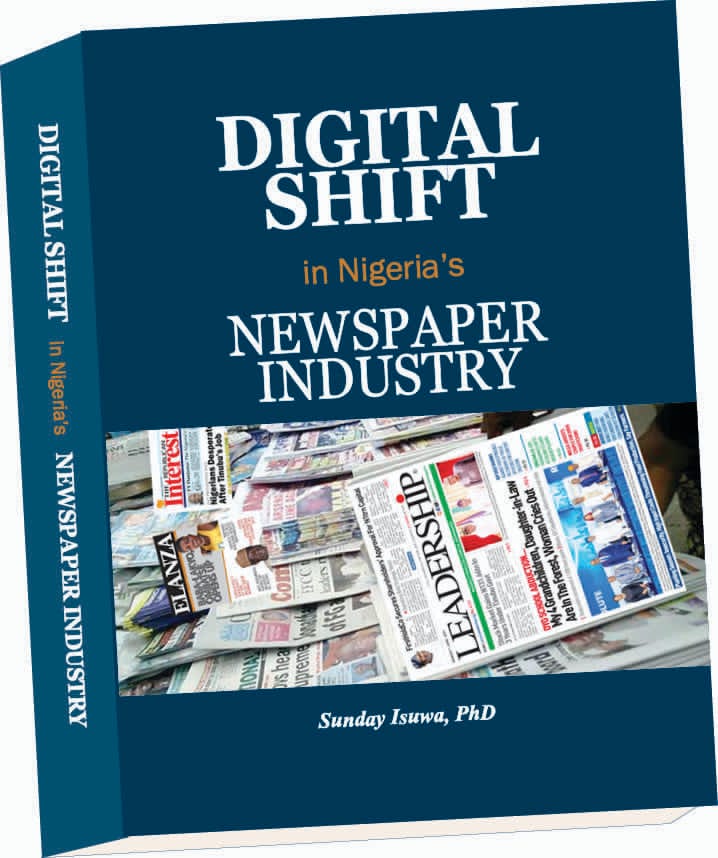
It explores newsroom transformation, multimedia reporting, audience analytics, digital revenue models, misinformation and the professional challenges confronting journalists in an increasingly fast-paced media environment.
Professor Umaru Pate of Bayero University, Kano, described the book as a timely examination of the changes affecting Nigeria’s newspaper industry.
“This book delves into newsroom adaptation, multimedia reporting, audience analytics, innovative revenue strategies, and the challenges presented by misinformation and shifting audience habits,” Pate said.
He said the publication combines contemporary evidence with practical examples to examine the opportunities and difficulties created by digital transformation.
Professor Farooq Kperogi of Kennesaw State University, United States, said the book provides an important account of how Nigerian newspapers are responding to the demands of the digital era.
According to Kperogi, Isuwa combines empirical research with professional experience to examine how traditional newsrooms are changing their editorial routines, business models and audience strategies.
He said the book also places Nigeria’s media transformation within a wider global context while considering the country’s political environment, infrastructure and media culture.
Kperogi said the publication fills an important gap in African media scholarship by examining the impact of technology on the ethical, economic and professional foundations of journalism.
The Managing Director and Chief Executive Officer of the News Agency of Nigeria (NAN), Ali M. Ali, described the publication as a comprehensive account of the evolution of the Nigerian press.
Ali said the book traces the development of Nigerian newspapers from their colonial beginnings to the digital revolution currently reshaping the industry.
He noted that newspapers are being forced to rethink their newsroom structures, business models and revenue sources as more Nigerians consume news through mobile devices.
“It considers the ethical and professional challenges faced by journalists today, highlighting the delicate balance between immediacy and accuracy, as well as the complexities of freedom of expression under regulatory pressures,” Ali said.
He added that the book uses comparative analysis and case studies to highlight the resilience and innovation of selected Nigerian newspapers.
The publication also looks ahead, offering recommendations for editors, journalists, policymakers and other stakeholders on building a sustainable and ethically grounded media industry.
The President of the Association of Communication Scholars and Professionals of Nigeria (ACSPN), Prof. Rotimi Olatunji of Lagos State University, wrote the foreword.
The Vice Chancellor of NOUN, Prof. Uduma Oji Uduma, is expected to review the book.
Former Speaker of the House of Representatives, Rt. Hon. Yakubu Dogara, and the Chairman of the National Credit Guarantee Company Limited (NCGC) will chair the event.
The launch is expected to bring together journalists, media executives, academics, policymakers and other stakeholders for discussions on the future of journalism in Nigeria.