


By Friday Idachaba
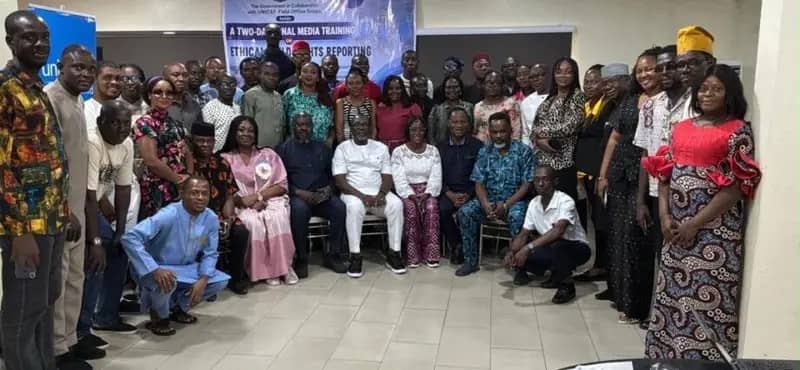
The United Nations Children’s Fund (UNICEF) and 40 journalists from Nigeria’s North-Central, South-East and South-South zones have called for dedicated Child Rights Desks in media organisations to improve the protection and ethical coverage of children.
The call was made in a communiqué issued after a two-day national workshop on Ethical Reporting of Children held in Port Harcourt under the Child Rights Information Bureau (CRIB) and UNICEF.

The participants said dedicated desks would help newsrooms provide sustained and specialised coverage of issues affecting children, particularly those exposed to abuse, violence, conflict and other forms of vulnerability.
They urged journalists to place the dignity, privacy, safety, informed consent and best interests of children above sensationalism.
The participants warned that irresponsible reporting could expose vulnerable children to further trauma, stigma and exploitation.
They also urged journalists to distinguish allegations from established facts when reporting cases involving children, using terms such as “alleged” or “accused” until a competent court determines guilt.
The communiqué advised media organisations to avoid publishing graphic or unnecessary details that could further endanger children, especially victims of sexual abuse and other forms of violence.
According to the participants, reports should focus on child protection, institutional responses, accountability and access to justice.
They also called on media organisations to develop and enforce internal child-protection and ethical reporting policies.
The journalists urged practitioners to prioritise the medical and psychological well-being of affected children and avoid interviews or questioning methods that could cause further trauma.
They further advised journalists to obtain relevant information from appropriate authorities, including the police and recognised child-protection agencies, and disclose any personal relationship or conflict of interest that could affect professional judgment.
The workshop featured 10 technical and three specialised sessions, alongside group exercises and case studies.
Facilitators included UNICEF Communications Specialist Susan Akila; CRIB’s Temitoye Falayi; Dr Geoffrey Njoku of Truevine Communications; former Nigerian Television Authority Executive Director Namsel Nimyel; Lanre Idowu of DAME; and Dr Jide Johnson of the Nigerian Institute of Journalism.
The sessions focused on child rights and the media, ethical reporting, public interest and child protection, trauma-informed journalism, child-sensitive storytelling, legal frameworks and the development of child-protection policies for media organisations.
The participants also urged online publishers and blogging platforms to uphold the same ethical and professional standards expected of mainstream media.
They called for stronger collaboration among UNICEF, the Guild of Editors, media owners and senior management through bodies including the Newspapers Proprietors’ Association of Nigeria and the National Broadcasting Organisations.
They further recommended regular training for journalists, editors and other media professionals on child rights, trauma-informed journalism, digital safety, privacy and Nigeria’s legal framework on children.
The journalists reaffirmed their commitment to journalism that “informs, protects and empowers” rather than exposes children to further harm.