

Close Menu
National Update
    Facebook X (Twitter) Instagram
    Trending
    • ₦4m For Medical School? HURIWA Demands Probe of Alleged Admission Racket
    • Tinubu Unveils N52,500 Minimum Pension, Free Healthcare for Nigerian Retirees
    • ADC Crisis: Dalung Demands Suspension of Caretaker Committee Inauguration
    • Tinubu’s Reform Agenda Gets Book Treatment, Unveiling Holds December 1
    • Tinubu’s Dutse visit revives Sule Lamido’s enduring infrastructure legacy
    • Retired Police Officers Camp at PenCom Demanding Unpaid Pensions
    • Senate Probes VIP Airspace Closures Over Flight Safety Fears
    • Senate Pledges N100m to Flamingos, Urges FG to Match Reward
    Facebook X (Twitter) Instagram
    National UpdateNational Update
    Subscribe
    • News
    • Politics
    • Opinion
    • Economy
    • Entertainment
    • Health
    • Security
    National Update
    Home»Agriculture

    Experts Seek Youth-Led Revolution to End Africa’s Livestock Import Dependence

    By National UpdateAugust 13, 2026 Agriculture No Comments4 Mins Read
    Share
    Facebook Twitter WhatsApp LinkedIn Email

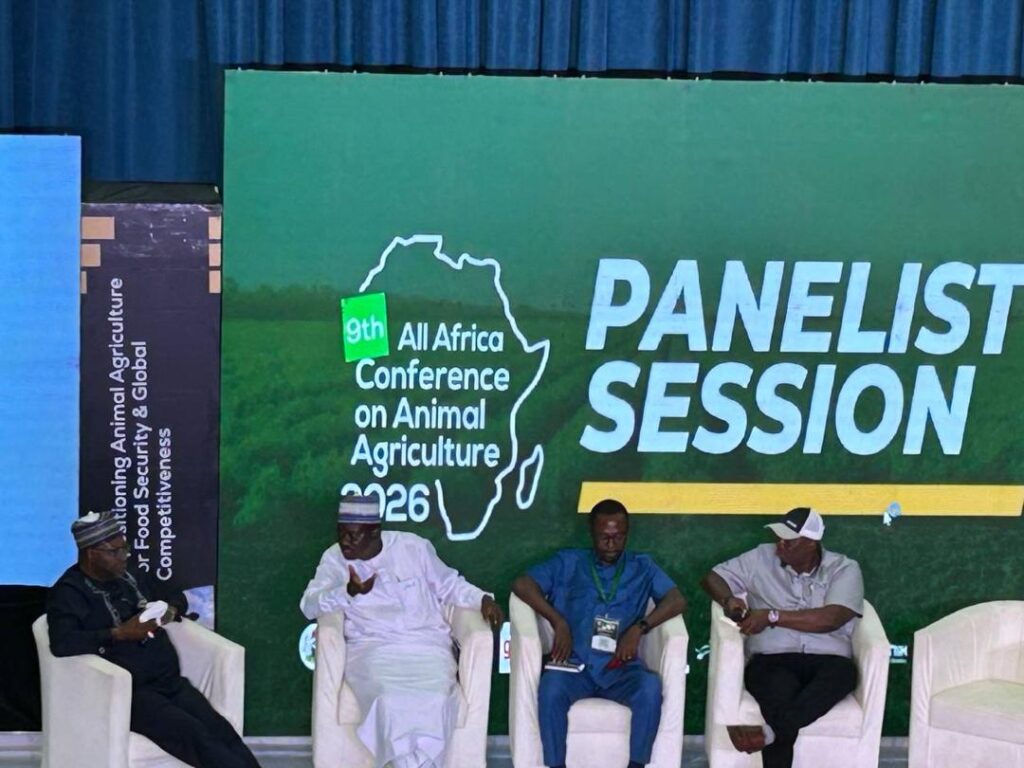
    Africa’s livestock industry must move beyond traditional farming and deliberately position young people as the architects of a technology-driven agricultural economy, experts at the 9th All Africa Conference on Animal Agriculture have said.

    The experts, who spoke during a panel session in Abuja, argued that Africa’s continued reliance on imported genetic materials and food commodities was unsustainable, especially with its large youthful population and vast agricultural resources.

    They called for a new approach that combines practical training, affordable finance, technology and access to markets to turn young people—particularly agricultural graduates—into livestock entrepreneurs, innovators and service providers.


    A member of the Presidential Livestock Implementation Committee, Prof. Demo Kalla, said Nigeria could no longer afford to treat its youthful population merely as beneficiaries of government programmes.

    Instead, he said, young Nigerians should be deliberately positioned to drive innovation across the livestock value chain.

    “Our youthful population is our greatest asset,” Kalla said, warning that failure to channel the creativity and energy of young people into productive ventures could create serious social and economic consequences.

    He identified artificial intelligence, digital platforms, animal tracking, agribusiness, processing, engineering and logistics as some of the emerging areas where young people could build businesses around livestock without necessarily owning farms.

    Kalla said the future of livestock production would depend increasingly on technology and systems capable of improving productivity, traceability and efficiency.

    “For us in the livestock sector, our focus is to see youth take up innovative enterprises and innovative platforms, digital economy, digital platforms and AI-enabled systems to change the face of our current production systems,” he said.

    He described animal agriculture as a largely untapped economic frontier, urging young Nigerians to see opportunities not only in producing animals but also in developing the infrastructure and services that support the industry.

    From manufacturing animal identification tags and developing tracking systems to providing specialised services, he said the livestock economy could support thousands of businesses across the continent.

    Kalla also linked livestock development to food and nutrition security, stressing that milk, meat, eggs and other animal-source foods were indispensable to a healthy food system.

    Prof. Kawu Domako of Ghana, another panelist, said Africa’s agricultural problem was not a shortage of land but a failure to make farming sufficiently attractive and commercially rewarding to its younger population.

    He advocated introducing agriculture at the basic education level to familiarise children with the sector early and change the perception of farming as a low-income occupation.

    Domako also challenged African governments to confront the paradox of a continent with abundant arable land that still imports basic food commodities.

    He said governments must back their youth-agriculture policies with financing that reflects the realities of young entrepreneurs.

    “We need to create a conducive environment to let agriculture become attractive to young people,” he said.

    Rather than relying solely on conventional bank loans that often require collateral and established financial records, Domako proposed youth-focused grants and affordable financing that could increase as beneficiaries demonstrate the ability to grow their businesses.

    “Young people don’t have collateral. They may not have a record. They may not have cash flow. But we need to trust them and assist them to start agriculture,” he said.

    According to him, many young farmers are forced to rely on personal savings because they cannot access affordable credit, while uncertainty over markets makes agricultural investment even riskier.

    The panelists therefore called for a broader agricultural strategy in which training, finance, technology and guaranteed markets work together.

    They argued that such an approach would not only attract more young people into livestock and agriculture but could also reduce Africa’s dependence on imported inputs, strengthen domestic food production and transform animal agriculture into a major source of jobs, innovation and wealth.

    Previous ArticleInterfaith Media Guild Warns Against Religious Rhetoric, Urges Restraint
    Next Article 2027: NLC Rift Widens Over Pro-Tinubu Group, Lagos Council Chairman Queried

    Keep Reading

    Veterinary Experts Warn Diseases, Climate Change Threaten Nigeria’s Livestock Sector

    Livestock Ministry denies ₦140m budget claim for Kaduna palaces, mosques allocation

    FG Unveils Roadmap for Dairy Transformation as Tinubu’s Livestock Reforms Gain Momentum

    UniAbuja Names Prof. Hakeem Fawehinmi as New VC

    Jega Rallies Stakeholders to Transform Nigeria’s Dairy Industry

    Senate to Screen INEC Chairman Nominee Thursday

    Add A Comment

    Comments are closed.

    Advert
    VGC Advert
    Most Viewed Posts
    • Ex-Kogi Gov’s Arraignment Stalled at the instance of EFCC Counsels (2,670)
      The arraignment of the former Governor of Kogi State, Yahaya Bello, on an alleged money laundering case instituted against him by the Economic and Financial Crimes Commission (EFCC), has been adjurned to June 27, by the Federal High Court, in Abuja, based on an agreement by the counsels to the two parties. A new date,
    • Breaking: Intrigues, as ADC suspends its presidential candidate, Kachikwu, accuses him of blackmail (1,986)
      The African Democratic Congress (ADC) has suspended its presidential candidate Dumebi Kachikwu, from the party, accusing him of false, misguided and defamatory video he made and circulated, among other infractions. The party also considered Kachikwu's action as "smacks of crass irresponsibility, gross indiscipline, disingenuous scandalization and blackmail, and completely unfit of someone who wants to
    • North Central Serving Governor withdrew N60 billion cash in six years ― EFCC (1,918)
      A serving Nigerian governor has allegedly withdrawn N60billion from his state’s purse. The Economic and Financial Crimes Commission (EFCC) said that he has lifted about N60 billion cash from state coffers in about his six years in office. The governor remains unnamed and his state, partially identified as domiciling in the North Central of the
    • Integrity Pays: Delta SANs Honour Police Officer with ₦1m Award (1,784)
      In a rare show of appreciation for integrity in public service, the Body of Senior Advocates of Nigeria (BOSAN), Delta State chapter, has honoured Assistant Commissioner of Police (ACP) Aliyu Shaba for what they described as his anti-corruption stance and outstanding service within the Nigeria Police Force. At a colourful ceremony in Ekpan, Uvwie Local
    • A major win for Kanu as Court orders Nigeria to pay him ₦1billion (1,618)
      For violating the rights of the leader of the Indigenous People of Biafra (IPOB) Nndi Kanu a High Court in Umuahia, Abia State, on Wednesday ordered the Nigeria Government to pay him the sum of N1 billion The presiding Judge Benson Anya described the invasion of Kanu’s Afaraukwu residence as notorious and brazen. He also

    Latest News

    ₦4m For Medical School? HURIWA Demands Probe of Alleged Admission Racket

    November 11, 2026

    Tinubu Unveils N52,500 Minimum Pension, Free Healthcare for Nigerian Retirees

    November 11, 2026

    ADC Crisis: Dalung Demands Suspension of Caretaker Committee Inauguration

    November 11, 2026

    Tinubu’s Reform Agenda Gets Book Treatment, Unveiling Holds December 1

    November 11, 2026

    Tinubu’s Dutse visit revives Sule Lamido’s enduring infrastructure legacy

    November 11, 2026

    Subscribe to Updates

    Get the latest creative news from FooBar about art, design and business.

    National Update
    Facebook X (Twitter) Instagram
    © 2026 National Update. Designed by Lamark Cre8ives.

    Type above and press Enter to search. Press Esc to cancel.