

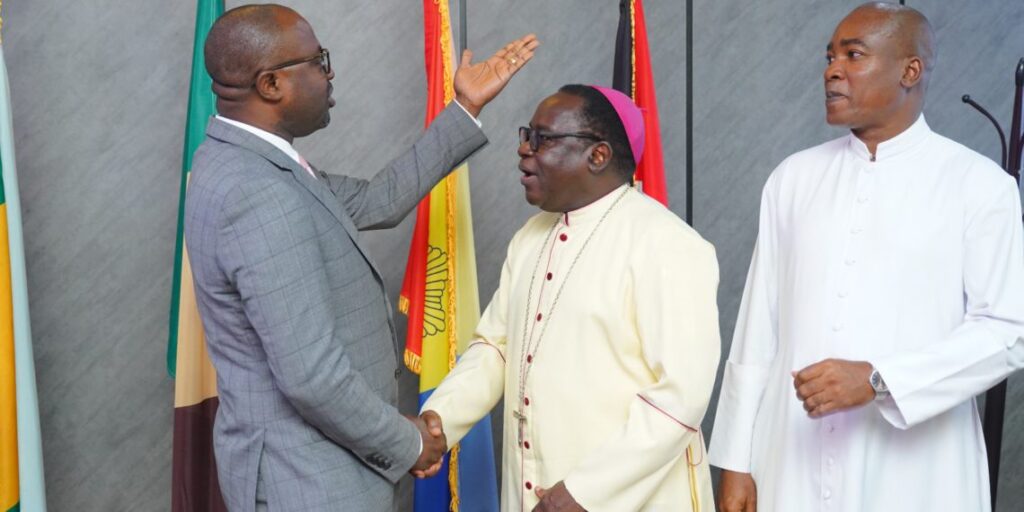

In a move that signals a broader approach to tackling Nigeria’s security and social challenges, the Federal Government is seeking deeper collaboration with religious institutions, describing faith-based organisations as indispensable partners in building a safer and more united nation.
The new direction emerged during a high-level meeting between Minister of Interior Olubunmi Tunji-Ojo and a delegation of the Catholic Secretariat of Nigeria led by Matthew Hassan Kukah in Abuja.
Rather than relying solely on conventional security measures, the government said it intends to leverage the influence, reach and credibility of religious institutions to promote peace, strengthen community resilience and improve public confidence in governance.


Tunji-Ojo said religious leaders occupy a unique position in society because of their direct engagement with citizens at the grassroots level, making them critical stakeholders in efforts to address insecurity and social tensions.
According to the minister, the administration of President Bola Tinubu is committed to fostering partnerships that go beyond government institutions and security agencies, arguing that national development and stability require collective responsibility.
The discussions centred on ways both parties can work together on peacebuilding, national security, social cohesion and governance reforms aimed at strengthening the country’s internal stability.
“We cannot build a secure and prosperous nation in isolation. Strong institutions, active citizens and trusted community leaders must work together to achieve lasting progress,” the minister emphasized.
For his part, Bishop Kukah welcomed the initiative, describing dialogue and collaboration as essential tools for addressing the country’s complex challenges.
The outspoken cleric reiterated the Catholic Church’s readiness to support efforts that advance justice, peace, accountability and national development, while stressing the importance of sustained engagement between government and faith communities.
The meeting reflects a growing shift toward community-driven security and governance strategies, with both sides agreeing that building trust, encouraging dialogue and promoting shared national values are crucial to Nigeria’s long-term stability.
Observers say the engagement highlights an emerging consensus that security is no longer viewed solely through the lens of law enforcement, but increasingly as a collective project requiring the participation of religious institutions, civil society and local communities.