

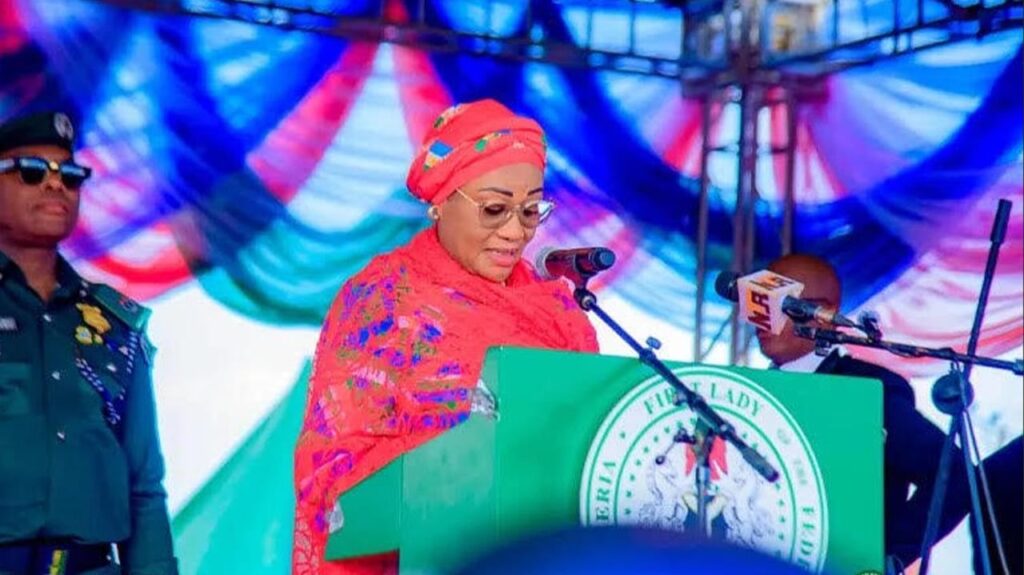

Nigeria’s First Lady, Oluremi Tinubu, has defended her administration’s grassroots empowerment programme amid criticism over comments referencing “akara sellers,” insisting that the initiative is designed to support thousands of women operating across Nigeria’s informal economy.
Mrs. Tinubu pushed back against what she described as misrepresentations of her remarks, stressing that the programme extends far beyond a single category of traders and targets women engaged in various small-scale businesses that sustain families and local economies nationwide.
Her response comes after public debate erupted over comments seen by critics as emblematic of the government’s approach to economic empowerment at a time of rising living costs and growing unemployment concerns.
Addressing the controversy, the First Lady said beneficiaries of the programme include tomato sellers, pepper vendors, vegetable traders, boli sellers and other market women whose businesses form the backbone of many communities.
“I know they have been talking that I said akara. It’s not only akara. We also have tomato sellers, we have boli, and those selling pepper, selling vegetables in the market. We’ll continue to empower them,” she said.
Mrs. Tinubu maintained that despite criticism, the initiative would continue to focus on supporting women at the grassroots level, arguing that many small-scale traders remain critical contributors to household incomes and economic activity across the country.
Her intervention comes as the administration faces increasing scrutiny over how best to address economic hardship, with debates growing over whether empowerment programmes targeted at informal traders should complement broader efforts to create jobs, expand access to finance and stimulate economic growth.
However, the First Lady insisted that helping women build and sustain small businesses remains a vital component of economic inclusion, particularly for those operating outside the formal sector.
“We are not intimidated by all those wrong reports,” she added.
The remarks underscore an emerging debate about the place of grassroots enterprise in Nigeria’s economic strategy, with the Presidency arguing that empowering market women and small traders is a practical pathway to improving livelihoods at the community level, even as critics continue to call for more expansive economic interventions.