

**”Warns Nigeria Is Edging Towards One-Party Dominance
A fresh twist has emerged in Nigeria’s evolving political landscape ahead of the 2027 presidential election, with respected cleric and national mobiliser, Prophet Isa El-Buba, publicly distancing himself from the political movement that backed Peter Obi in 2023 and declaring support for Social Democratic Party (SDP) presidential hopeful, Prince Adewole Adebayo.
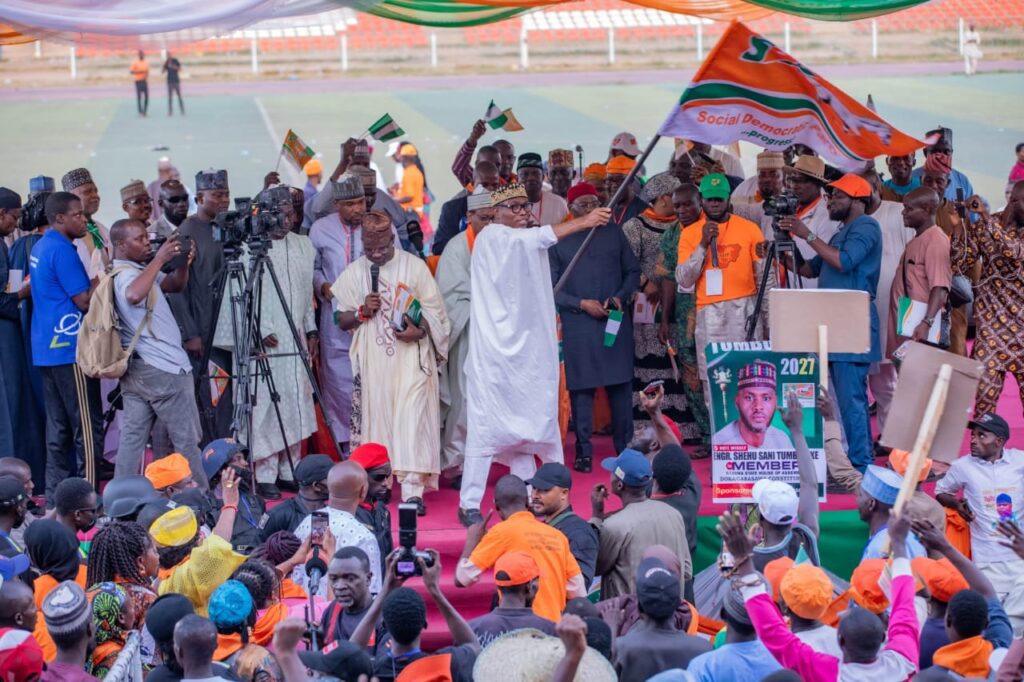
The outspoken cleric, who serves as Convener of the Initiative for a Better and Brighter Nigeria, unveiled his new political direction during a gathering of SDP delegates, stakeholders and supporters in Bauchi State, where he painted Adebayo as a unifying national figure capable of steering the country away from its current challenges.
His endorsement is already generating ripples across opposition circles, with political observers viewing it as one of the clearest indications yet that the battle for the 2027 presidency may trigger a major realignment of political forces beyond the traditional party structures.
Speaking before a packed audience of party faithful, youth leaders and community stakeholders, El-Buba said Nigeria is standing at a decisive moment in its history and can no longer afford leadership that merely manages crises without addressing their root causes.
He lamented the worsening economic realities facing ordinary citizens, the persistence of insecurity and the growing sense of frustration among Nigerians, arguing that the country requires a new generation of leadership driven by competence, vision and national purpose.
According to him, the nation possesses all the resources required for prosperity but has remained trapped in cycles of poor governance and missed opportunities.
“Nigeria has everything it needs to succeed, yet millions of our citizens continue to struggle daily with poverty, unemployment, insecurity and uncertainty,” he said.
“The time has come for Nigerians to rise above old political divisions and embrace leaders who are prepared to rebuild institutions, restore confidence and place the interests of the people above personal ambition.”
However, beyond his endorsement of Adebayo, El-Buba used the occasion to sound a stark warning about what he described as the gradual erosion of democratic competition in the country.
He expressed concern that Nigeria may be drifting towards a one-party political order, a development he said could weaken accountability, diminish political plurality and undermine democratic progress.
Without naming any political party, the cleric cautioned that democracy flourishes only when alternative voices remain vibrant and citizens retain the power to choose from competing visions for national development.
“No nation thrives when political power becomes concentrated in one direction,” he declared.
“Nigeria cannot afford a one-party state. Democracy survives on competition, accountability and the freedom of citizens to choose. Once those principles are compromised, the entire democratic project comes under threat.”
El-Buba maintained that opposition parties must move beyond rhetoric and present Nigerians with credible, practical and people-oriented alternatives capable of inspiring public confidence.
Explaining his support for Adebayo, he described the SDP flagbearer as a leader whose political philosophy is rooted in institutional reform, national unity and inclusive development.
He said Nigerians are increasingly looking beyond ethnic and religious sentiments in their political choices and are becoming more focused on competence, character and the ability to deliver meaningful change.
“The electorate is changing. Citizens are asking tougher questions and demanding better leadership,” he said.
“The era when voters could be swayed by empty promises and temporary inducements is fading. Nigerians want leaders who can create opportunities, restore dignity and offer a clear path to national renewal.”
The cleric also expressed confidence that the 2027 elections could become a defining moment for the country’s democratic future if citizens remain actively engaged in the political process and insist on transparency and accountability from those seeking public office.
He urged Nigerians across political, ethnic and religious lines to unite around the ideals of justice, fairness and good governance, insisting that no nation can achieve sustainable development without strong institutions and responsible leadership.
As political calculations intensify ahead of 2027, El-Buba’s dramatic shift from the Obi movement to the Adebayo camp is expected to fuel fresh conversations about opposition unity, coalition-building and the search for a viable alternative in Nigeria’s increasingly competitive political arena.