By James Ojochegbe
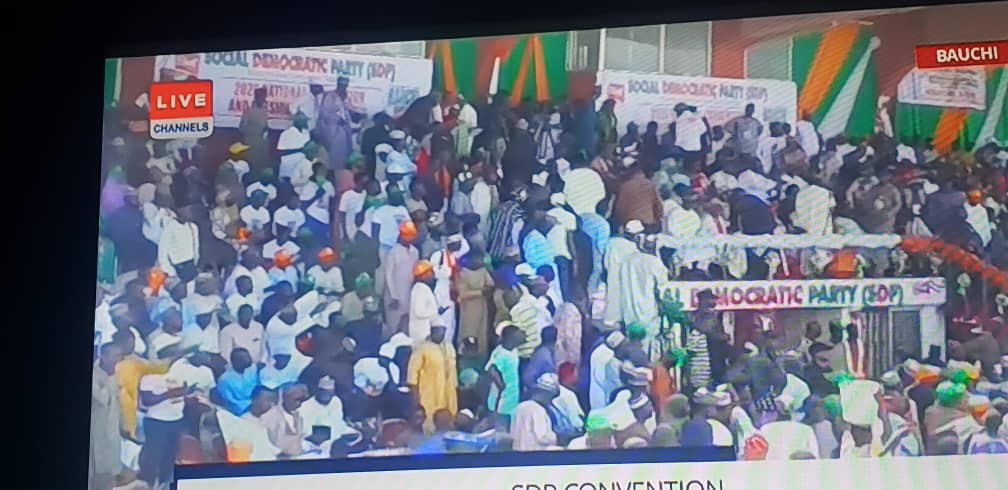
In Nigeria’s increasingly turbulent opposition landscape, the 2026 National Convention of the Social Democratic Party in Bauchi was more than a routine political gathering. It was a declaration of survival.
For months, the SDP had faced what party leaders described as an orchestrated attempt to weaken, infiltrate and eventually seize control of one of the country’s oldest surviving ideological parties. There were internal battles, legal disputes, alleged external interference and growing accusations that state institutions were being deployed to constrict opposition politics ahead of the 2027 general elections.
But by the end of the convention in Bauchi, the message from the party leadership was unmistakable: the SDP believes it has survived the siege — and emerged politically stronger.
The symbolic high point of the convention came with the adoption of Adewole Adebayo as the party’s sole presidential candidate for the 2027 election, effectively positioning the lawyer and 2023 presidential flagbearer as the face of the SDP’s renewed national push.
The atmosphere in Bauchi carried the tone of a party that saw itself not merely as participating in democracy, but defending it.
Again and again, speakers at the convention returned to one recurring theme: that Nigeria’s democratic space was shrinking and that opposition parties were operating under increasingly hostile conditions.
Convention Chairman, Usman Bugaje, delivered perhaps the convention’s sharpest political rebuke, accusing both the judiciary and the Independent National Electoral Commission of enabling anti-democratic forces.
“National institutions like the judiciary and democratic institutions like INEC have become tools in the hands of unscrupulous politicians, tossed around like chess pieces,” Bugaje declared before party delegates.
To SDP leaders, the accusation was not rhetorical exaggeration. It reflected months of internal crisis during which the party says it battled coordinated attempts by political actors and coalition interests to hijack its structure from within.
The fear inside the SDP was that, as opposition realignments intensified nationwide, the party could become vulnerable to external capture by ambitious political blocs searching for ready-made structures ahead of 2027.
But instead of collapse, the leadership claims the pressure forced the party into institutional self-preservation.
At the center of that recovery effort was National Secretary Olu Agunloye, who described the past year as a period of “essential internal cleansing.”
According to Agunloye, the SDP deliberately activated its internal disciplinary and constitutional mechanisms to resist infiltration and restore authority to what he called “genuine bonafide members” of the party.
“The party survived the siege of takeover attempts by self-serving politicians and agents of coalition,” he said.
That statement captured the defining political tension surrounding the convention.
Unlike several opposition parties battling endless factional wars, litigations and parallel leadership claims, SDP leaders argued that Bauchi represented proof that the party had regained control of its internal architecture.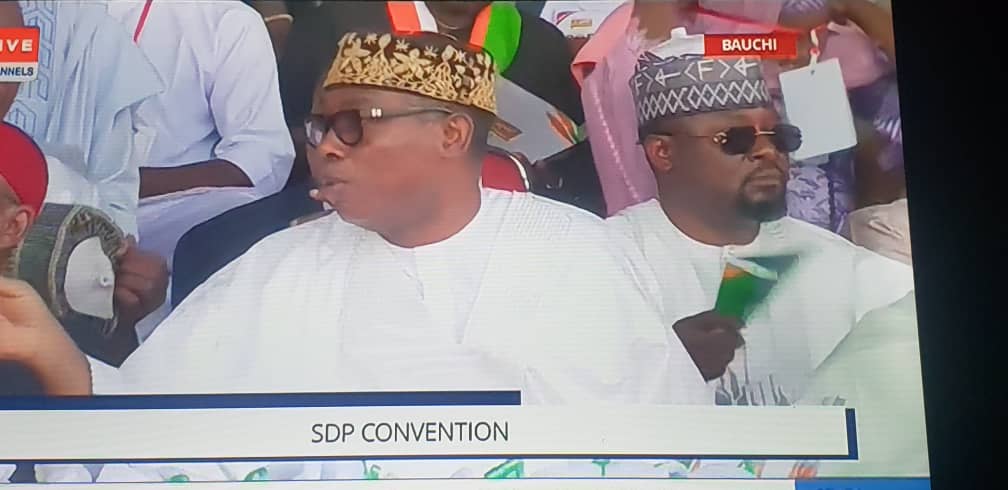
The convention itself became part political congress, part institutional reaffirmation.
New national officers were sworn in under a renewed pledge of constitutional order, while newly elected National Chairman, Sadiq Umar Gombe, promised a leadership anchored on discipline, transparency and strict adherence to party rules.
The underlying message was clear: the SDP wanted to project stability at a time many opposition parties appear trapped in chaos.
One of the most politically explosive dimensions of the convention was the SDP’s direct confrontation with INEC.
Party leaders repeatedly accused the electoral body of unlawful interference in the party’s affairs, citing multiple court victories secured against the commission between 2025 and 2026.
Agunloye disclosed that the party won cases against INEC at the High Court, Court of Appeal and Supreme Court, including one in which the commission was reportedly fined N2m for illegal interference.
To SDP leaders, those court victories became more than legal wins — they became evidence of what the party sees as a dangerous pattern of institutional overreach against opposition movements.
Bugaje went even further, accusing unnamed political forces of attempting to use democratic institutions to eliminate opposition competition entirely.
“The attempt by the ruling party to block political space and eliminate opposition is one of the most despicable offences in a democracy,” he said.
Whether exaggerated or not, such rhetoric reflects a growing distrust between opposition parties and institutions expected to serve as neutral arbiters of Nigeria’s democratic process.
And in Bauchi, that distrust became a unifying force for the SDP.
Adebayo’s Emergence and the Search for Credibility
Against that backdrop, the emergence of Adewole Adebayo as consensus presidential candidate was carefully staged not merely as a nomination, but as a statement of ideological continuity.
Unlike the transactional coalition politics dominating much of Nigeria’s opposition space, SDP leaders portrayed Adebayo as a candidate rooted in party philosophy rather than political convenience.
State chairmen across the federation individually endorsed his candidacy during the convention before delegates ratified his emergence through voice vote.
For the SDP, Adebayo represents several strategic advantages heading into 2027.
He already possesses national visibility from the 2023 presidential race. He remains relatively untouched by corruption allegations that plague much of Nigeria’s political establishment. And perhaps most importantly for the SDP, he projects ideological consistency in a political climate dominated by defections and opportunistic alliances.
The party hopes that combination can help it attract frustrated voters searching for an alternative outside both the ruling establishment and unstable opposition coalitions.
Yet beyond the speeches and symbolism, the real significance of the Bauchi convention may lie in what it reveals about Nigeria’s changing political terrain.
The SDP is no longer presenting itself as a fringe ideological platform surviving on nostalgia from the June 12 political era. It is attempting to reposition itself as a structured national opposition force capable of capitalising on widening public frustration over economic hardship, insecurity and democratic anxieties.
The party says it has already begun building model secretariats nationwide while preparing to contest every elective position in 2027.
More importantly, the convention exposed a broader reality in Nigerian politics: opposition parties increasingly see survival itself as a political victory.
In Bauchi, the SDP was not merely celebrating a convention.
It was celebrating endurance.
And after months of internal warfare, court battles and accusations of institutional intimidation, the party left Bauchi convinced that it had crossed a defining threshold — from a party under siege to a party preparing for national relevance.