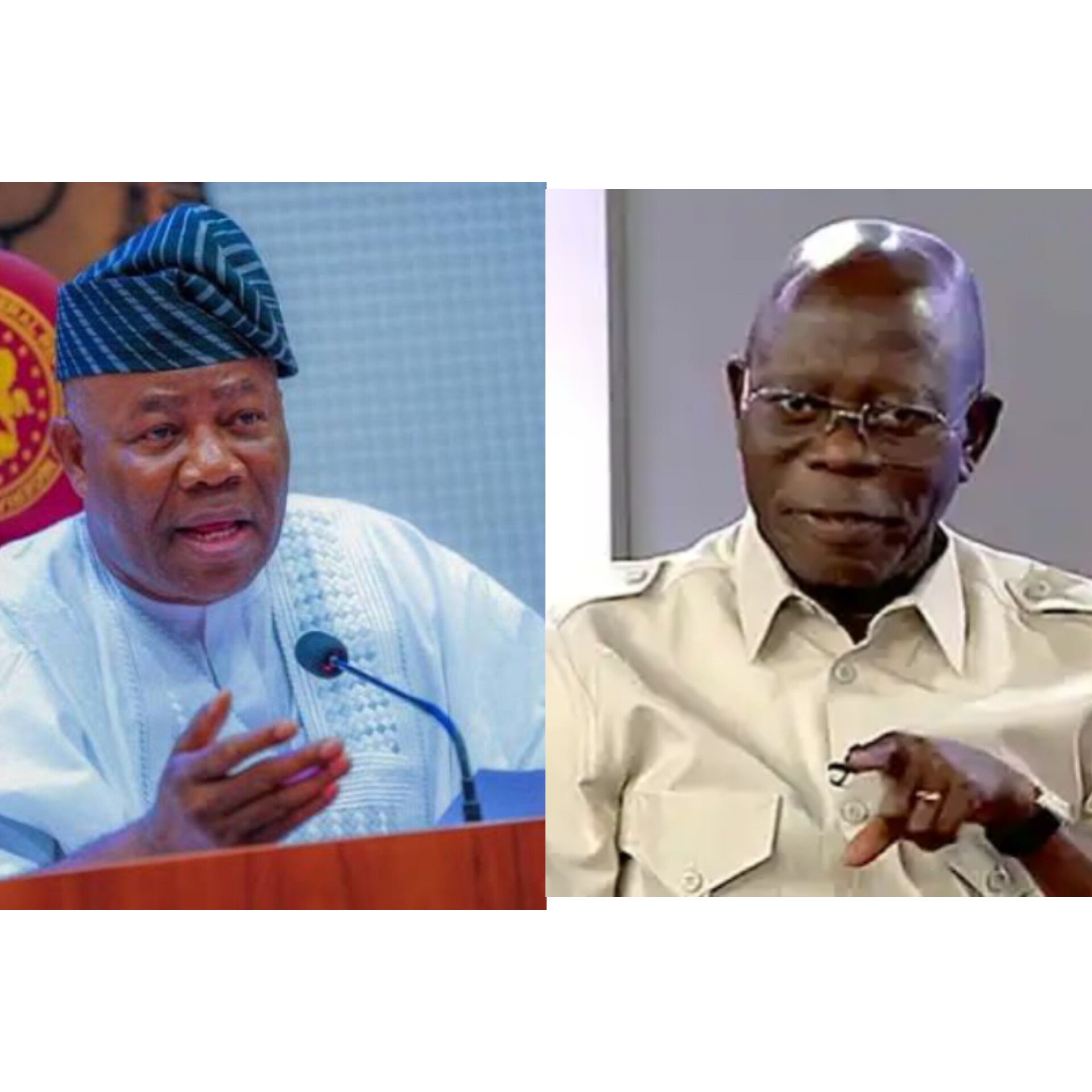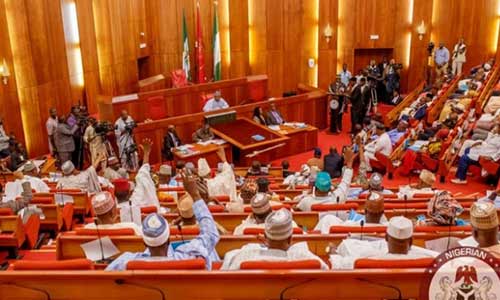
A routine sitting of the Senate on Wednesday briefly tilted into tension as Senate President Godswill Akpabio and Senator Adams Oshiomhole engaged in a sharp procedural exchange that disrupted proceedings and reignited quiet conversations about authority, hierarchy and emerging political alignments within the chamber.
The incident unfolded during the consideration of the Votes and Proceedings, when Senator Oshiomhole sought to raise a point of order. The Senate President, however, did not immediately recognise him, insisting on proceeding with the formal agenda.
Oshiomhole persisted, repeatedly signalling for attention in a manner that visibly unsettled the flow of proceedings. The situation drew intervention attempts from other lawmakers, including the Chief Whip, Senator Mohammed Monguno, but the tension had already begun to spill into the chamber’s atmosphere.
Rather than escalate the exchange person-to-person, Akpabio responded by grounding his position in procedure. He referenced the Senate Standing Orders, emphasising that the presiding officer retains full authority to guide debate, enforce discipline, and determine the admissibility of interventions on the floor.
“The rules governing this chamber are clear,” he said, underscoring that order in plenary is anchored on strict adherence to procedure.
He went further to caution senators against conduct capable of disrupting legislative business, warning that disorderly behaviour would not be entertained under his watch.
“This is the final warning,” he declared, a statement that immediately restored a degree of control to the chamber but also left lingering tension in its wake.
While the immediate trigger was procedural, the exchange has since been read through a broader political lens within and outside the National Assembly.
Oshiomhole, a former governor and prominent political figure, has remained an influential voice in national politics since joining the Senate. His insistence on being heard at that moment has been interpreted in some quarters as more than a routine procedural objection.
Political observers note that undercurrents of positioning ahead of the 2027 political cycle are gradually beginning to surface within legislative circles, particularly around questions of leadership influence and succession planning in the upper chamber.
At the centre of these discussions is a recent amendment to Senate rules, which some lawmakers privately describe as capable of shaping the internal balance of power over time. While officially framed as administrative refinement, critics argue that such adjustments often carry political implications beyond procedure.
Within this context, Wednesday’s encounter is being viewed less as an isolated breach of order and more as a glimpse into a chamber where institutional procedure and political calculation increasingly intersect.
For supporters of the Senate leadership, Akpabio’s handling of the situation reflected a firm commitment to maintaining discipline and protecting the sanctity of plenary proceedings from disruption.
Others, however, see the moment as indicative of growing sensitivity around dissenting interventions and the evolving dynamics of influence within the chamber.
Oshiomhole’s camp, meanwhile, is said to view his intervention as consistent with the role of lawmakers to challenge, question, and assert procedural rights within the legislative space.
As the Senate moved on after order was restored, the moment quickly faded from formal proceedings. Yet its political aftertaste lingered.
In a chamber where procedure often intersects with power, Wednesday’s exchange served as a reminder that even routine sittings can quietly reflect deeper struggles over authority, influence, and the shifting architecture of Nigeria’s legislative politics ahead of 2027.
Akpabio–Oshiomhole Exchange Rekindles Senate Power Debate