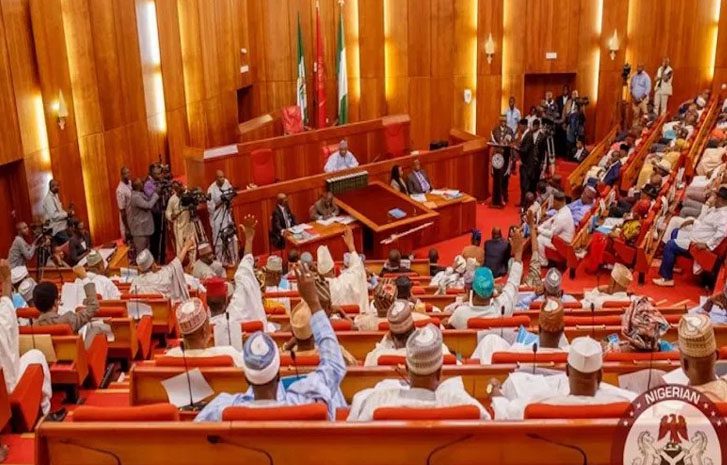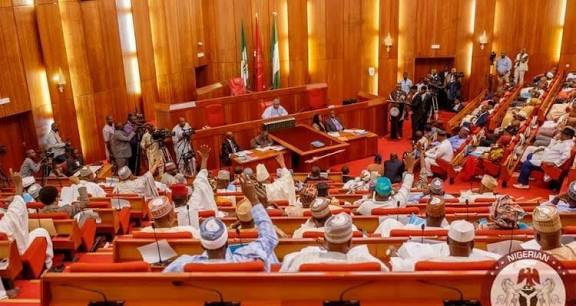
Nigeria’s Senate has moved to reshape the funding architecture of the police, passing the Nigeria Police Trust Fund (Establishment) Bill, 2025 for second reading—an effort that has sparked intense debate over its proposed 1 percent statutory allocation from the Federation Account.
The bill, sponsored by Senate Leader Opeyemi Bamidele, seeks to repeal the 2019 framework and introduce a broader, more structured system for financing and managing the Nigeria Police Force. Central to the proposal is the doubling of funding allocation from 0.5 percent to 1 percent of total national revenue.
Opening debate, Bamidele framed the bill as a necessary response to Nigeria’s worsening security climate, arguing that persistent threats—from insurgency to cybercrime—require a better-funded and modernised police force. He noted that beyond statutory funding, the new framework aims to attract international grants, private sector support, and development-based contributions.
The proposal also introduces governance reforms, including a multi-stakeholder board and a Project Implementation Committee designed to improve transparency and ensure funds are deployed efficiently.
However, the move drew sharp scrutiny from several lawmakers.
Abdul Ningi warned that increasing statutory deductions could significantly reduce the pool of funds available for federal, state, and local governments. He cautioned that layering multiple allocations on the Federation Account may strain public finances and create long-term fiscal pressure.
On his part, Ibrahim Dankwambo questioned whether the proposed funding model aligns with ongoing discussions around decentralising policing through state police structures, suggesting the bill may require clearer policy coordination.
Abdulfatai Buhari raised concerns about accountability, advocating for a performance-based funding mechanism that ties disbursement to measurable improvements in policing outcomes.
Defending the bill, Chief Whip Mohammed Tahir Monguno argued that the National Assembly is constitutionally empowered to legislate such funding frameworks, dismissing fears over legality.
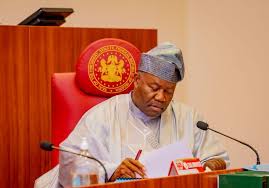
Providing further clarity, Senate President Godswill Akpabio said the bill is not solely about increasing funds but also about correcting structural inefficiencies in the Trust Fund’s operations. He acknowledged concerns over transparency and stressed that any new framework must deliver visible improvements in policing nationwide.
After extensive deliberation, the bill scaled second reading through a voice vote and was referred to the Senate Committee on Police Affairs for further scrutiny, with a report expected within two weeks.
As the legislative process continues, the proposal is shaping up to be a defining test of how Nigeria balances urgent security needs with fiscal sustainability and institutional accountability.
Senate Pushes Police Trust Fund Reform, Debate Deepens Over 1% Revenue Allocation