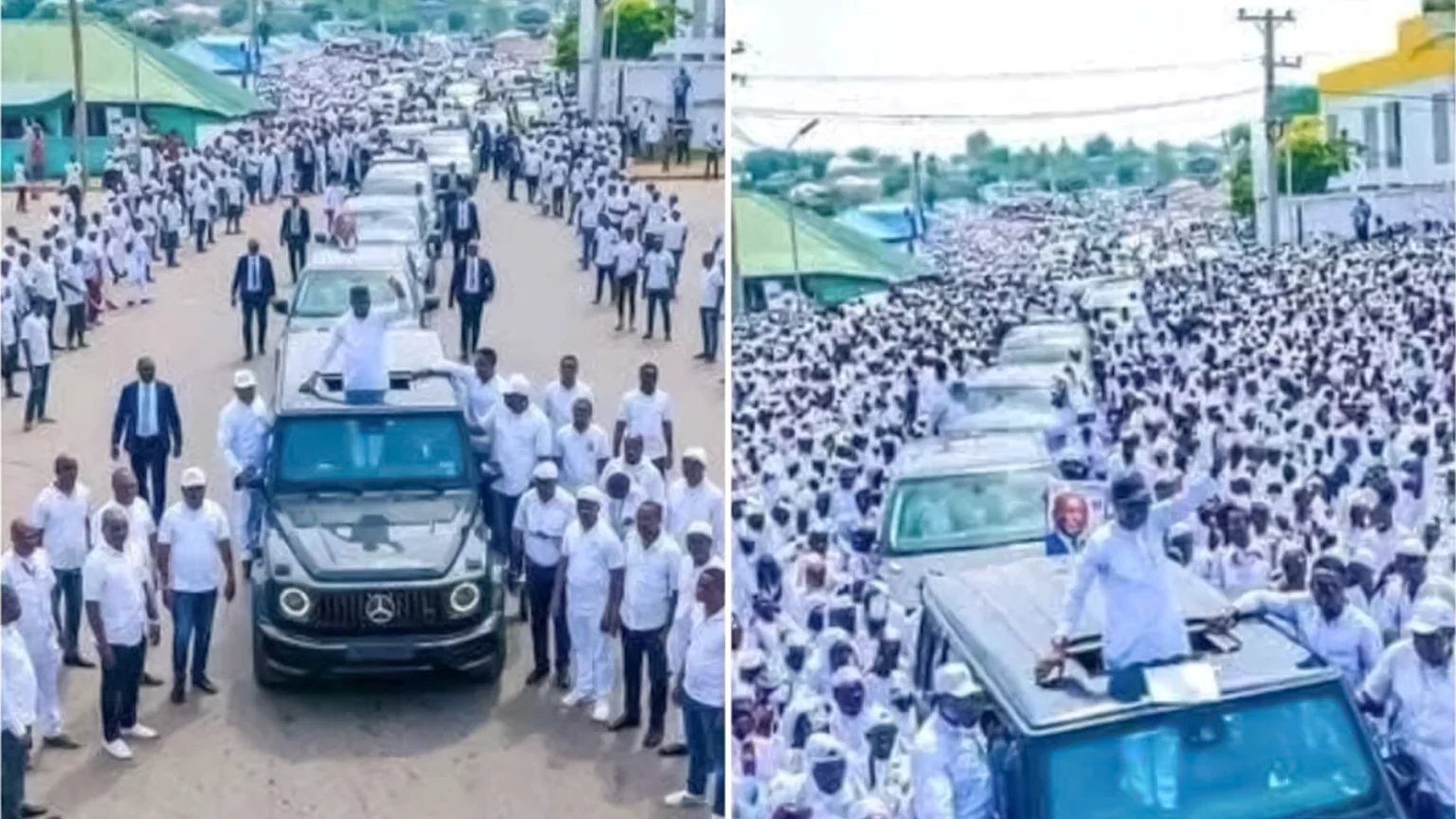
Controversy has erupted in Nasarawa State after campaign images linked to governorship aspirant Ahmed Wadada surfaced online, allegedly manipulated with artificial intelligence to exaggerate crowd turnout at a political rally.
The images—now widely circulated across social media—appear in side-by-side comparisons showing what critics claim are original photos alongside digitally enhanced versions depicting significantly larger crowds.
The development has triggered a storm of reactions, with political observers warning that the use of AI to distort public perception could mark a dangerous new phase in Nigeria’s electoral politics ahead of 2027.
A prominent activist, Adnan Muktar, accused the All Progressives Congress (APC) aspirant of deploying “digitally manipulated crowd images” to project artificial popularity following his recent visit to Keffi.
“This appears AI-generated just by looking at the picture,” Muktar wrote on Facebook. “There must be genuine mobilisation. This so-called welcome home event falls short, especially after the endorsement by the incumbent.”
The controversy deepened after additional critics and influencers weighed in, amplifying concerns that the images were deliberately altered to mislead supporters and political stakeholders.
Another commentator, Datti Assalafiy, condemned the trend, warning that emerging technologies are being weaponised to deceive the public and manufacture political momentum.
Observers say the incident reflects a growing pattern in which digital tools are being used to construct narratives of popularity that may not exist on the ground.
A political scientist, Dr Ojoma David, described such practices as a form of “sophisticated electoral manipulation,” cautioning that unchecked use of artificial intelligence in political campaigns could erode trust in democratic processes.
The disputed images reportedly emerged after Wadada’s visit to his hometown, where visuals circulated online suggested a massive turnout. However, skeptics quickly flagged inconsistencies in crowd patterns, sparking questions about authenticity.
As the 2027 race gradually gathers momentum, analysts warn that the controversy may be an early signal of how technology could reshape political campaigning—blurring the line between reality and digital fabrication.
With public trust already fragile, calls are growing for accountability, transparency, and stricter scrutiny of campaign materials in an era where images can be easily altered and widely disseminated within minutes.
The Wadada camp has yet to issue an official response to the allegations.
AI Crowd ‘Inflation’ Scandal: Wadada’s Campaign Photos Ignite Outrage in Nasarawa