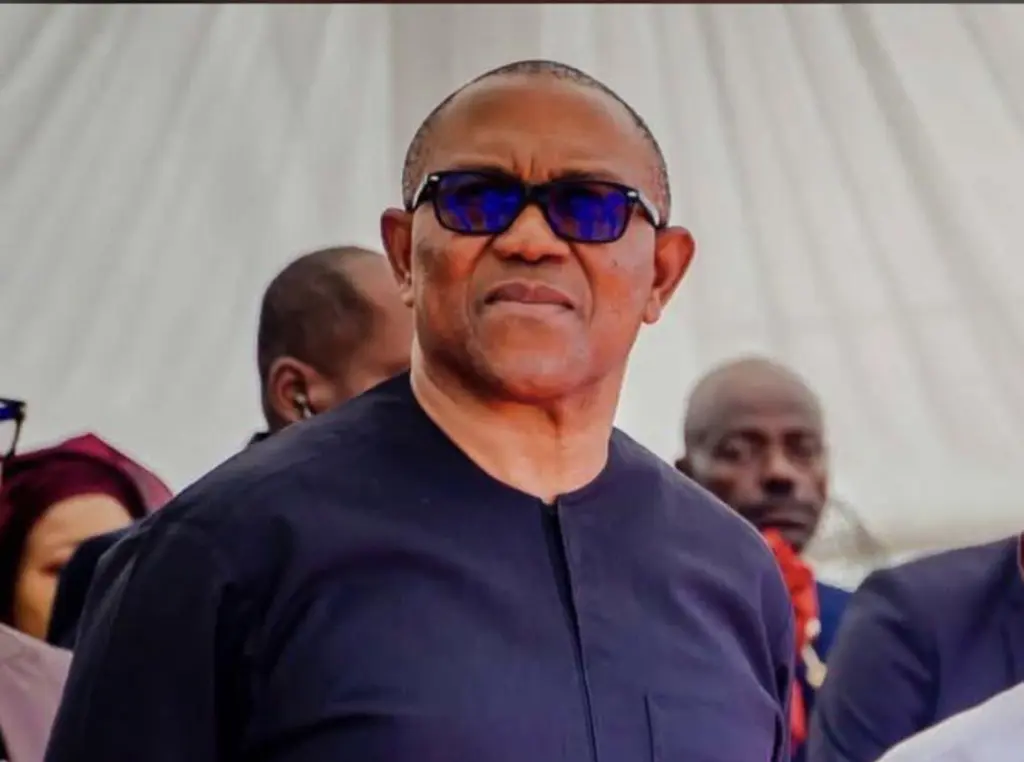
A fresh storm has erupted over academic freedom in Nigeria as former Anambra State governor, Peter Obi, openly accused authorities of shrinking intellectual space following the sudden cancellation of his scheduled lecture at Obafemi Awolowo University.
In a strongly worded reaction via his V-Handle, Obi described the development not as an isolated incident but part of a disturbing and recurring pattern, revealing that similar disruptions to his academic engagements have occurred more than ten times across the country.
The aborted lecture, which had been planned months in advance, was expected to hold early Saturday before Obi’s onward trip to a political summit in Ibadan. However, the last-minute withdrawal of the university as venue has now ignited debate over alleged interference, institutional pressure, and the erosion of intellectual independence within Nigeria’s higher institutions.
“This is no longer incidental,” Obi declared. “It points to a troubling pattern that should concern all well-meaning Nigerians.”
The former presidential candidate warned that universities—long regarded as “ivory towers” insulated for independent thought—are increasingly being drawn into what he implied are external pressures capable of stifling free expression and critical engagement.
He extended the concern beyond a single institution, recalling that even his alma mater, University of Nigeria, Nsukka, had previously cancelled a high-profile lecture organised in honour of former Vice Chancellor, Frank Ndili, on the very day it was scheduled to hold.
For Obi, the implications go far beyond personal inconvenience.
“What we are witnessing is a gradual closing of spaces meant for dialogue, knowledge exchange, and intellectual contest,” he said, warning that such trends could weaken the foundation of democratic and academic institutions.
The development has triggered wider questions about the autonomy of Nigerian universities and whether political sensitivities are beginning to dictate what ideas can be shared—and where.
Drawing a sharp contrast, Obi pointed to his recent engagements at some of the world’s leading universities, including University of Oxford, University of Cambridge, Harvard University, Yale University, Princeton University, University of Chicago, University of Pennsylvania, and Imperial College London—institutions he said continue to uphold robust traditions of open debate and intellectual freedom.
In those environments, he noted, divergent views are encouraged, not suppressed—a standard he argued Nigeria must urgently reclaim.
Observers say the repeated cancellations risk sending a chilling signal to scholars, students, and public figures, potentially discouraging open discourse at a time when the country faces complex socio-political and economic challenges.
Obi did not mince words in framing the stakes.
“A country’s progress is anchored on its ability to encourage knowledge, debate, and the contest of ideas—not restrict them,” he said.
He warned that if universities begin to lose their role as safe spaces for inquiry and dissent, the consequences could extend beyond academia into the broader democratic fabric of the nation.
As reactions continue to build, the incident has intensified calls for clarity from university authorities and renewed scrutiny of the forces shaping decisions within Nigeria’s academic institutions.
For Obi, however, the message remains stark: a nation that limits its intellectual space risks limiting its future.
“Nigeria must become a place where ideas thrive without fear,” he insisted, adding that the country’s institutions must return to the principles they were created to uphold.
In the unfolding debate, one question now hangs heavily in the air—who, or what, is afraid of the conversation?
Obi Condemns Alleged Suppression of Academic Freedom After Sudden Halt of OAU Lecture