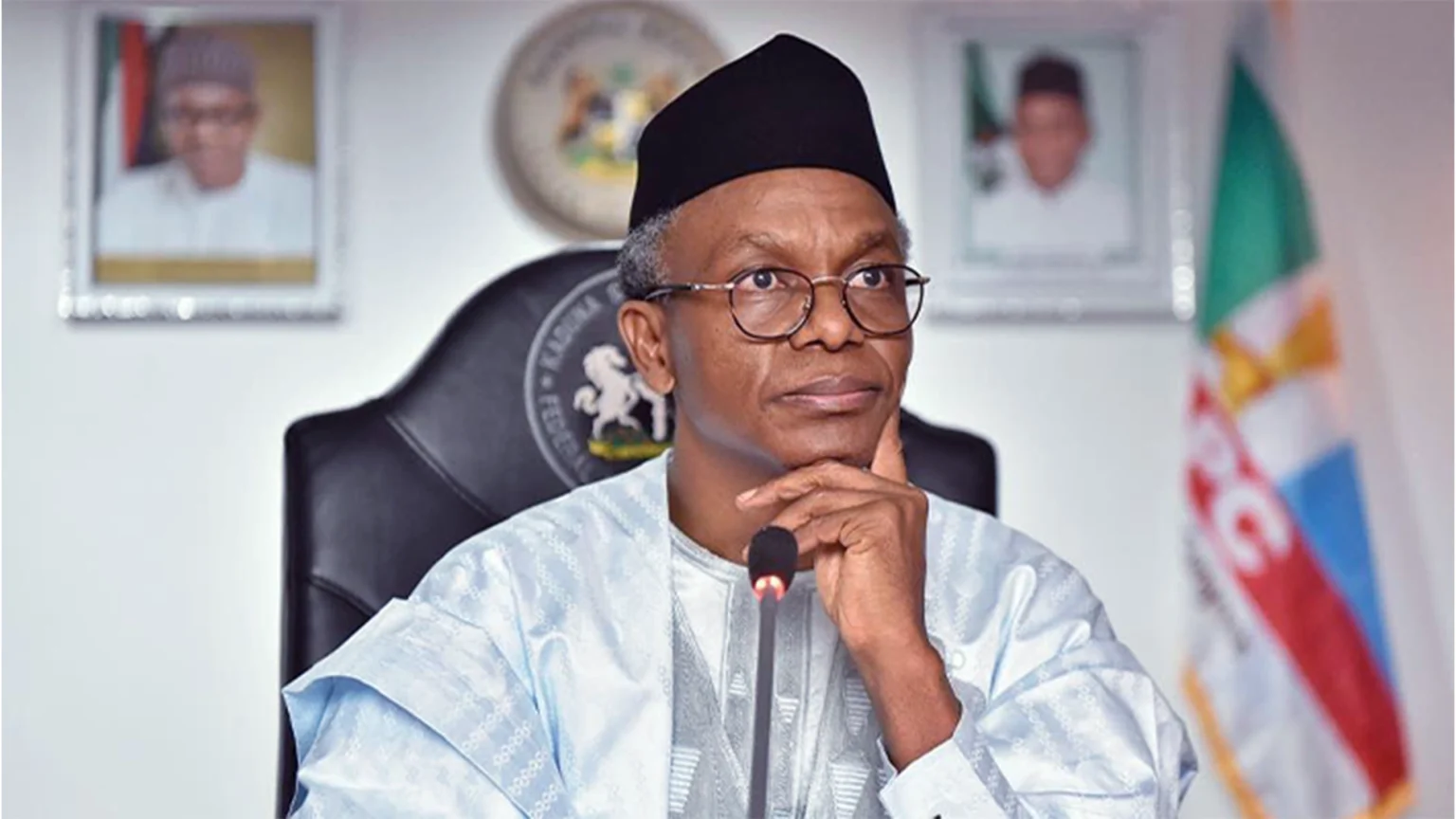
A fresh political storm erupted on Friday as the Human Rights Writers Association of Nigeria (HURIWA) launched a blistering attack on the prosecution of former Kaduna State Governor, Nasir El-Rufai, alleging a coordinated attempt by the administration of President Bola Ahmed Tinubu to neutralise a political opponent through state institutions.
In a sharply worded statement the national Coordinator of the Group, Comrade Emmanuel Nnadozie Onwubiko, HURIWA accused the Federal Government of orchestrating what it described as a “layered legal siege,” deploying agencies such as the Economic and Financial Crimes Commission (EFCC), Independent Corrupt Practices and Other Related Offences Commission (ICPC), and Department of State Services (DSS) to keep El-Rufai locked in a web of overlapping charges.
The controversy comes amid the Federal Government’s decision to expand the case against El-Rufai from an initial three-count charge to a five-count amended charge bordering on national security, including alleged interference with critical infrastructure and unauthorised access to classified information.
But HURIWA insists the evolving charges are less about justice and more about strategy.
“This is not prosecution — this is persecution dressed in legal robes,” the group declared, warning that the repeated amendment of charges signals “a deliberate attempt to keep the defendant in indefinite custody.”
Fueling the controversy is the refusal of the Kaduna State High Court, presided over by Justice Darius Khobo, to grant El-Rufai bail — a decision HURIWA described as “legally indefensible and dangerously precedent-setting.”
The group argued that the court relied on “speculative fears” of interference rather than concrete evidence, insisting that established legal principles favour bail, especially for non-capital offences.
“You cannot detain a citizen indefinitely based on suspicion. That is not law — that is power,” HURIWA said.
In one of its most explosive claims, the rights group alleged that the judiciary is increasingly perceived as being under executive influence — a development it warned could erode the foundations of Nigeria’s democracy.
“When courts begin to mirror the interests of the executive, justice itself is in danger,” the statement read.
HURIWA cautioned that the optics of the case — multiple agencies, expanding charges, and prolonged detention — risk reinforcing public fears of institutional bias.
Though careful to distance itself from El-Rufai’s political record, HURIWA suggested that the timing and intensity of the prosecution raise deeper political questions.
“This is about the system, not the individual. Today it is El-Rufai; tomorrow it could be anyone who falls out of favour,” the group warned.
HURIWA called for immediate harmonisation of all charges, insisting that fragmented prosecutions across agencies undermine fairness and due process.
It also demanded that El-Rufai be granted bail under strict conditions to enable him prepare his defence, arguing that continued detention amounts to “pre-trial punishment.”
As the legal battle heads toward trial dates in May and June, analysts say the case is fast becoming a litmus test for Nigeria’s justice system — one that could shape public trust in both the judiciary and the executive.
For now, the clash between the government and rights advocates has intensified scrutiny on how power is exercised — and whether the rule of law can withstand the pressure.
Storm Over El-Rufai Prosecution as HURIWA Accuses Tinubu of ‘State-Backed Witch-Hunt’