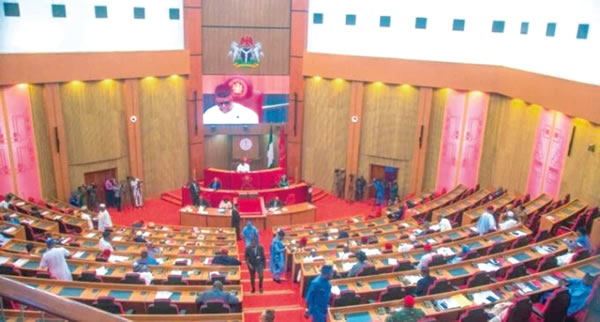
The Senate Committee on Ethics, Code of Conduct and Public Petitions has defended its decision to dismiss several high-profile petitions, insisting that its rulings are anchored strictly on law, verified facts, and respect for existing court judgments rather than public sentiment or political pressure.
Chairman of the committee, Senator Neda Imasuen, stated this in Abuja after a public hearing, making it clear that the Senate cannot act as an alternative court of appeal for matters already decided by competent judicial authorities.
He said many petitioners mistakenly approach the legislature without presenting full disclosure of their cases, including prior court rulings that directly affect the matters they bring forward.
“The committee’s actions were guided strictly by the law and available evidence,” Imasuen said, stressing that incomplete disclosure often collapses otherwise emotional petitions.
One of the cases reviewed involved allegations against the Nigeria Customs Service over seized goods. The committee found that the petitioner failed to comply with import declaration laws.
“The complainant violated import regulations by failing to declare goods contained in a truck,” he explained, adding that the Federal High Court had already ruled in favour of customs, ordering forfeiture of the items.
Imasuen maintained that once a court of competent jurisdiction has ruled on a matter, the Senate is constitutionally restrained from revisiting or contradicting such judgment.
Another petition involving Fidelity Bank was also thrown out after documentary evidence showed that the dispute lacked merit.
“The petitioner admitted taking a loan that was credited into his account, and records confirmed that withdrawals were duly authorized,” he said.
Despite the dismissals, the committee said it is not shutting its doors to legitimate grievances, pointing instead to ongoing investigations where evidence remains inconclusive.
At the centre of current scrutiny is a pension dispute involving retirees of the defunct Afribank and the Central Bank of Nigeria (CBN), which Imasuen described as a matter of serious public concern.
He revealed that the committee is probing allegations of missing pension funds and administrative gaps that may have disadvantaged retirees.
“We are still investigating this matter thoroughly. All parties have been given two weeks to submit additional documents before a final decision is reached,” he said.
Imasuen reaffirmed that the committee will continue to entertain petitions, but warned that only cases supported by credible evidence, transparency, and full disclosure will survive legislative scrutiny.
He added that the era of emotionally driven petitions without documentary backing is giving way to a stricter, evidence-based review system aimed at strengthening institutional credibility and public trust.
Senate petitions committee insists evidence, not emotion, will decide cases