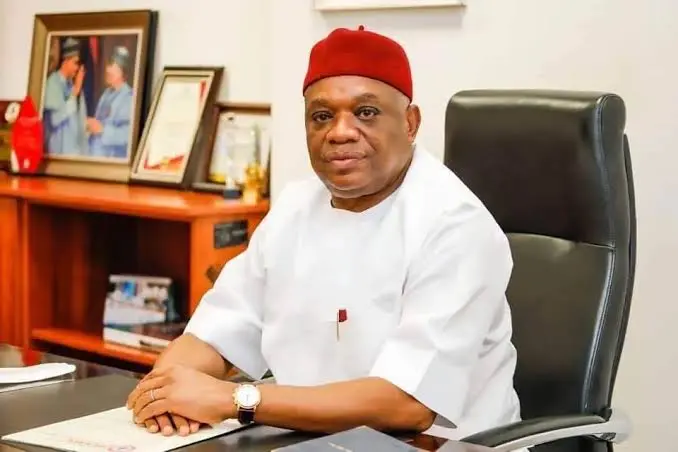
Senator Orji Uzor Kalu has downplayed allegations of electoral interference by the ruling All Progressives Congress (APC), insisting that Nigeria’s Independent National Electoral Commission (INEC) remains institutionally autonomous as political positioning intensifies ahead of the 2027 general elections.
Speaking to journalists at the National Assembly in Abuja during his 66th birthday engagements, Kalu described claims of manipulation of the electoral process as “political exaggerations,” warning that such narratives risk eroding public confidence in democratic institutions.
He maintained that the Independent National Electoral Commission (Independent National Electoral Commission) operates independently and should not be drawn into partisan disputes.
Kalu firmly rejected suggestions that the APC influences electoral outcomes or administrative processes, stressing that the commission functions on constitutional authority rather than political direction.
He urged opposition actors to focus on strengthening their structures instead of raising allegations that, in his view, weaken Nigeria’s democratic image.
Turning to the 2027 political landscape, Kalu expressed confidence that President Bola Ahmed Tinubu remains well positioned for re-election, citing what he described as expanding political support for the APC across the country.
He portrayed the ruling party as increasingly dominant, pointing to continued defections and realignments as evidence of growing national acceptance.
According to him, “the APC is expanding everywhere… it is becoming a national movement,” adding that he does not see a viable opposition structure capable of dislodging the incumbent in a free and fair contest.
Kalu’s remarks come at a time of visible fragmentation within opposition politics, with multiple political blocs still struggling to consolidate ahead of the next election cycle.
While not directly naming rival figures, his comments reflected a broader APC narrative that the opposition remains divided and strategically unprepared for 2027.
On growing speculation about zoning of the Senate Presidency to the South-East, Kalu said he was not aware of any formal agreement, stressing that such decisions lie strictly with party leadership.
He, however, noted that he remains open to any responsibility if offered, while making clear he is not actively lobbying for positions.
The senator also weighed in on the state of the economy, acknowledging that while reforms under the Tinubu administration are beginning to attract investor confidence, their impact is still uneven across the country.
He attributed lingering hardship to insecurity and structural bottlenecks, arguing that economic transformation is a gradual process that cannot yield immediate results.
Kalu concluded by urging political actors to reduce inflammatory rhetoric and focus instead on institutional strengthening and policy-based engagement.
He emphasized that Nigeria’s democratic stability depends not only on elections, but on trust in institutions and restraint by political stakeholders.
Kalu Backs Tinubu’s 2027 Outlook, Defends INEC, Says Opposition Narratives “Overstated”