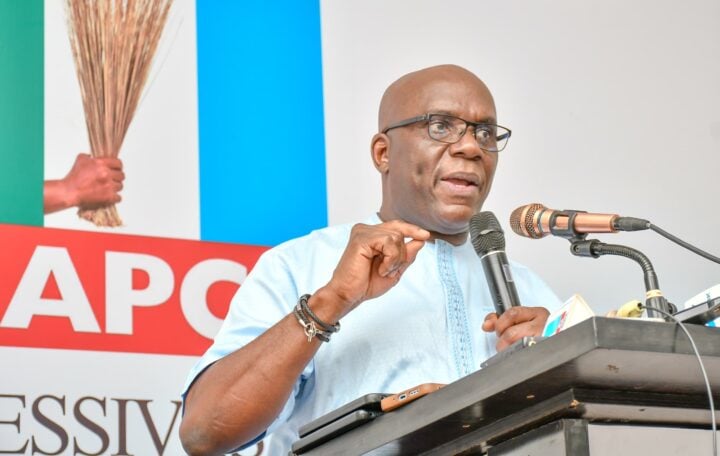
The leadership crisis rocking the African Democratic Congress (ADC) intensified on Wednesday as former presidential candidate Dumebi Kachikwu publicly criticized the Nigerian Bar Association (NBA) over its stance that courts should not interfere in the internal affairs of political parties. The development underscores a growing debate on the limits of judicial oversight in Nigeria’s democracy and the potential consequences for the 2027 general elections.
Kachikwu described the NBA’s interpretation of Section 83 of the Electoral Act 2026—which bars courts from assuming jurisdiction over intra-party disputes—as “misguided, legally flawed, and dangerous to democracy.” He warned that the absence of judicial oversight could create opportunities for illegal takeovers of political parties. “If individuals who are not members of a party can seize control and the courts are told to look away, we are inviting chaos into our democracy,” he said.
The NBA had earlier cautioned against the growing trend of using courts for tactical political battles within parties. The association emphasized that the Electoral Act prohibits courts from granting interim or interlocutory orders in intra-party matters, arguing that judicial involvement could undermine party autonomy.
Reacting to this position, Kachikwu insisted that the ADC’s current dispute is not a routine internal disagreement but a deliberate attempt by a rival faction—reportedly linked to former Senate President David Mark—to hijack the party’s structure. He alleged that this group proceeded with a national convention despite a Federal High Court order mandating all parties involved to maintain the status quo pending resolution of ongoing litigation. He described their actions as “political gangsterism” and a threat not only to the ADC but to democratic norms in Nigeria.
Kachikwu argued that courts have a constitutional duty to intervene where there are allegations of fraud, illegality, or violations of party constitutions. Without such oversight, he warned, democratic safeguards risk being eroded, and political institutions could be captured by individuals acting outside the law.
Despite the ongoing turmoil, Kachikwu expressed confidence that the ADC would overcome its internal challenges and field candidates in the 2027 general elections. He confirmed that the party is working closely with the Independent National Electoral Commission (INEC) to ensure all planned activities comply with electoral regulations.
Addressing rumors that his faction enjoys presidential backing, Kachikwu dismissed such claims as politically motivated and baseless. He, however, accused unnamed political actors of attempting to destabilize the ADC for strategic advantage, warning that Nigeria’s fragile political environment could not withstand further institutional disruption.
The crisis within the ADC highlights a broader debate over the judiciary’s role in political party governance and the delicate balance between party autonomy and the rule of law. It raises critical questions about how internal party disputes should be resolved and the safeguards necessary to protect democracy from manipulation by powerful political interests.
Kachikwu, meanwhile, remained defiant, pledging that the “real ADC” would continue to operate within the bounds of the law and resist any attempts to undermine its leadership and structure.
ADC Leadership Crisis Escalates as Kachikwu Challenges NBA Over Court Intervention