Nigeria is sinking deeper into debt as the Federal Government prepares to borrow massively to fund a record ₦25.27 trillion budget deficit in the proposed 2026 Appropriation Bill, triggering fresh warnings from lawmakers and economists over the country’s fiscal sustainability.
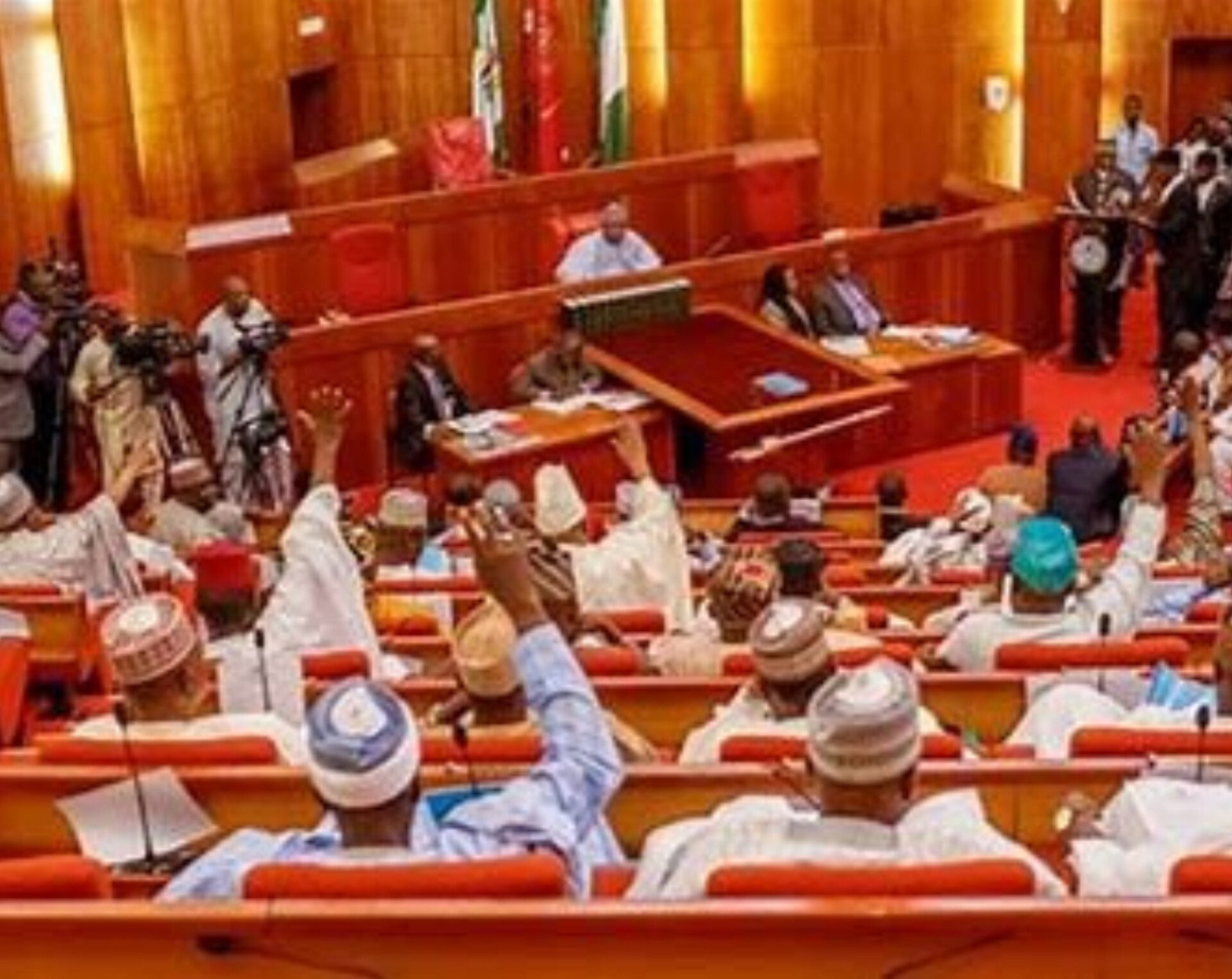
At a public hearing on the 2026 budget held Monday at the National Assembly, the Senate disclosed that projected revenues remain grossly insufficient to meet rising expenditure, forcing the government to rely heavily on borrowing at a time when debt servicing is already swallowing a significant share of national income.
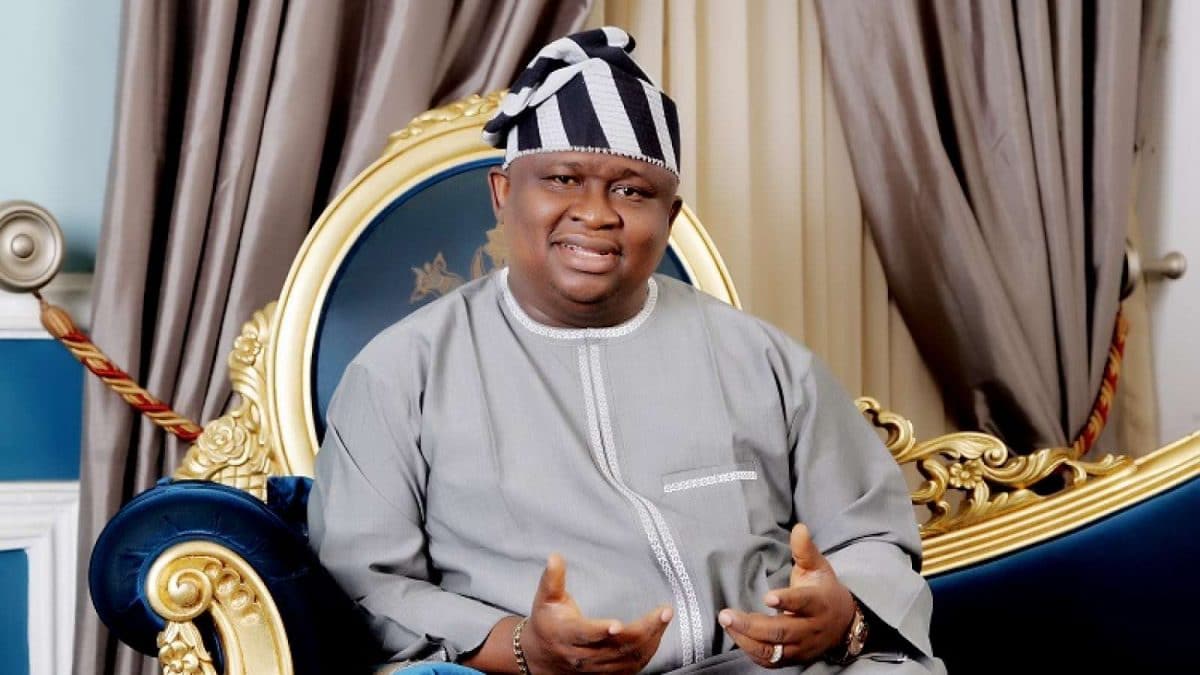
Chairman of the Senate Committee on Appropriations, Senator Solomon Olamilekan Adeola, revealed that the 2026 budget proposes total expenditure of ₦58.47 trillion against projected revenue of ₦33.19 trillion, leaving a staggering financing gap of ₦25.27 trillion. Even more troubling, ₦15.90 trillion—nearly half of projected revenue—has been earmarked solely for debt servicing.
“Nigeria cannot avoid borrowing,” Adeola declared bluntly. “Revenue inflows are unpredictable, while development needs continue to expand. The issue before us is not whether we will borrow, but how responsibly we manage these growing deficits.”
The disclosure sparked sober reflections among lawmakers and fiscal experts who warned that Nigeria is fast approaching a danger zone, where debt accumulation, weak revenue mobilisation, and chronic budget underperformance could undermine economic stability.
Adeola admitted that years of poor budget implementation, abandoned projects, and repeated rollovers had worsened Nigeria’s fiscal crisis. In a stern warning, he said the National Assembly would no longer tolerate budget extensions.
“Never again will budget rollovers be approved,” he said. “Budgets must mean something. Projects must be completed. Nigerians deserve results, not recycled figures.”
With borrowing unavoidable, the Senate committee said the government would explore alternative financing options to reduce pressure on domestic credit markets. These include external loans, public-private partnerships (PPPs), asset optimisation, privatisation, and Eurobond issuances, in a bid to avoid crowding out private sector investment.
Adeola also defended the controversial removal of electricity subsidies, arguing that decades of subsidy spending had bled the treasury dry without delivering value.
“For years, trillions of naira were borrowed to fund subsidies that did not exist,” he said. “We were borrowing to finance consumption, not development. Removing subsidies was painful but necessary if Nigeria is to survive.”
Yet, experts at the hearing warned that borrowing alone will not save Nigeria unless systemic revenue leakages are urgently addressed.
Economist Dr Olatilewa Adebanjo painted a grim picture of Nigeria’s revenue challenges, describing them as “self-inflicted wounds.” He singled out the mining and solid minerals sector, alleging that massive losses persist due to weak enforcement and exploitation by foreign operators.
“This is a wake-up call,” Adebanjo warned. “We are losing enormous revenues, especially in mining, where foreign companies—particularly Chinese operators—extract resources with little benefit to Nigeria. Unrealistic revenue projections only deepen the crisis.”
The Chief Commissioner of the Public Complaints Commission echoed similar concerns, citing widespread abuse of public funds across ministries, departments, and agencies (MDAs). He pointed to abandoned projects, inflated contracts, and poor-quality execution as symptoms of weak oversight and accountability.
Responding to the criticisms, Adeola pledged intensified legislative scrutiny, insisting that no public funds would escape parliamentary oversight.
“There must be consequences,” he said. “Public money belongs to Nigerians, and we will no longer tolerate waste.”
Despite the grim fiscal outlook, the 2026 budget prioritises security and infrastructure amid rising insecurity and economic fragility. According to the proposal, ₦5.41 trillion is allocated to defence and security, ₦3.56 trillion to infrastructure, ₦3.52 trillion to education, and ₦2.48 trillion to health. Capital expenditure stands at ₦23.21 trillion, reflecting the government’s stated commitment to productivity-enhancing investments.
However, the Accountant-General of the Federation, Shamseldeen Olujimi, warned that Nigeria’s problem is not budget size but budget impact.
“A budget is a moral document,” Olujimi said. “For too long, Nigeria has been strong on paper but weak on delivery. What matters is not how much we allocate, but what Nigerians actually feel.”
Minister of State for Finance, Dr Doris Uzoka-Anite, described the 2026 proposal as a “Budget of Consolidation,” aimed at maximising scarce resources and deepening ongoing reforms. She acknowledged that economic recovery remains fragile, particularly in agriculture and manufacturing, while warning that rising debt costs pose serious long-term risks.
“We are consolidating reforms—subsidy removal, tax reforms, power sector liberalisation—but debt servicing pressures are real and growing,” she said.
Senate President Godswill Akpabio, represented by Deputy Senate President Barau Jibrin, reminded stakeholders that budgets are not academic exercises.
“Our responsibility is not just to spend more,” he said, “but to spend better—turning limited resources into real outcomes that Nigerians can see and feel.”
As Nigeria prepares to plunge deeper into borrowing to keep government running, the 2026 budget exposes a stark reality: a nation caught between urgent development needs and a shrinking fiscal space. Whether the promised reforms can halt the slide into deeper debt—or merely slow it—remains the defining question hanging over Africa’s largest economy.
Nigeria Faces ₦25.27trn Budget Deficit as Debt Burden Deepens Further