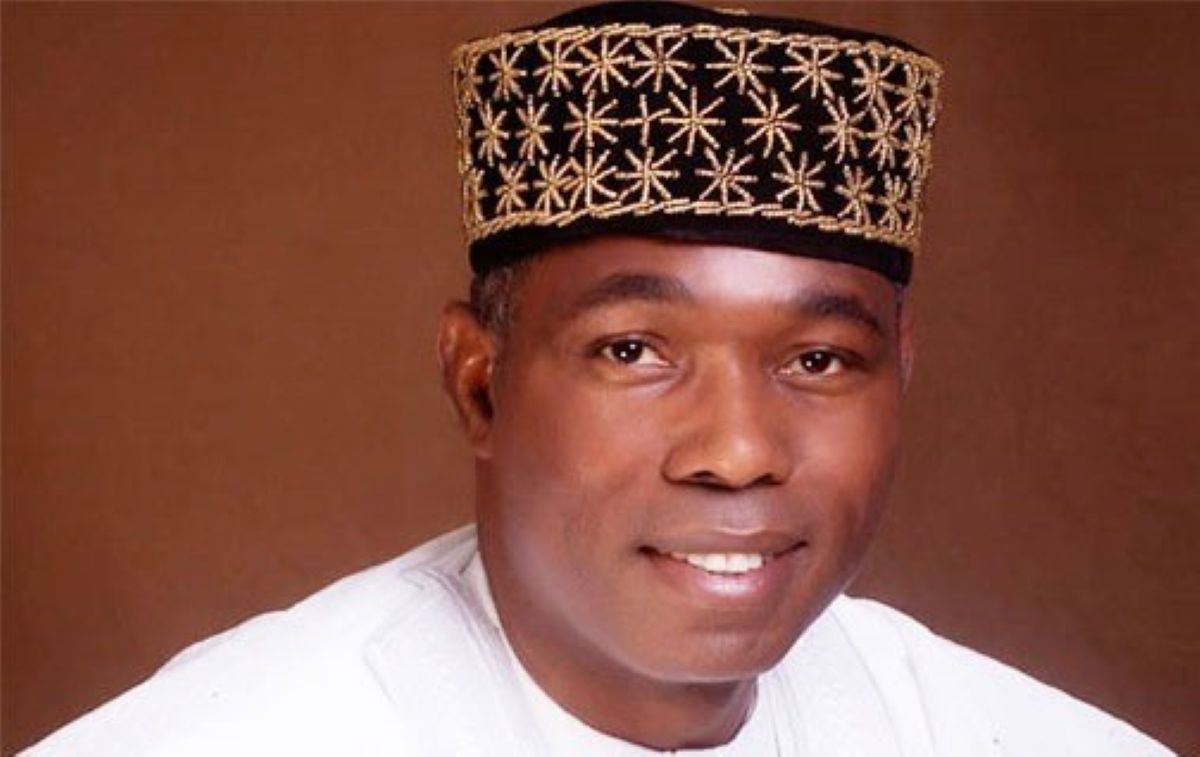
Former presidential candidate of the Social Democratic Party (SDP), Barrister Adewole Adebayo, on Friday hailed the Supreme Court’s dismissal of the Independent National Electoral Commission’s (INEC) appeal against the party, describing the ruling as a defining moment for Nigeria’s democracy and the rule of law.
Speaking to journalists in Abuja after the apex court struck out INEC’s case and imposed a ₦2 million fine on the commission, Adebayo said the judgment conclusively affirmed that the electoral umpire has no constitutional authority to interfere in the internal affairs of political parties.
According to him, the decision of the Supreme Court—coming after similar rulings by the Federal High Court and the Court of Appeal—had finally settled the matter of party autonomy in Nigeria’s multiparty system.
“This is not just a victory for the SDP; it is a victory for all political parties and for democracy itself,” Adebayo said. “INEC has now been told, clearly and repeatedly, that it has no business dictating leadership arrangements within political parties.”
Adebayo accused the commission of undermining opposition parties through selective recognition of party leadership, arguing that such actions fuel internal crises and weaken democratic competition.
“In a multiparty democracy, the umpire must be impartial,” he said. “Many of the crises we see in opposition parties today are possible only because INEC interferes where it has no constitutional mandate.”
The legal dispute arose from an internal leadership change within the SDP, carried out in line with the party’s constitution. Adebayo explained that the party appointed an acting national chairman and acting national secretary, who formally communicated their status to INEC and performed their statutory duties, including signing nomination documents.
However, INEC declined to recognise the acting leadership and continued to deal with a former national chairman who had already been removed by the party, prompting the legal challenge.
“That position was unlawful,” Adebayo said. “The courts were unanimous that the SDP had the right to change its leadership and to authorise its acting officers to act on its behalf.”
After losing at the High Court and the Court of Appeal, INEC took the matter to the Supreme Court, where its appeal was dismissed. The apex court also ordered the commission to pay a ₦2 million fine.
While noting that the fine would ultimately be borne by taxpayers, Adebayo said it should serve as a strong warning to the electoral body.
“It is regrettable that public funds will be used to pay the fine, but it is a necessary lesson,” he said. “INEC must learn to leave political parties alone.”
Adebayo warned that democracy cannot thrive if opposition parties are weakened through administrative interference, stressing that political plurality is essential to democratic choice.
“If only the ruling party is allowed to function freely, then democracy is effectively dead,” he said. “INEC must ensure that all political parties can operate independently so Nigerians can genuinely choose between alternatives.”
He also urged the new leadership of INEC to break from what he described as the excesses of the commission’s past leadership, recalling that a former chairman had repeatedly been cited for contempt by superior courts.
Adebayo said members of the SDP’s National Working Committee and other party leaders were present at the Supreme Court to witness the judgment, reaffirming that the party had acted strictly within the provisions of its constitution throughout the dispute.
He expressed appreciation to the judiciary for upholding constitutional principles, describing the ruling as a boost to internal party democracy and Nigeria’s democratic institutions.
Adebayo Celebrates Supreme Court Win, Cautions INEC on Party Autonomy