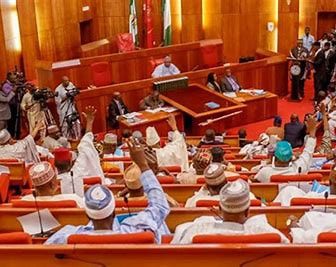
In a bold move to strengthen fiscal governance, both chambers of the National Assembly on Wednesday passed a bill to repeal and re-enact the 2024 Appropriation Act, valued at ₦43.5 trillion, following a request from President Bola Tinubu. The legislation marks a decisive push to overhaul Nigeria’s budget implementation framework, aiming to eliminate overlapping budget cycles and reinforce legislative oversight of public spending.
Presenting the bill, Senate Leader Opeyemi Bamidele described it as a structural reform rather than a mere fiscal adjustment. “The central purpose is to end the practice of running multiple budgets simultaneously, which has long complicated fiscal management and weakened accountability across Ministries, Departments, and Agencies,” Bamidele said.
The proposed legislation authorises the Federal Government to spend ₦54.56 trillion in 2025, covering ₦1.74 trillion in statutory transfers, ₦8.27 trillion for debt servicing, ₦11.27 trillion for recurrent non-debt expenditure, and ₦22.28 trillion for capital projects and development funds.
Bamidele highlighted that the bill provides a clearer, legally backed appropriation mechanism, allowing the government to consolidate past expenditures or respond to emergencies—including security crises, humanitarian needs, and economic shocks—while keeping every naira under parliamentary scrutiny.
The reforms also limit executive discretion, requiring National Assembly approval for budget reallocations and restricting corrections strictly to genuine errors. Excess revenues must be recorded and authorised before spending.
Enhanced transparency and accountability measures are woven throughout the law, including periodic reporting on fund releases, expenditures, revenues, and external assistance.
Bamidele concluded that the bill consolidates past fiscal actions, removes ambiguities in existing law, and lays a solid statutory foundation for future budget implementation.
The bill has now been referred to the Senate Committee on Appropriations, with its report expected on Friday, coinciding with President Tinubu’s presentation of the 2026 budget.
National Assembly Moves to Overhaul Budget Framework, Repeals 2024 Appropriation Act