

Close Menu
National Update
    Facebook X (Twitter) Instagram
    Trending
    • Obi Puts Tinubu on the Spot Over Trillions in Subsidy Savings, Loans
    • FG Cancels NTI 2026 Admissions, Bars Degree-Awarding Arrangements
    • Akpabio banks on Wike, Rivers peace to deliver Tinubu
    • Yobe APC Mobilises Thousands for Tinubu After ‘Must Go’ Protest
    • Atiku Revives Tinubu’s 1993 US Forfeiture Case, Challenges Him Over Record
    • Kano Uncovers 3.18m Pregabalin Capsules in Sabon Gari Raid
    • Two to Hang for Killing Kano Mother, Six Children
    • ADC Races to Save Atiku’s Ticket, Tells INEC to Wait
    Facebook X (Twitter) Instagram
    National UpdateNational Update
    Subscribe
    • News
    • Politics
    • Opinion
    • Economy
    • Entertainment
    • Health
    • Security
    National Update
    Home»Senate

    Senate Endorses Bill to Boost MSME Financing

    By National UpdateOctober 15, 2025 Senate 1 Comment3 Mins Read
    Professor Joash Ojo Amupitan
    Share
    Facebook Twitter WhatsApp LinkedIn Email

    ***Passes Factoring Regulation Bill for Second Reading

    The Senate on Wednesday advanced deliberations on the Factoring Regulation Bill, 2024 (SB.474), approving it for second reading — a major step toward easing cash-flow bottlenecks for small businesses and unlocking over $1 billion in annual financing for Nigeria’s micro, small, and medium enterprises (MSMEs).

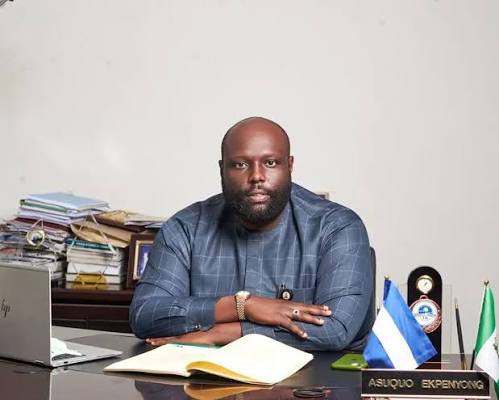
    Sponsor of the Bill, Senator Asuquo Ekpenyong (Cross River South), said the legislation seeks to tackle one of the most stubborn challenges facing MSMEs — delayed payments that leave many small firms cash-strapped, stifling growth and job creation.

    Ekpenyong noted that Nigeria’s over 40 million MSMEs — the backbone of the economy — often endure payment delays of 30 to 90 days after delivering goods or services, a situation that cripples their ability to meet payroll, restock, or expand.

    “This cycle of delayed payment weakens small businesses, limits their survival, and slows down economic growth,” Ekpenyong told colleagues during plenary.

    The Bill seeks to institutionalize and regulate factoring — a financing model that allows businesses to sell verified invoices to licensed financial institutions or “factors” at a small discount, gaining near-instant access to working capital.

    Under the arrangement, a factor advances up to 90 percent of an invoice’s value upfront and collects full payment from the buyer when due.

    Ekpenyong explained that factoring, unlike conventional bank loans, depends on the buyer’s creditworthiness and the authenticity of the invoice rather than the SME’s collateral or credit history.

    “Factoring allows businesses to access financing based on the strength of their sales, not their fixed assets,” he said.

    The Bill designates the Securities and Exchange Commission (SEC) as the regulator responsible for licensing and supervising factoring institutions, ensuring transparency, consumer protection, and enforceable invoice transfers. It also complements ongoing financial reforms such as e-invoicing and digital receivables registries, expected to enhance verification and reduce fraud.

    Drawing from international precedents, Ekpenyong cited Mexico’s Cadenas Productivas initiative and India’s TReDS platform as successful examples, noting that similar reforms in Chile, Brazil, and South Africa have unlocked billions in SME financing.

    “With clear regulations, Nigeria can unlock over $1 billion annually for small enterprises — funds that will directly support production, employment, and value chains,” he added.

    The Bill also provides for periodic reporting on factoring volumes, buyer concentration, and MSME participation, while mandating transparent, plain-language contracts and standardized cost disclosures to strengthen financial literacy.

    Ekpenyong emphasized that the Bill represents a structural reform rather than another short-term lending scheme.

    “By passing this Bill, we’ll enable Nigerian businesses to hire faster, restock sooner, and expand stronger — without relying on costly, collateral-backed debt,” he said.

    The Bill, first introduced on June 11, 2024, has now been referred to the relevant Senate committees for further legislative scrutiny and report.

    Previous ArticleUzoka-Anite, Cardoso Highlight Nigeria’s Economic Gains at G24
    Next Article Senate to Screen INEC Chairman Nominee Thursday

    Keep Reading

    Tinubu Seeks Senate Approval for $7.7bn Loan, Dumps $20bn Proposal

    Tinubu Seeks Senate Nod to Repatriate Nigerians Jailed Abroad

    Senate Targets Travel Agencies, Short-Lets in Trafficking Fight

    Senate Okays PhD Powers for Medical College, Boosts NSIB Autonomy

    Senate Examines Bayelsa University Proposal to Bridge Science Skills Gap

    Bamidele: Southwest States Must Plan Beyond Boundaries to Unlock Regional Economy

    View 1 Comment

    1 Comment

    1. 📧 🔐 Security Needed - 0.6 BTC transaction held. Proceed now >> https://graph.org/Get-your-BTC-09-04?hs=2f067216ce0966c8d1ed3d44583b07b4& 📧 on October 16, 2025 7:33 am

      kda939

    Advert
    VGC Advert
    Most Viewed Posts
    • Ex-Kogi Gov’s Arraignment Stalled at the instance of EFCC Counsels (2,606)
      The arraignment of the former Governor of Kogi State, Yahaya Bello, on an alleged money laundering case instituted against him by the Economic and Financial Crimes Commission (EFCC), has been adjurned to June 27, by the Federal High Court, in Abuja, based on an agreement by the counsels to the two parties. A new date,
    • Breaking: Intrigues, as ADC suspends its presidential candidate, Kachikwu, accuses him of blackmail (1,982)
      The African Democratic Congress (ADC) has suspended its presidential candidate Dumebi Kachikwu, from the party, accusing him of false, misguided and defamatory video he made and circulated, among other infractions. The party also considered Kachikwu's action as "smacks of crass irresponsibility, gross indiscipline, disingenuous scandalization and blackmail, and completely unfit of someone who wants to
    • North Central Serving Governor withdrew N60 billion cash in six years ― EFCC (1,895)
      A serving Nigerian governor has allegedly withdrawn N60billion from his state’s purse. The Economic and Financial Crimes Commission (EFCC) said that he has lifted about N60 billion cash from state coffers in about his six years in office. The governor remains unnamed and his state, partially identified as domiciling in the North Central of the
    • Integrity Pays: Delta SANs Honour Police Officer with ₦1m Award (1,736)
      In a rare show of appreciation for integrity in public service, the Body of Senior Advocates of Nigeria (BOSAN), Delta State chapter, has honoured Assistant Commissioner of Police (ACP) Aliyu Shaba for what they described as his anti-corruption stance and outstanding service within the Nigeria Police Force. At a colourful ceremony in Ekpan, Uvwie Local
    • A major win for Kanu as Court orders Nigeria to pay him ₦1billion (1,575)
      For violating the rights of the leader of the Indigenous People of Biafra (IPOB) Nndi Kanu a High Court in Umuahia, Abia State, on Wednesday ordered the Nigeria Government to pay him the sum of N1 billion The presiding Judge Benson Anya described the invasion of Kanu’s Afaraukwu residence as notorious and brazen. He also

    Latest News

    Obi Puts Tinubu on the Spot Over Trillions in Subsidy Savings, Loans

    November 7, 2026

    FG Cancels NTI 2026 Admissions, Bars Degree-Awarding Arrangements

    November 7, 2026

    Akpabio banks on Wike, Rivers peace to deliver Tinubu

    November 7, 2026

    Yobe APC Mobilises Thousands for Tinubu After ‘Must Go’ Protest

    November 7, 2026

    Atiku Revives Tinubu’s 1993 US Forfeiture Case, Challenges Him Over Record

    November 7, 2026

    Subscribe to Updates

    Get the latest creative news from FooBar about art, design and business.

    National Update
    Facebook X (Twitter) Instagram
    © 2026 National Update. Designed by Lamark Cre8ives.

    Type above and press Enter to search. Press Esc to cancel.