

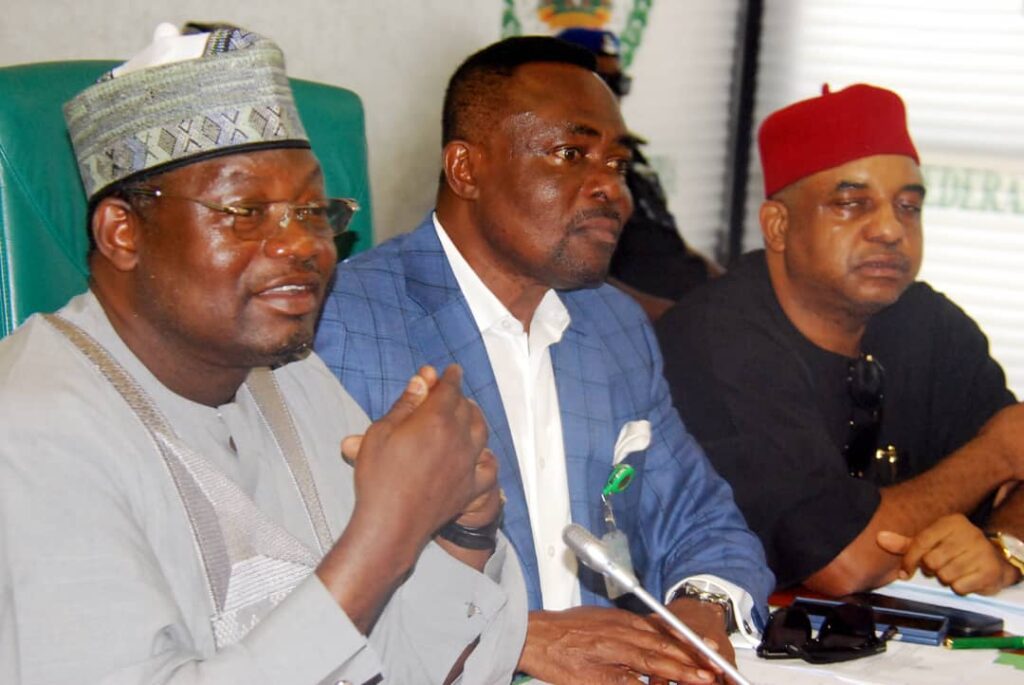

The House of Representatives Committee on Alternative Education has reaffirmed its commitment to building a credible framework for vocational and technical learning as a key driver of job creation and national development.
The committee made the pledge on Monday during a one-day public hearing in Abuja on four bills seeking to establish vocational and skills acquisition centres across different parts of the country.
In his opening remarks, the Committee Chairman, Hon. Ibrahim Almustapha, said the initiative reflects the House’s resolve to make alternative education a viable path for lifelong learning and employment generation.
He noted that the hearing was convened to gather expert and stakeholder input that would help ensure effective legislative implementation.
“Vocational training and entrepreneurial skill acquisition are fundamental drivers of national development,” Almustapha said. “Nigeria’s youthful population remains a valuable asset that must be empowered through skills training and alternative education for self-sufficiency and national progress.”
The lawmaker commended the Speaker of the House, Rt. Hon. Abbas Tajudeen, for his foresight in creating the Committee on Alternative Education — the first of its kind — to bridge the educational gap faced by millions of Nigerians outside the formal school system.
Declaring the public hearing open, the Speaker, represented by Rep. Paul Nnamchi, said the concept of alternative education arose from the growing need to connect formal learning with employable skills.
“Vocational, technical, and entrepreneurship education is the needed bridge between educational qualifications and practical skills for national development,” he stated.
Representing the South-East Development Commission (SEDC), Mr. Ifejika Sunday reaffirmed the Commission’s support for initiatives promoting technical and vocational training.
“The Commission supports the establishment of vocational and entrepreneurship educational institutions as it aligns with our mandate to promote technical education and skills development,” he said.
Other stakeholders — including representatives from the National Commission for Almajiri Education (NCAE), the Arogbo Ijaw Kingdom, and the Mbaise Community — also expressed strong support for the proposed institutions.
However, Princess Stephanie Osa-Osaghae, Director of Special Initiatives at the Nigeria Non-Governmental Association for Literacy Support Services (NOGALSS), urged lawmakers to include NOGALSS on the governing boards of the proposed centres to ensure broader stakeholder participation and effective coordination.
The four bills under consideration included, HB.2263: Bill to Establish the South East Institute for Vocational and Entrepreneurial Studies, Umuobum, Imo State — sponsored by Hon. Ikeagwuonu Onyinye Ugochinyere; HB.2342: Bill to Establish the Federal Institute of Technical Education and Skills Acquisition, Mbaise, Imo State — sponsored by Hon. Chinedu Emeka Martins; HB.554: Bill to Establish the Federal College of Entrepreneurship and Skills Acquisition, Ilorin West, Kwara State — sponsored by Hon. Muktar Tolani Shagaya; and HB.2033: Bill to Establish the National Institute for Vocational and Entrepreneurial Studies, Agadagba-Obon, Ese-Odo, Ondo State — sponsored by Hon. Donald Kimikanboh Ojogo.
The hearing attracted participants from government agencies, academia, industry, and professional bodies, including the Nigerian Society of Engineers (NSE), who commended the legislative initiative and underscored the importance of technical education in addressing unemployment and promoting youth empowerment.
Almustapha reaffirmed that the committee remains committed to developing a strong and sustainable alternative education framework that will drive innovation, productivity, and inclusive growth.