***Calls for Bold, Inclusive Reforms
***Enugu Governor Backs Judicial, Police Overhaul
By Fatima Ndagi, Enugu

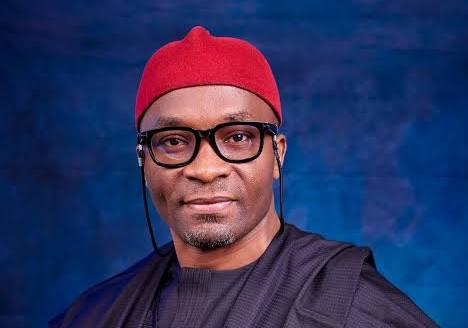
Deputy Speaker of the House of Representatives and Chairman, House Committee on Constitution Review, Hon. Benjamin Okezie Kalu, says the ongoing constitutional review must produce a document that truly reflects the aspirations of Nigerians.
Speaking at the opening of the 3rd House Committee Retreat on Constitutional Review in Enugu on Friday, Kalu said Nigerians desire a Constitution that strengthens local governance, deepens fiscal federalism, guarantees women’s participation, and enhances electoral and institutional accountability.
“Our democracy cannot remain vulnerable to inefficiency and manipulation,” Kalu declared. “We must craft a Constitution that empowers local governments, guarantees women’s inclusion, and restores confidence in the electoral system.”
He urged lawmakers to approach the exercise with unity of purpose, legislative discipline, and national interest, emphasizing that constitutional amendments must command bipartisan support to succeed.
“We represent different parties and ideologies, but on this issue, we must speak with one voice,” he said. “Every decision must be guided by one question — what is best for Nigeria?”
Kalu challenged his colleagues to focus on achievable, high-impact reforms rather than politically divisive proposals, saying the work in Enugu must yield a clear, actionable roadmap for constitutional reform.
“Let us leave Enugu ready to build the consensus needed for passage — and inspired by the knowledge that we are shaping Nigeria’s destiny for generations to come,” he added.
Enugu Governor Seeks Judicial and Police Reforms
In his remarks, Governor Peter Mbah of Enugu State, represented by Deputy Governor Ifeanyi Ossai, called for sweeping judicial and police reforms to ensure fair and speedy justice delivery.
Ossai urged the Committee to consider constitutional recognition of geopolitical zones and to redefine federal character to include equitable distribution of national resources — not just political appointments.
“We often complain about federal character in appointments but ignore how infrastructure and national budgets are shared,” he said.
On security, Ossai stressed that reforms to policing must go beyond creating state police to addressing systemic abuse and poor detention conditions.
“Our police cells are inhuman. Anyone detained for three hours would confess to crimes they didn’t commit,” he lamented.
He proposed a “magistrate-on-call” system, allowing magistrates to review arrests at any hour to ensure due process and prevent unlawful detentions.
“This will make the police accountable and prevent suspects from being punished before trial,” Ossai noted.