


By Fatima Ndagi
The Chairman, House Committee on Commerce, Hon. Ahmed Munir, has reaffirmed the determination of the 10th House of Representatives to deepen transparency, inclusiveness, and people-driven legislation as part of its broader agenda to stimulate economic growth and strengthen national institutions.
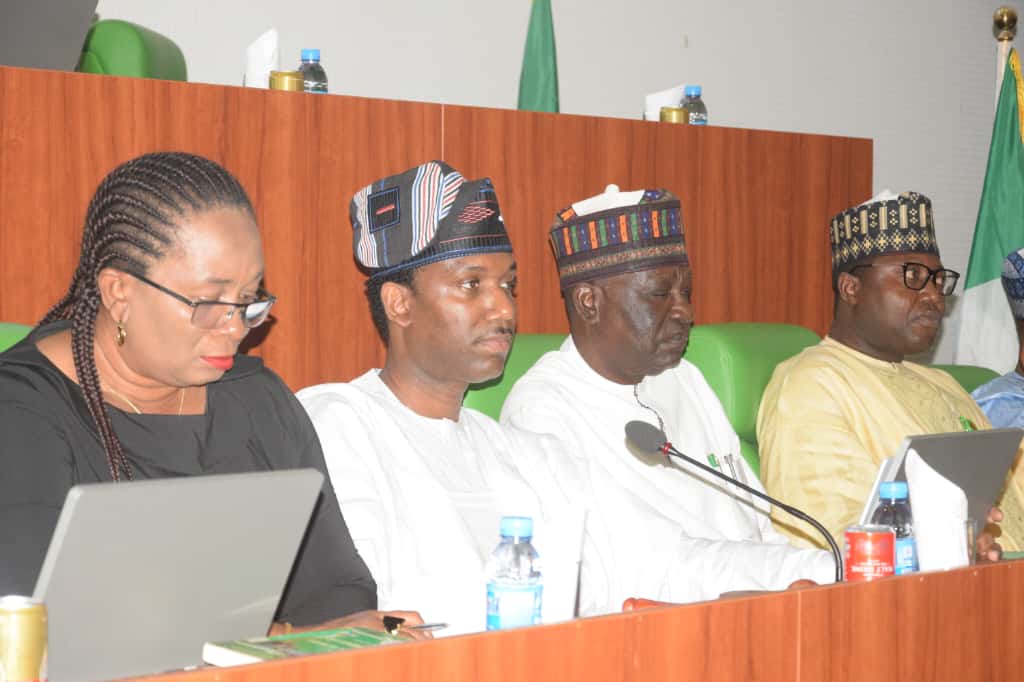
Speaking at a public hearing on ten bills in Abuja on Thursday, Hon. Munir said the House is focused on passing laws that genuinely reflect the aspirations of Nigerians and align with President Bola Ahmed Tinubu’s economic transformation vision.
“A close look at these bills shows that both the legislature and the executive share one purpose — advancing the interest of the people,” he said. “If passed, these laws will create new regulatory institutions that uphold professionalism, accountability, and efficiency across key sectors.”
The bills under consideration, he explained, span multiple areas of national importance — from commerce and financial services to climate resilience — aimed at modernizing outdated laws and boosting institutional performance for better service delivery.
Among the key proposals was the Bill for an Act to Establish Climate-Resilient Commerce in Nigeria (HB. 2206), designed to promote sustainable growth while protecting Nigerian businesses from the economic risks of climate change.
Hon. Munir noted that the legislation would not only safeguard the nation’s economy but also position Nigeria to benefit from global climate finance and green investment opportunities.
“This is about preparing Nigeria for the future — reducing long-term risks and unlocking new economic opportunities through sustainability,” he stated.
Other bills reviewed included those to establish or amend several professional and regulatory bodies, such as the Chartered Institute of Nigerian Universities Professional Administrators, Institute of Chartered Biochemists and Molecular Biologists, Chartered Institute of Mortgage Bankers and Brokers, Chartered Institute of Entrepreneurship Consultants, and the Chartered Institute of Enterprise Risk Management of Nigeria.
Also considered were amendments to the Nigerian Export Promotion Council Act and the National Institute of Marketing of Nigeria Act 2003, as well as reforms to enhance financial analysis and risk management practices nationwide.
Hon. Munir emphasized that the public hearing provided a crucial opportunity for citizens and stakeholders to contribute meaningfully to the legislative process.
“Democracy thrives on participation,” he said. “Our goal is to ensure that every Nigerian voice counts in shaping the laws that govern our nation.”
The lawmaker commended President Bola Ahmed Tinubu’s administration for stabilizing the economy, citing a 3.9% annual GDP growth rate and improved revenue mobilization as proof of progress.
“The bleeding has stopped,” he remarked, “but we must now heal the wound by ensuring that macroeconomic gains translate into real benefits for ordinary citizens.”
He noted that the next phase should focus on expanding social protection, tackling inflation, boosting food security, and removing trade barriers to accelerate inclusive development.
Reaffirming the legislature’s commitment to participatory governance, Hon. Munir described the 10th House as a “People’s Parliament” — open, responsive, and firmly grounded in national interest.
He recalled the recent nationwide constitutional review hearings as proof of the House’s resolve to involve citizens at every stage of the democratic process.
“We are united by a shared purpose — to uplift our people and build a greater nation,” Munir said, urging all stakeholders to offer constructive and focused contributions that will strengthen the legislative outcomes.