
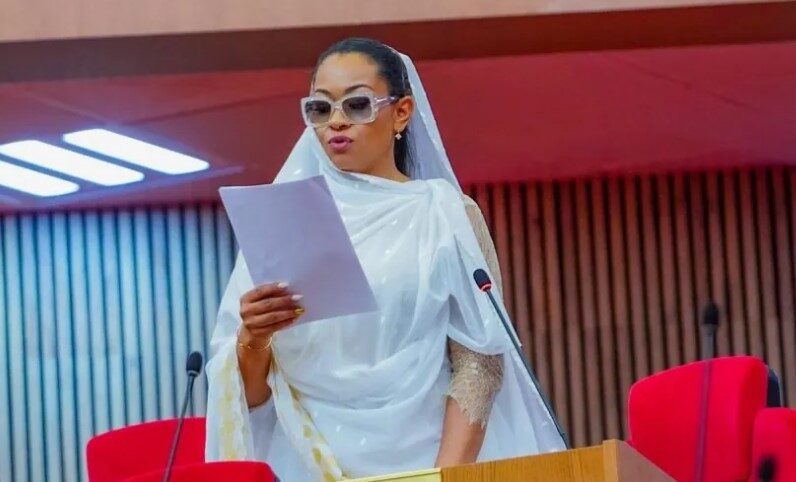
Senator Natasha Akpoti-Uduaghan (Kogi Central) on Tuesday resumed plenary at the Senate after six months of suspension, describing her return as “a victory for resilience” and a symbol of the people’s will.
Speaking on the floor, Akpoti-Uduaghan credited her constituents and Nigerians at large for standing firm against what she called “unscrupulous intimidation.”
“My attendance at plenary today is a testament to the resilience of the good people of Kogi Central and Nigerians, especially their courage to resist every unscrupulous intimidation,” she declared.

Drawing lessons from past political struggles, she recalled the case of Hon. Rifkatu Danna, whose mandate was controversially truncated, saying: “Our victory is the people’s and God’s.”
The senator reaffirmed her commitment to service and expressed faith in the judiciary to deliver justice in ongoing legal matters concerning her mandate.
Her resumption followed the unsealing of her office on September 23 after Senate leadership, amid mounting pressure from civil society and international groups, reversed an earlier decision. Women’s groups, opposition parties, and rights advocates had widely condemned the lockout as an attempt to silence a vocal critic of Senate President Godswill Akpabio.
Akpoti-Uduaghan, however, maintained she was never formally informed that her suspension had been lifted. She accused Senate leadership of fraud and intimidation, insisting she would not apologise for what she described as injustice.
“You can’t apologize for an injustice,” she said. “The fraudulent document used to suspend me—endorsed with forged signatures—was an affront to democracy. If they expect an apology, they will wait forever.”
The senator also alleged months of harassment, including blockades on road and waterways forcing her to fly by helicopter, smear campaigns, and what she called public humiliation.
“The National Assembly cannot be run like a dictatorship,” she declared. “No one is more Nigerian than another.”
Her return has reignited debate on legislative independence, accountability, and the treatment of dissenting voices in the upper chamber.