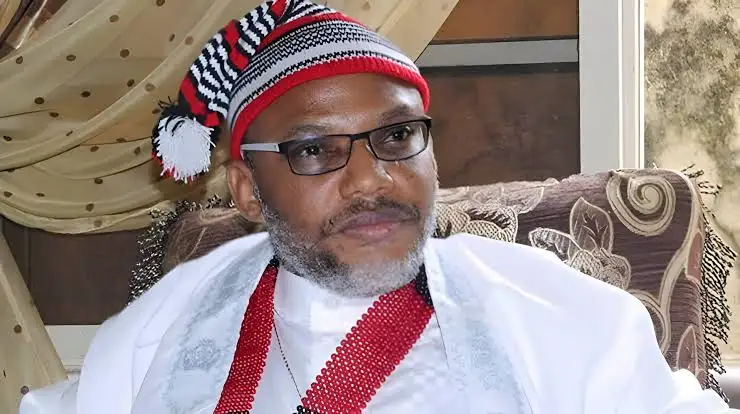
The petition filed by Indigenous People of Biafra (IPOB) leader, Mazi Nnamdi Kanu, to the World Medical Association (WMA) may appear, at first glance, to be about an individual’s health crisis. But beneath the details of his alleged medical neglect in Department of State Services (DSS) custody lies a deeper question: how does Nigeria treat its most controversial detainees?
Kanu, who has been in solitary confinement since his arrest in Kenya in 2021 has claimed deteriorating health to a “life-threatening threshold,” with conditions ranging from hypertension and organ strain to severe tinnitus.
His lawyers accused DSS doctors of providing inconsistent records and inadequate care, while delaying the release of an independent medical report ordered by the Federal High Court.
The allegations are not entirely new. Over the years, detainees in Nigeria — from political activists to journalists and suspects of terrorism — have raised similar complaints about medical neglect, prolonged detention, and lack of transparency in treatment. Kanu’s petition simply amplifies an already familiar concern: whether the state’s security priorities consistently override detainees’ basic human rights.
By elevating his case to the WMA and copying bodies like the Nigerian Medical Association (NMA), Kanu is reframing his health troubles as a global human rights issue. It is no longer only about his personal survival, but about Nigeria’s compliance with international standards on the humane treatment of prisoners.
Rights groups argue that the longer the authorities delay releasing the medical report — or addressing his complaints — the more Nigeria risks damaging its credibility before both its own citizens and the international community.
For the DSS, silence may no longer be enough. With Kanu’s petition now in global circulation, his case has become a test not just of medical ethics, but of the country’s justice system and its ability to balance security with dignity.