By Umar Muhammed, Lafia
In a decisive move to decongest correctional facilities and uphold citizens’ rights, Justice Husseini Baba-Yusuf, Chief Judge of the Federal Capital Territory (FCT), has discharged 35 inmates from two custodial centres in Keffi Local Government Area of Nasarawa State.
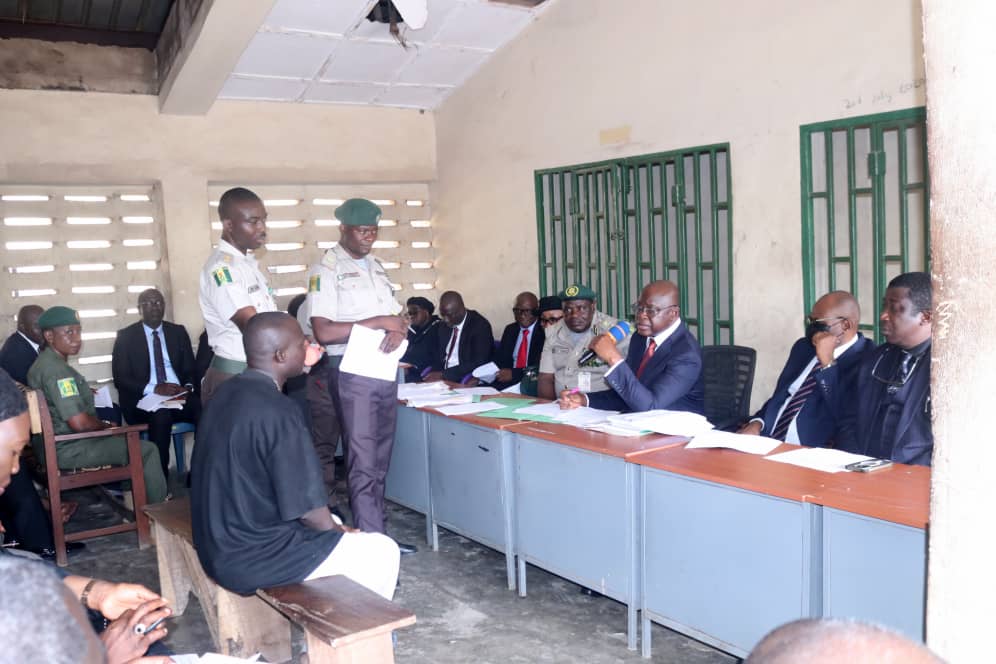
The Chief Judge secured their release during a routine inspection of the Medium Security Custodial Centre, Keffi, on Tuesday. Among those freed were 33 men and two women—including Mohammed Abdullahi, who had been incarcerated for a year without a single court appearance.

“Today we have been able to set free 35 people who have no business being here—and that is a huge boost,” Baba-Yusuf told journalists after the exercise. He explained that the visits are designed to ensure that “those who are not supposed to be in custody are allowed to go free.”
He emphasized that such exercises will now be routine to prevent prolonged and unnecessary detentions.
“Some of those we freed are unwell or had been held without genuine charges,” he added. “We have also rectified delayed cases and set fresh dates for hearings, while magistrates have been directed to improve case management to ensure proceedings run smoothly.”
The effort drew praise from civil society groups. Cynthia Onyeka, Program Officer for the Public and Private Development Center (PPDC), said the visit tackles Nigeria’s “high rate of pre-trial detentions” that has caused overcrowding in correctional centres.
“For activities like this, we support by paying fines, and today we contributed ₦1.5 million to help secure some releases,” she said.
Mrs. Chioma Onyenucheya-Uko, Chairperson of the International Federation of Women Lawyers (FIDA), Abuja Branch, commended both the Chief Judge and supporting NGOs for stepping in where vulnerable inmates could not afford fines or compensatory payments.
Keffi Custodial Centre’s Officer-in-Charge, Mr. Sumaila Bulus, thanked Baba-Yusuf for his intervention, noting the facility currently houses 667 inmates. He appealed for logistical support to transport inmates to court, revealing that only two vehicles are available to convey up to 90 prisoners at a time.
The releases, observers say, underscore a renewed effort within Nigeria’s justice system to protect the rights of detainees, ensure fair trials, and address overcrowding in correctional centres.