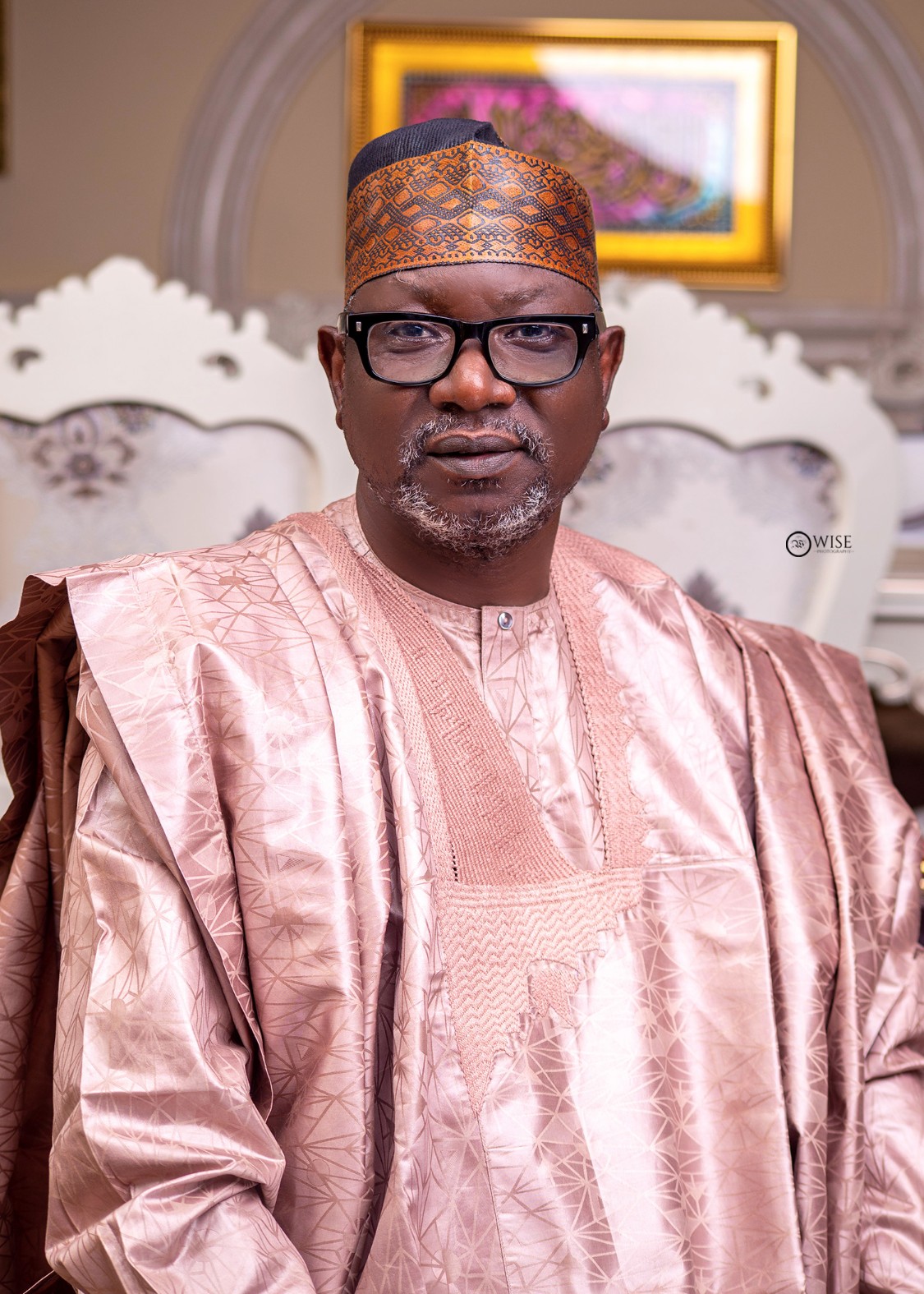
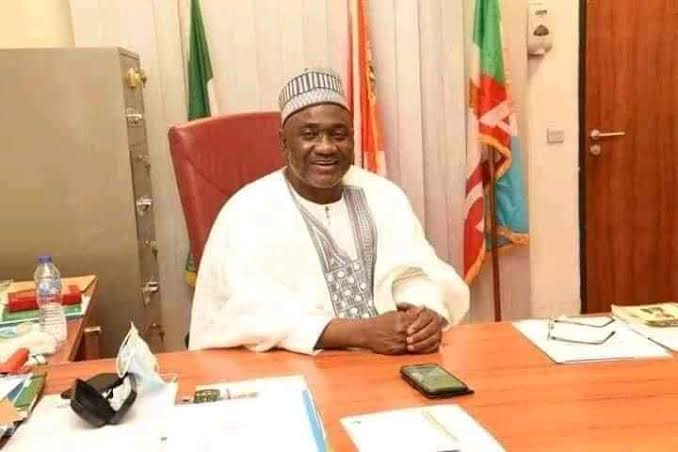
A feature on Senator Jibrin Isah’s quiet but powerful transformation of Kogi East
By John Akubo
When Senator Jibrin Isah, popularly known as Echocho, took his seat in the National Assembly in 2019, expectations were high but cautious. The Igala nation, weary of promises, wanted results, tangible ones. Six years on, the evidence is hard to ignore: Kogi East has never had it this good.

From the dusty towns of Ankpa to the farmlands of Ibaji, and from the schools in Dekina to the health centres in Idah, Echocho’s footprint is everywhere.
Not in rhetoric, but in roads, hospitals, schools, boreholes, jobs, empowerment schemes, and bold legislation that puts Kogi East on the national map.
Unlike many senators whose names are only mentioned during campaigns, Echocho has been consistently active in lawmaking. He has sponsored bills of both local and national importance, such as: National Eye Centre, Ochadamu (Establishment) Bill, Federal University of Education, Ankpa (Establishment) Bill, Nigeria Cashew Crop Processing Agency Bill and Violence Against Persons (Prohibition) Act (Repeal and Re-enactment) Bill
Others are Import Substitution Strategy Bill 2025, National Broadcasting Commission (Re-Enactment) Bill and Orthopaedic Hospitals Management Board (Amendment) Bill
Add to this is a long list of motions from pushing for the rehabilitation of critical roads in Anyigba, Shintaku, and Itobe-Ajaokuta, to demanding aid for displaced communities in Bassa and Olamaboro, to lobbying for completion of abandoned federal projects — and you see a senator who knows that representation is more than speeches.
Echocho’s real power lies not just in bills but in bringing projects home. He has delivered hospitals, schools, skill acquisition centres, rice mills, cashew and cassava processing factories, and even police command offices. Solar-powered boreholes dot the villages of Dekina, Ankpa, Ibaji, Omala, and beyond. Hundreds of rural households have light today because Echocho fought for transformers and solar streetlights.
The education sector has not been left out. From rehabilitating schools to revamping the Prince Abubakar Audu University bakery, he has shown a commitment to human capital.
In healthcare, over 30 primary health centres across Kogi East have benefitted from medical equipment and drug support he facilitated.
Perhaps one of his quietest but most impactful legacies is in job facilitation and empowerment.
Echocho has been instrumental in securing federal appointments, lobbying jobs for Kogi East youths, and empowering farmers with processing facilities that not only reduce post-harvest losses but also add value to local crops like cashew, rice, and cassava.
In agriculture — the heartbeat of the Igala nation – his influence has sparked an industrial shift. The rice mills in Ibaji and Omala, the cassava factory in Ankpa, and the cashew hub in Ofu are not just projects; they are seeds of economic independence for rural Kogi East.
Representation in Nigeria’s National Assembly is not just about one man. It is about positioning a people. Echocho today is not just another senator — he is a principal figure in the National Assembly.
Removing him prematurely in 2027 would mean throwing away the ladder just when Kogi East is climbing higher.
In Nigerian politics, influence grows with time. Seniority counts. Networks deepen. Access expands. Echocho has painstakingly built that capital in Abuja — the kind that translates into more projects, more attention, and more leverage for his people. Replacing him with a newcomer would mean starting from zero.
Too often, elections in Kogi East have been clouded by sentiment — tribe, clan, or personal loyalty. But this time, the choice is clearer: do we stick with proven performance, or gamble on promises?
Echocho has not been perfect — no leader is. But his record speaks louder than campaign slogans. From infrastructure to agriculture, from education to healthcare, from motions to bills, his work is visible, measurable, and undeniable.
Kogi East stands at a crossroads as 2027 approaches. The gains of the last six years are real but fragile. They need consolidation, not disruption. Senator Jibrin Isah Echocho has shown capacity, character, and commitment.
He has delivered more in one term than many did in two.
The message is simple: Kogi East cannot afford to let go of Echocho now.
For peace, prosperity, and progress, continuity is not an option — it is an imperative.
John Akubo is a media practitioner based in Abuja