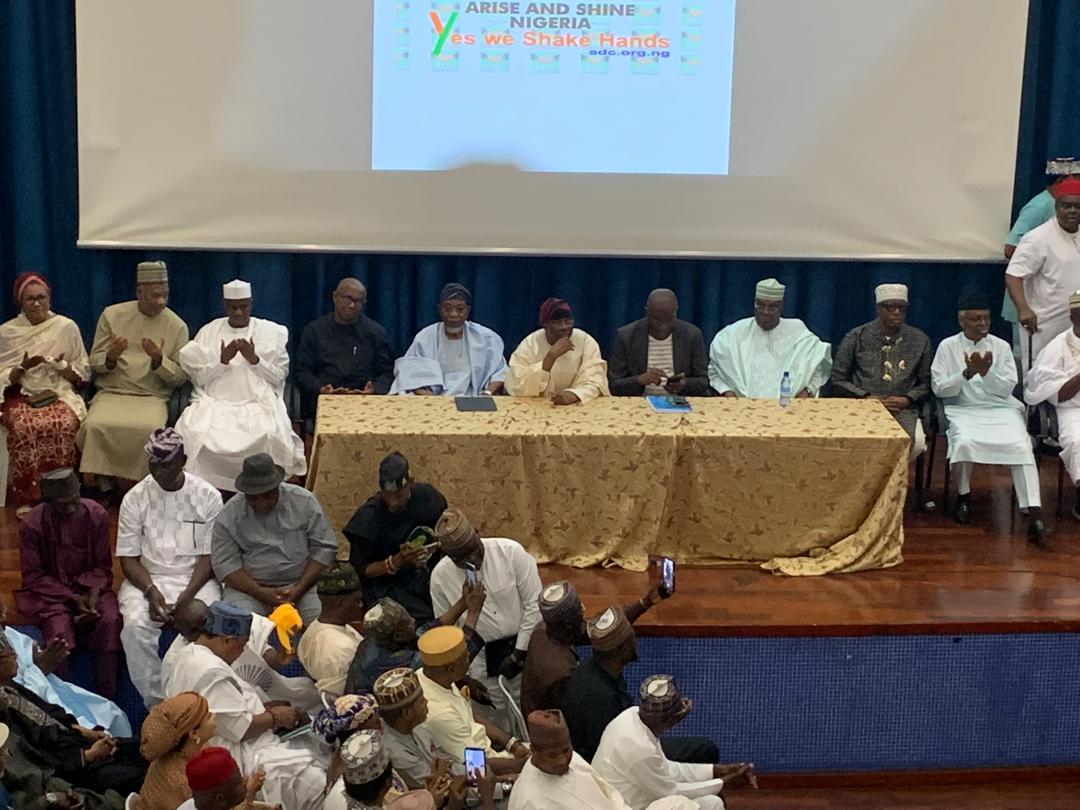
A quiet political earthquake is rumbling beneath Nigeria’s political terrain — and its epicenter is a coalition of powerful opposition leaders who appear to be shedding their legacy affiliations in favor of a bold, unified future under the African Democratic Congress (ADC).
On the surface, it may seem like mere defection talk. But behind the scenes, a coordinated, strategic exodus is taking shape — one that could reshape Nigeria’s 2027 general election before the campaign season even begins.
From former Rivers Governor Rotimi Amaechi to ex-Justice Minister Abubakar Malami (SAN) and former Senate President David Mark, political heavyweights have begun making high-profile exits from the All Progressives Congress (APC) and the Peoples Democratic Party (PDP) — with the ADC emerging as their new political home.
Mark, now interim national chairman of the ADC, put it plainly: “All of us remain firmly united under the ADC banner for the 2027 general elections and beyond.”
Yet even as the banners of the new coalition rise, questions swirl around why some key players are delaying their official breakaways.
Among them: former Vice President Atiku Abubakar, Labour Party’s 2023 presidential candidate Peter Obi, and former Kaduna State Governor Nasir El-Rufai.
Their silence — or in Obi’s case, delicately worded statements devoid of outright defection — has sparked speculation. Are they truly committed to leaving their parties? Or are they hedging bets in a fast-changing political climate?
Obi’s cryptic message on Thursday only deepened the intrigue. He spoke of sacrifice, unity, and building “uneasy bridges” — but stopped short of naming the ADC or renouncing the Labour Party.
“No one group can change Nigeria alone,” Obi said. “To dismantle the structures that keep our people in poverty and insecurity, we must build bridges, not walls — even when those bridges are uneasy.”
For some, it was the language of diplomacy. For others, it was a sign of cold feet.
But one of the coalition’s most senior voices, Alhaji Adamu Maina Waziri, insists that the plan is intact — just unfolding methodically.
“Everyone in the coalition is leaving their respective parties, But we are doing so in accordance with the procedures laid out by our parties.”
Waziri, still a formal PDP member and BoT stalwart, revealed that he would resign only after personally submitting his letter to his ward chairman in Yobe — underscoring the symbolic and procedural weight such decisions carry.
“I could easily sit here in Abuja and send a press release saying I’ve left. But that’s not proper. I’m expected to do what is right — in the best way possible.”
The same, he said, applies to Atiku, who would need to travel to Jada, Adamawa State to formally tender his resignation at the ward level.
“Of course he’s leaving. Everybody is. It’s just a matter of timing and doing it by the book,” Waziri confirmed.
What makes this opposition merger different from the past is the scale — and the careful choreography.
The ADC, long seen as a fringe party, is now being rebranded as the central vehicle for a grand opposition coalition aiming to dethrone the APC in 2027. With political titans from across the ideological spectrum aligning, it could represent Nigeria’s most unified challenge to ruling party dominance since 2015.
But even the best-laid coalitions have their risks. Will party structures align in time for key elections — including upcoming by-elections and a state governorship race? Will egos clash as presidential ambitions re-emerge? And most crucially: Will Nigerians see this as a genuine movement or just another political reshuffle?
What’s clear is this: The political centre is shifting — and the ADC is no longer a bystander in Nigeria’s democracy.
But in the coming weeks, Nigerians will be watching not just who joins the ADC — but how they do it. Quietly? Boldly? All at once? Or in piecemeal fashion?
The next chapter of this coalition story may not be about declarations — but about decisions. About whether these opposition leaders, with their varying backgrounds, ideologies, and ambitions, can do something rare in Nigerian politics:
The Great Realignment: Opposition Heavyweights Shift Toward ADC